





What David Knew That Changed Everything
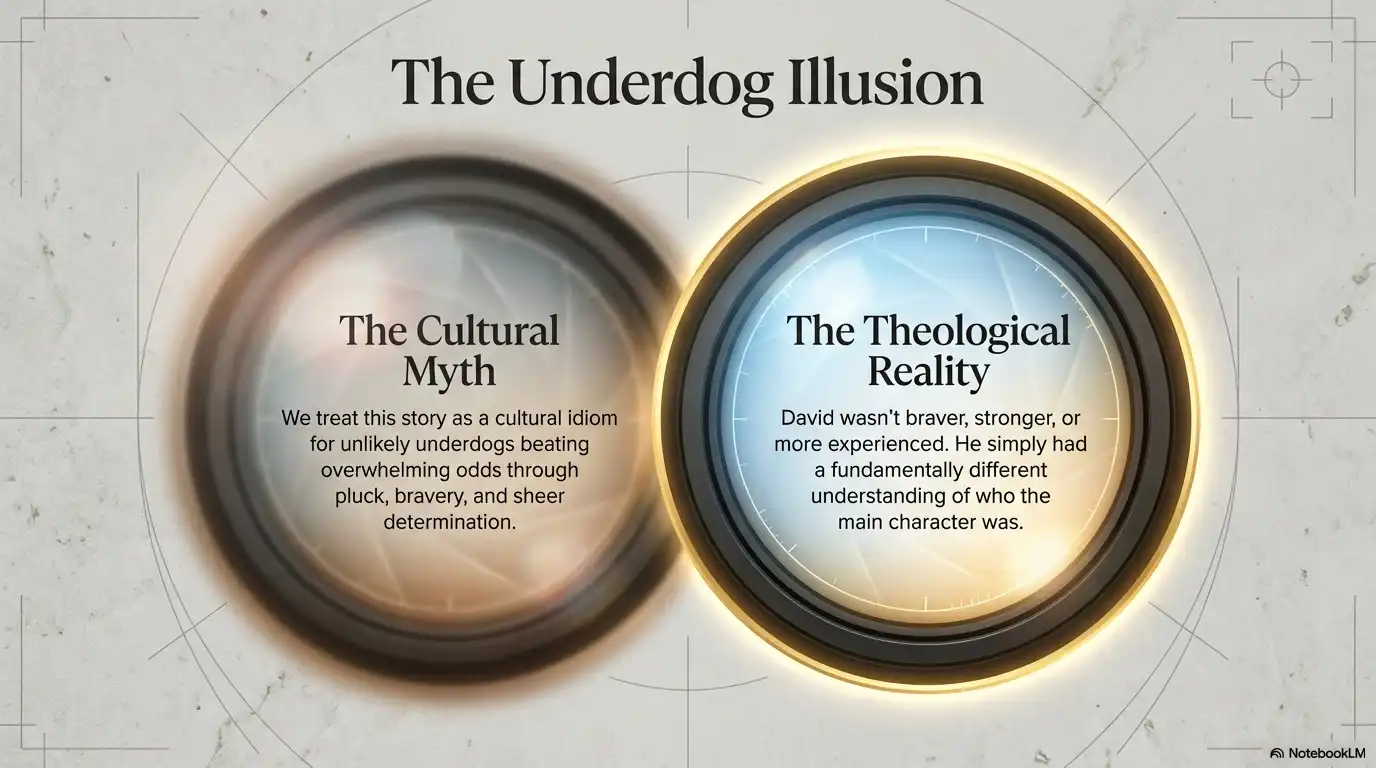
There’s something about the David and Goliath story that we think we know so well that we stop actually hearing it. It’s become shorthand — a cultural idiom for unlikely underdogs beating overwhelming odds through pluck and determination. And while there’s nothing wrong with that reading exactly, it misses the thing that made David actually different from everyone else on that battlefield.
David wasn’t braver than the Israelite soldiers surrounding him. He wasn’t stronger. He wasn’t more experienced. He was, by most accounts, the least qualified person in the vicinity to be doing what he was about to do.
What he had was a different understanding of who the main character in the story actually was.
1. Everyone Else Was Looking at Goliath — David Was Looking at God
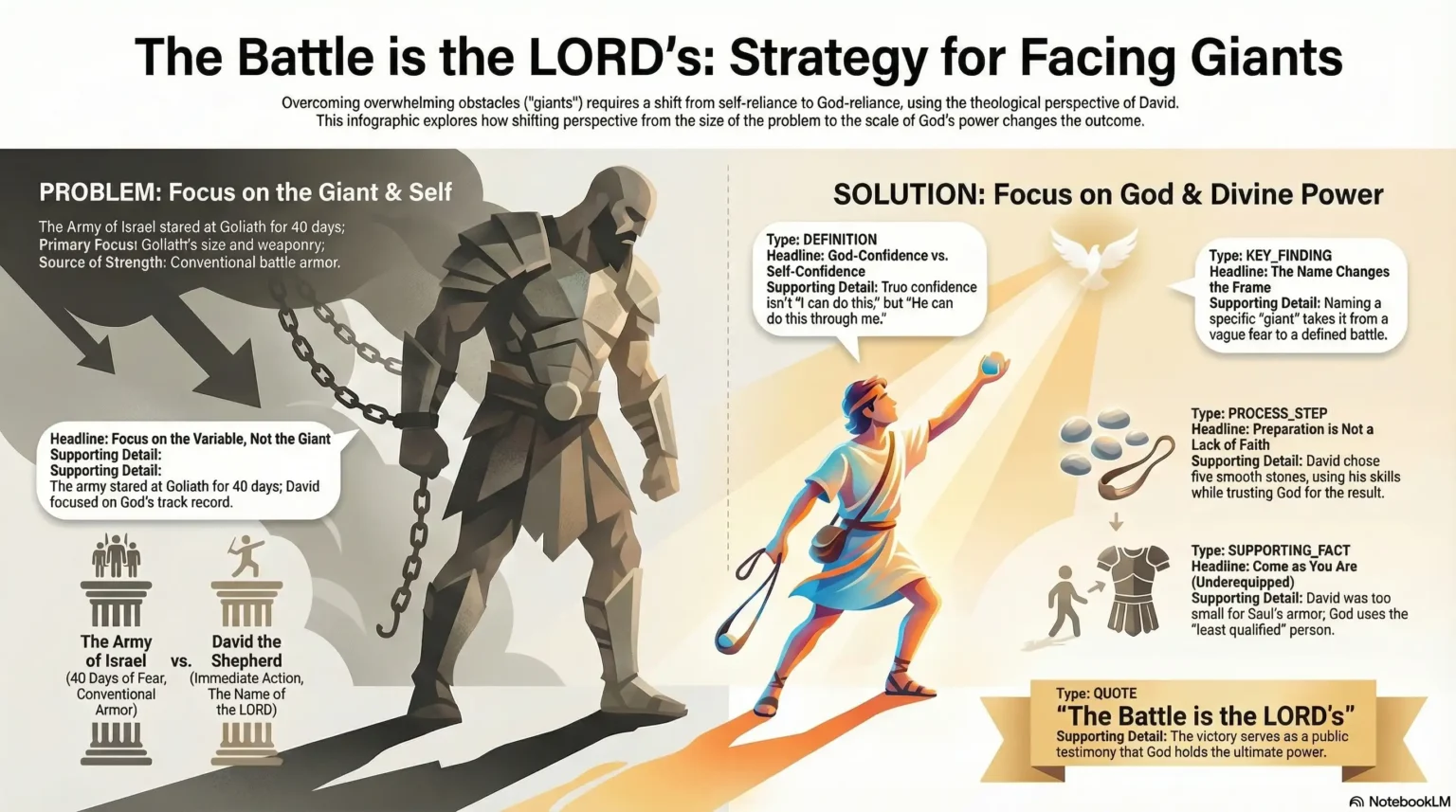
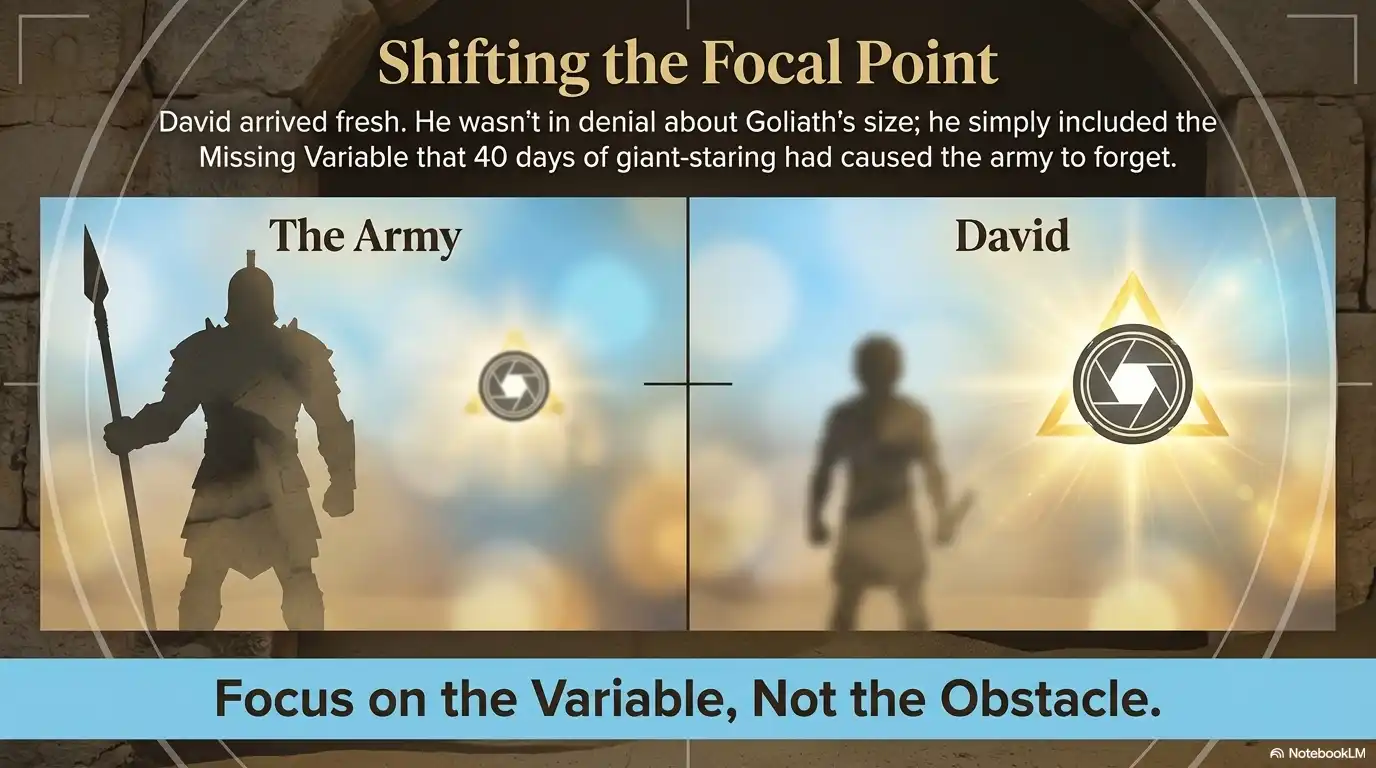
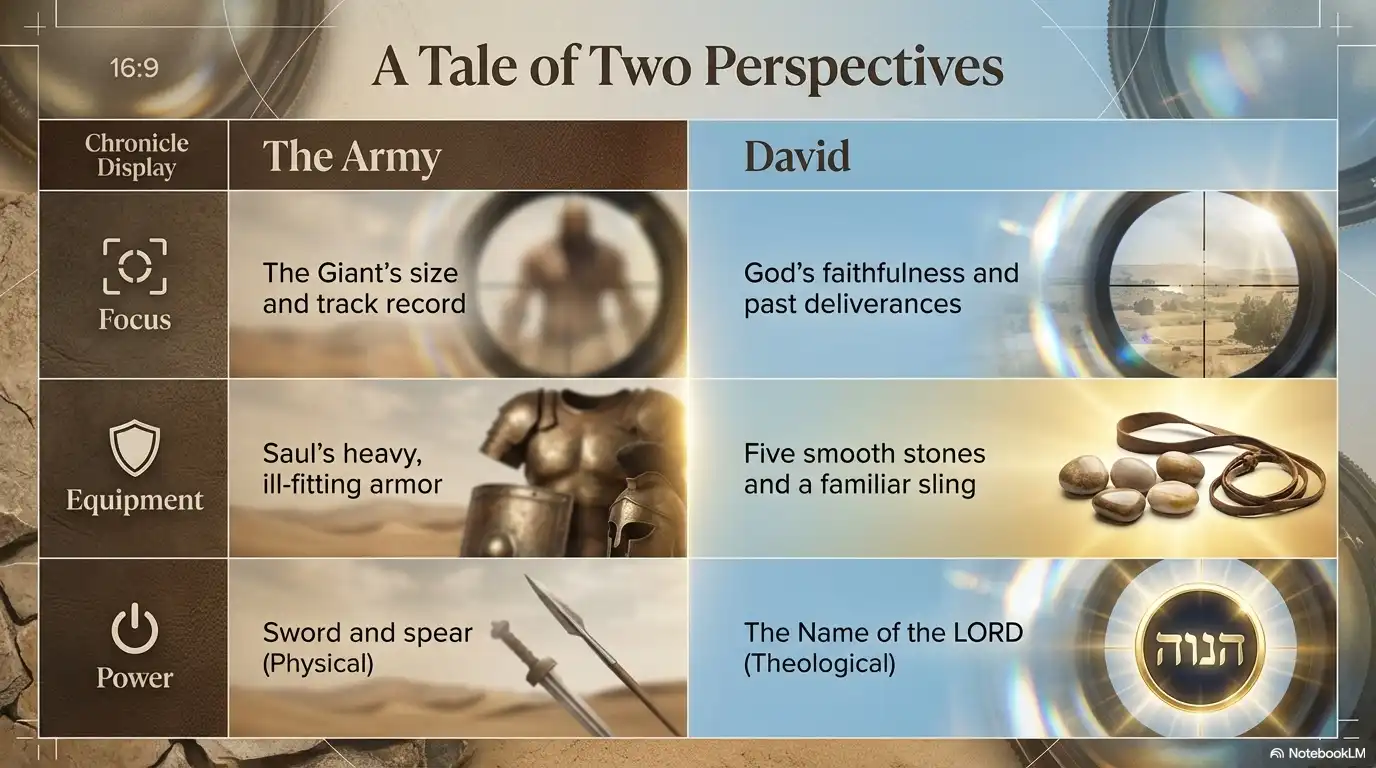
The army of Israel had been staring at Goliath for forty days. Forty days of his twice-daily appearances, his taunting, his visible size and weaponry and intimidating track record. Forty days of the giant filling the entire field of vision until he seemed like the only relevant fact about the situation.
And that’s, honestly, exactly what prolonged exposure to a giant does. It makes the giant look like the determining factor. The bigger he looks, the smaller everything else looks by comparison — including, eventually, your sense of what God is capable of in this particular situation.
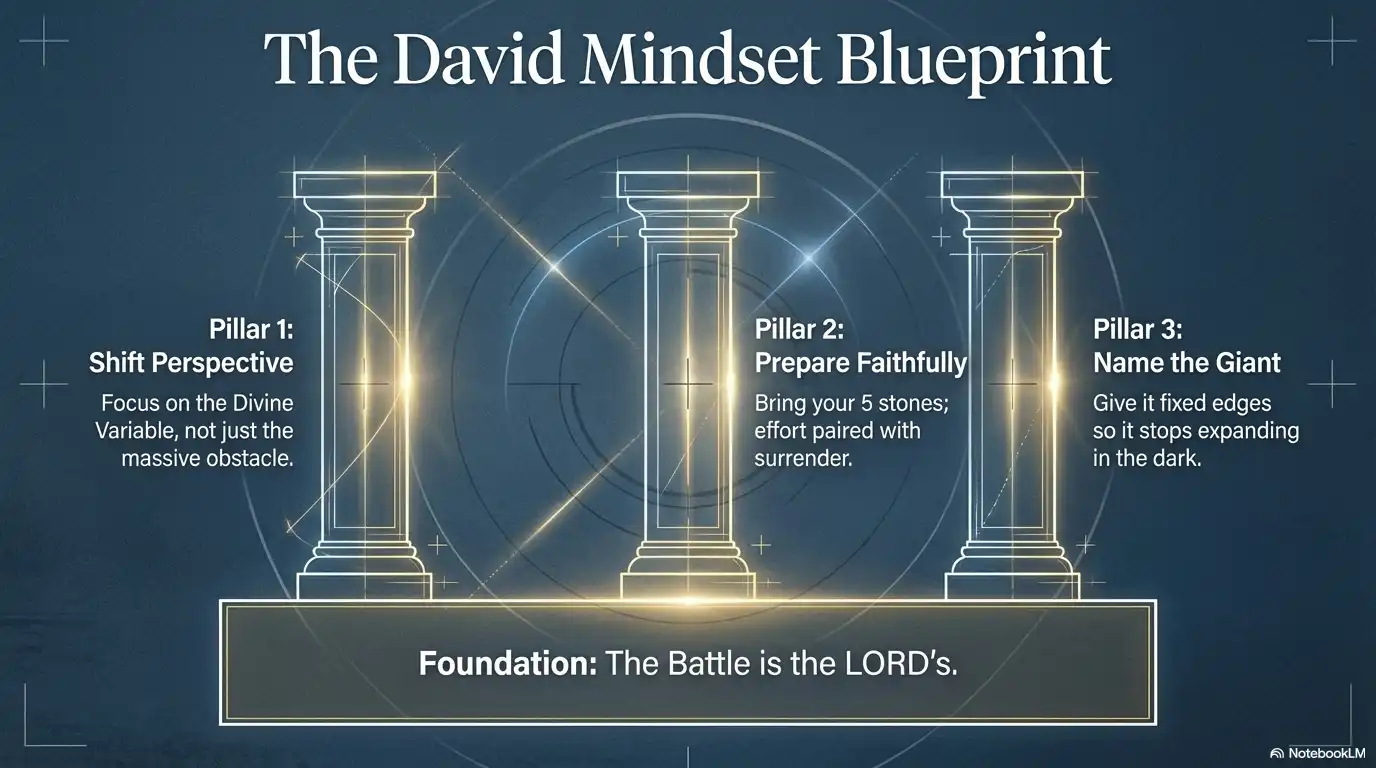
David arrives fresh. He hasn’t spent forty days staring at Goliath. His frame of reference is different — shaped by the lion he killed, the bear he killed, the God who showed up in both of those impossible moments. When he looks at the battlefield, he’s genuinely not seeing the same thing everyone else sees. He’s not in denial about Goliath’s size. He’s simply including a variable in his assessment that forty days of giant-staring had caused everyone else to forget.
That variable is everything.
2. David’s Confidence Speech Is Worth Reading as a Theological Statement, Not Just Bravado
When David speaks to Goliath before the fight, he doesn’t trash-talk. He doesn’t pump himself up or perform false courage. He makes a series of very precise theological statements. You come against me with sword and spear. I come against you in the name of the LORD. The battle is the LORD’s. He will deliver you into our hands.
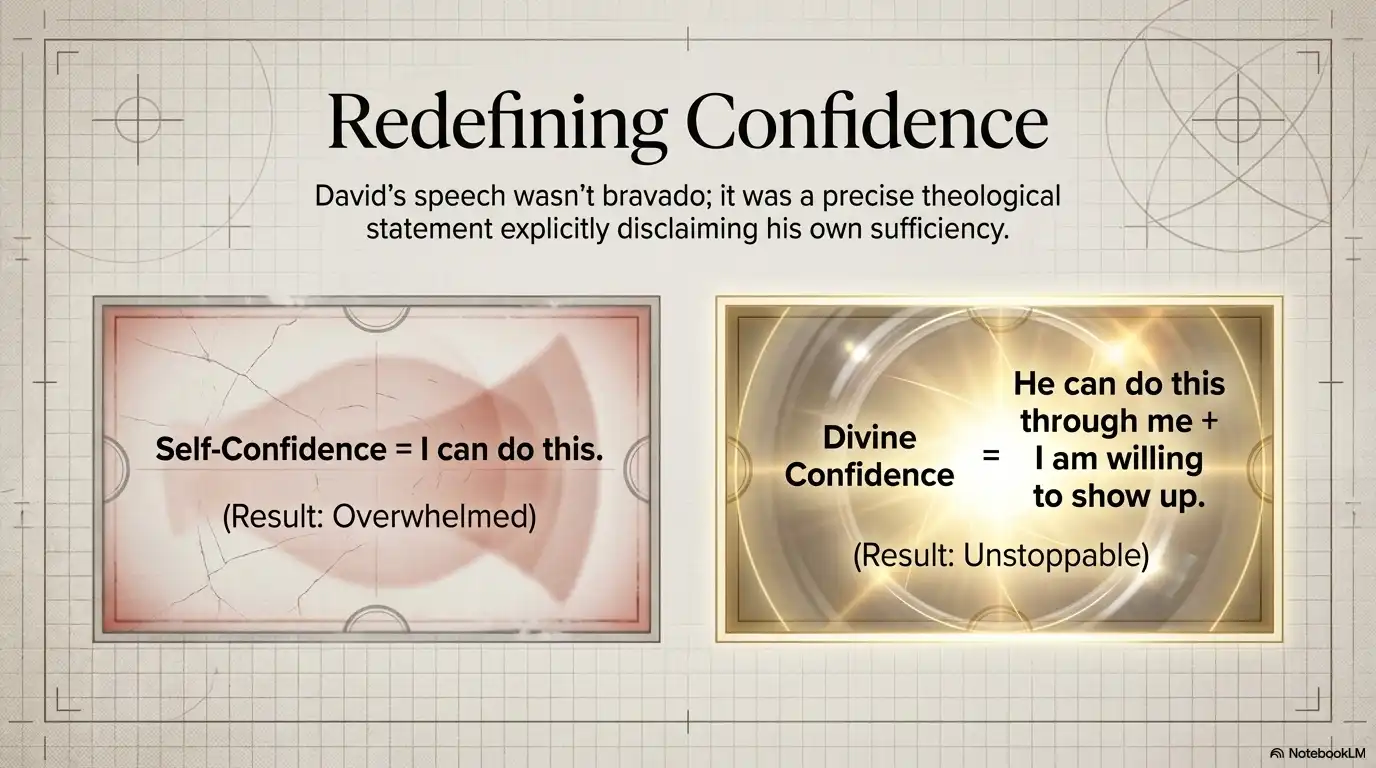
This is not the speech of someone who has talked himself into believing he can win. It’s the speech of someone who has correctly identified who is actually fighting this battle. David isn’t claiming his own sufficiency. He’s explicitly disclaiming it — not by sword or spear — and redirecting attention to the only factor that actually determines the outcome.
That kind of confidence is, genuinely, structurally different from self-confidence. Self-confidence says I can do this. David’s confidence says He can do this, and I’m the one willing to show up and let Him. Those are not the same statement. And for the giants in your life that are too big for the first statement to be true, the second one is available to you right now, exactly as you are.
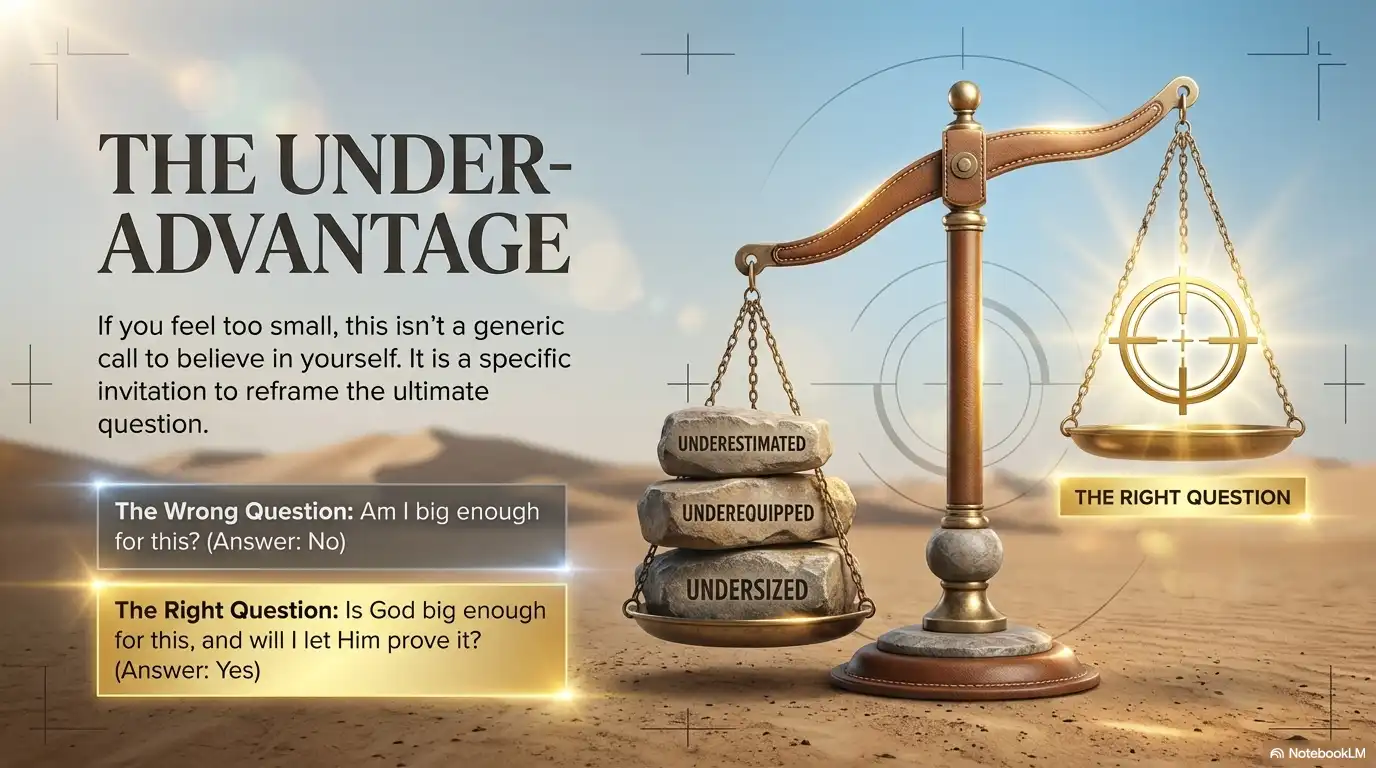
3. Undersized, Underequipped, Underestimated — Sound Familiar?
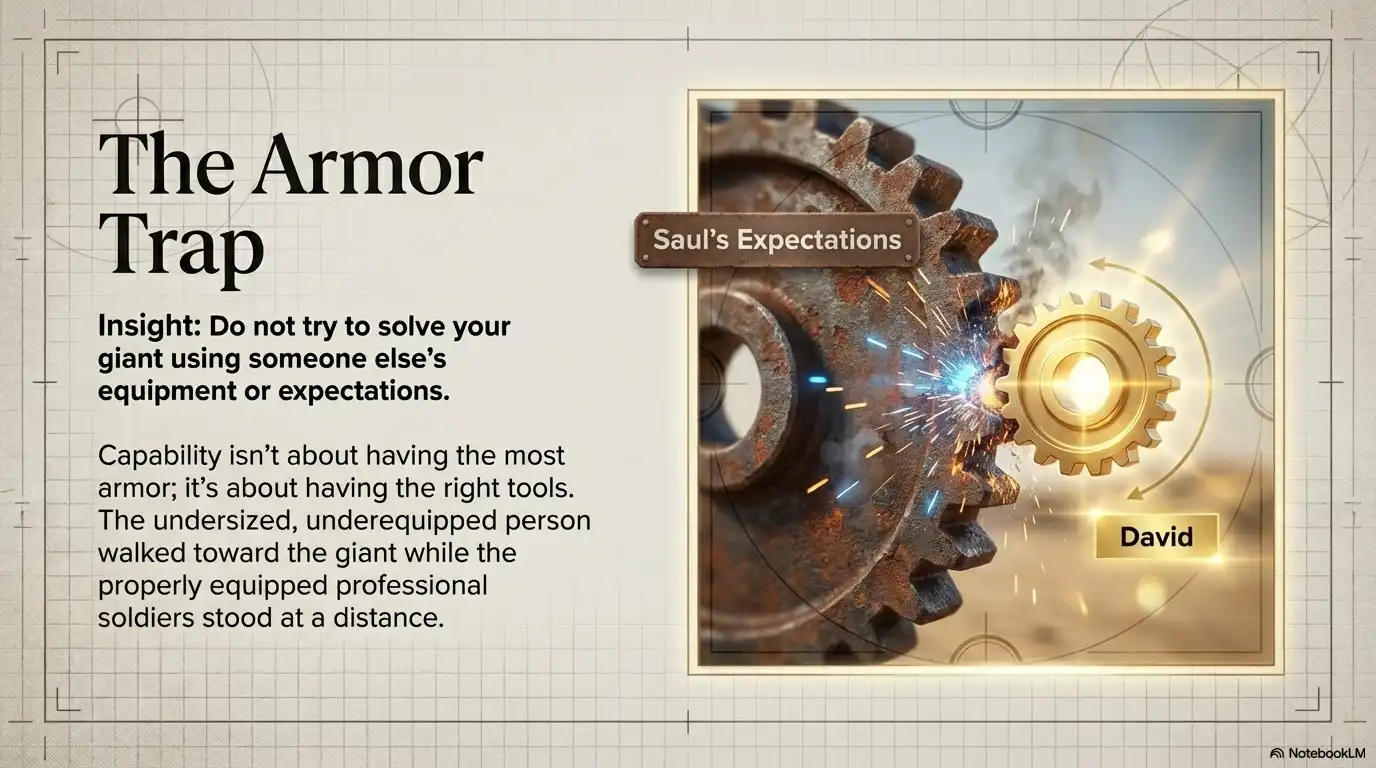
Let’s stay with David’s actual situation for a moment rather than moving past it too quickly. He was literally too small for the available armor — Saul’s equipment didn’t fit him and had to be set aside. He was carrying a sling and five smooth stones into a confrontation with a professional soldier in full battle gear. He was so thoroughly underestimated that Goliath, on seeing him approach, was personally offended that Israel had sent this particular person.
And yet. The undersized, underequipped, underestimated person was the one who walked toward the giant while the appropriately sized, properly equipped, battle-experienced soldiers stood at a distance.
The difference was not capability. The difference was the understanding of whose battle it was.
If you’ve been holding back from your own giant because you feel too small, too underequipped, too underestimated by the people around you — David’s story is not a generic encouragement to believe in yourself. It’s a specific invitation to reframe the question. The question is not am I big enough for this? The question is is God big enough for this, and am I willing to show up and let Him prove it?
The first question, answered honestly about most real giants, is usually no. The second question has a different answer entirely.
4. The Five Smooth Stones Are Worth Noticing
There’s a detail in the story that tends to get overlooked in favor of the dramatic arc — David picks up five smooth stones before he goes. Not one. Five.
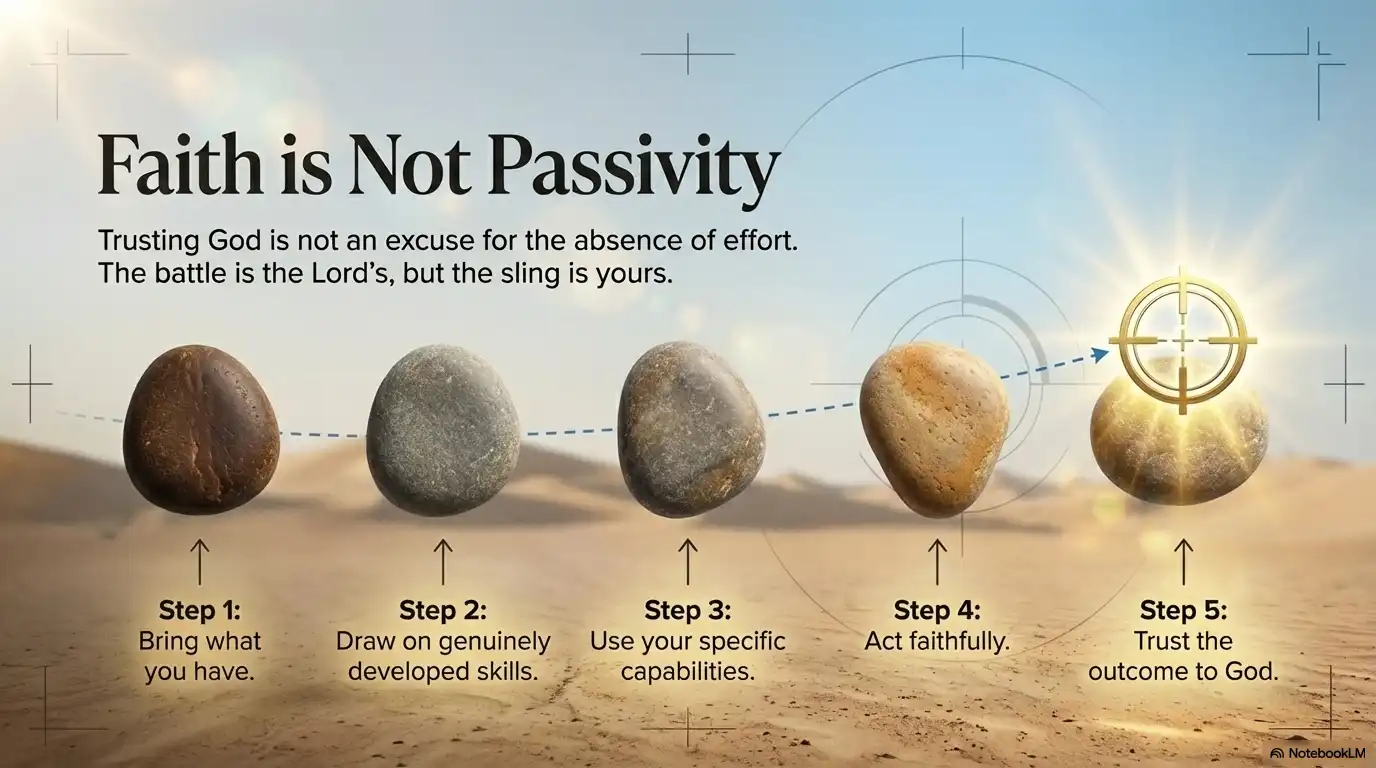
There are various interpretations of why, but the most straightforward reading is simply this: David was prepared. He wasn’t reckless. He did what was actually his to do — he selected the right tools, he drew on skills he had genuinely developed through years of shepherding, he used the specific capabilities God had given him in the specific way that made sense for his particular situation.
This is worth holding alongside the larger theological point. Trusting God to fight your giants is not the same as arriving completely unprepared and expecting supernatural compensation for the absence of effort. David brought what he had. He used it skillfully. He just didn’t make the mistake of thinking that what he brought was the determining factor.
You bring what you have. You use it faithfully. You trust God with the outcome. That’s not passivity — that’s the full picture of what David actually did on that hill.
5. Naming the Giant Is an Act of Courage, Not Defeat
Today’s practice asks you to name your Goliath specifically. And there’s something worth noticing about that instruction — because the temptation with giant-sized problems is often to keep them somewhat vague, somewhere between acknowledged and suppressed, where they’re not fully faced but also not fully surrendered.
Vague giants tend to loom largest. They expand to fill whatever space the imagination provides. They’re most powerful when they remain unnamed — shapeless threats that feel bigger precisely because their edges are undefined.
David didn’t treat Goliath as a vague threat. He walked toward him. He named the encounter directly. And in naming it specifically — this particular giant, this particular battle, this particular declaration of whose power was actually in play — something shifted in the framing of the whole situation.
Writing your giant down specifically does something similar. It takes the thing from the place in your mind where it has been quietly growing and puts it on paper where it has fixed edges, defined characteristics, an actual size that can be held up against something larger. And then writing underneath it — this battle belongs to God, not me — is not spiritual performance. It’s the most accurate thing you can say about the situation. Because it was always true. You’re just finally writing it down.
6. The Audience Was Part of the Point
Here’s something in this verse that deserves its own moment. David says all those gathered here will know — meaning the declaration he’s making is intentionally public, intentionally witnessed, intentionally designed to produce a testimony. Not just a private victory but a visible demonstration of what God can do with a willing and undersized person.
He wanted people to see. Not to see him — to see God. The whole encounter was structured, in David’s mind, as an opportunity for the watching world to update its understanding of who actually holds power in any given situation.
Your giants, surrendered to God and faced in His name, have the same potential. The people watching how you navigate the impossible thing — whether they’re literally watching or watching through the way your life unfolds over time — are receiving evidence about the nature of the God you trust. Your willingness to name the giant, refuse to be defined by it, and step toward it in faith is, quietly, a form of testimony that no comfortable season could ever produce.
Giants, it turns out, are not just threats. They’re opportunities for a demonstration that wouldn’t be possible any other way.
7. Day 13: You Are Not the Same Person Who Started This Challenge
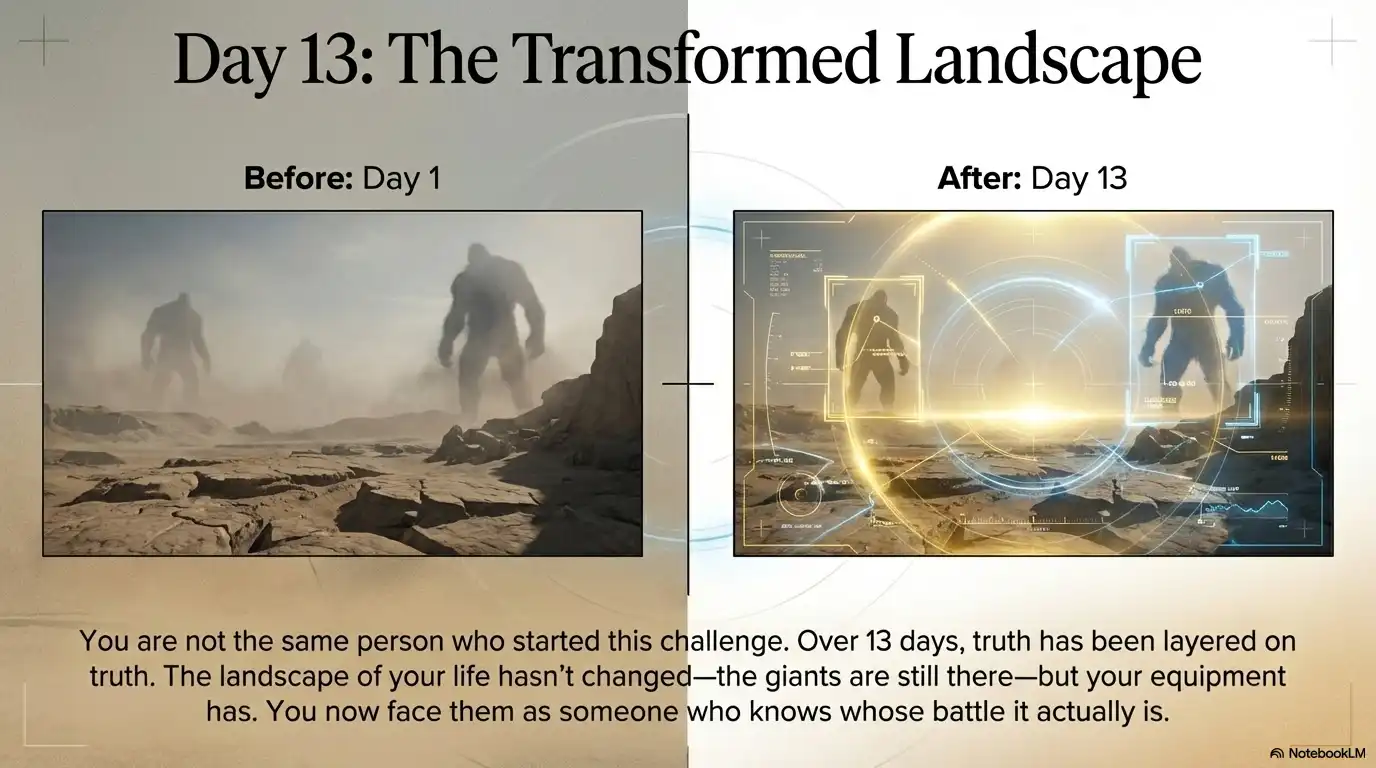
And this is worth saying clearly as you name your giant today. Thirteen days ago, you came in with certain foundations — some solid, some shakier than you may have realized. Over these thirteen days, truth has been layered on truth. You’ve looked honestly at where your confidence has been rooted, at what fear of abandonment and failure have been costing you, at what it means to be seen, claimed, held, accompanied, and multiplied by a God whose character doesn’t fluctuate.
That’s not nothing. That’s actually an entirely different set of equipment than you walked in with.
You’re still going to face giants. The challenge ending doesn’t change the landscape of your life. But you’re facing them now as someone who knows whose battle it actually is. And that — honestly, genuinely — changes everything about the encounter.
✦ FAQ: Real Questions, Real Answers
Q: My giant has been there for years. I’ve prayed about it, surrendered it, declared it — and it’s still standing. How do I keep trusting this verse when nothing has changed?
That’s one of the most honest and significant questions you can bring to this passage, and it deserves a real answer. Goliath fell on the first stone. Not every giant does — and Scripture is actually full of examples of prolonged battles that didn’t resolve on anyone’s preferred timeline. Here’s what’s worth sitting with: the promise in this verse is not a specific timeline. It’s a specific reality — that the battle belongs to God, and that His power is the determining factor, not yours. A giant still standing after years of prayer and surrender is not evidence that the promise has failed. It may be evidence that the work being done in the waiting is something that couldn’t happen any other way. That’s genuinely difficult to hold. But it’s worth distinguishing between a promise unfulfilled and a promise operating on a different timeline and through different means than you expected.
Q: My giant is an internal one — depression, anxiety, addiction, deep shame. Does “the battle is the LORD’s” still apply to things that happen inside me?
Absolutely — and in some ways, the internal giants are the most important application of this principle, because they’re also the ones most resistant to human willpower and self-management. The consistent failure of trying harder to beat internal giants is, honestly, one of the most common and most painful experiences people carry into recovery and healing work. The reframe this verse offers — that the battle is not yours to win in your own strength — is specifically liberating for the internal stuff. That doesn’t mean doing nothing: it means bringing yourself, consistently, to the Source of the power that can actually do what willpower cannot. Therapy, community, medication where needed, spiritual practice — all of these are the five smooth stones. But the outcome, ultimately, belongs to the same God who faced Goliath with David on that hill.
Q: I feel embarrassed about the size of my giant — like everyone else’s problems are bigger or more legitimate than mine. Can I still bring this?
Not only can you — you really should. The comparative diminishment of your own struggles is, actually, one of the more subtle ways the enemy of your confidence operates. It keeps you from fully surrendering what’s actually yours to surrender by convincing you it doesn’t qualify. But giants are not measured by how they compare to other people’s giants. They’re measured by how they compare to you — and a thing that feels too big for you is, by definition, the right size of giant for this verse to address. Nobody in that valley was evaluating whether Goliath was an appropriately impressive giant before deciding to be afraid of him. He was too big for them. That was enough. What’s too big for you is enough.
Q: I’m afraid that if I declare “the battle is God’s,” I’ll become passive and stop doing my part. How do I stay engaged without taking the battle back?
The five smooth stones answer this question pretty directly. Surrendering the battle to God is not surrendering your participation in it. David still ran toward Goliath. He still used his sling with skill. He still did what was his to do. The surrender is specifically of the outcome, of the weight of determining whether victory is possible, of the exhausting labor of trying to be sufficient for something you were never meant to handle in your own strength. You keep showing up. You keep using what you have. You keep taking the next faithful step. You just stop carrying the burden of whether it all comes out right — because that part was never yours to carry. Staying engaged looks like faithfulness. Taking the battle back looks like anxiety-driven control. Usually, you can feel the difference from the inside.
Q: What do I do when my giant is another person — someone whose choices are actively harming me or others I love?
This is one of the more tender and complex applications of today’s verse, and it deserves honesty rather than a tidy answer. When the giant in your life has a name and a face, the “battle belongs to God” language requires particular care. It doesn’t mean accepting harm passively or removing yourself from the responsibility to protect yourself or others when protection is necessary. What it does mean is releasing the weight of trying to change what you cannot change, control what you cannot control, and fix what isn’t yours to fix about another person’s choices. You can set limits, create safety, take necessary action — and simultaneously release the outcome of their life and their choices to God. Those two things are not mutually exclusive. Often the most faithful and loving thing you can do for someone whose choices are harming you is to stop trying to fight their battle for them and trust God with the part that was never in your hands.
Q: I want to name my giant in the forum but I’m worried it will sound dramatic or that people will judge me for what I’m struggling with. What do you think?
Here’s what tends to actually happen in spaces like this one: when one person names something with genuine honesty, it creates permission for everyone else who’s been carrying something similar in silence to finally exhale. The person who worries their struggle sounds too dramatic is almost always the person whose honesty gives the most people relief. And the person who worries they’ll be judged is usually projecting the judgment they’ve already been issuing toward themselves — which the community, more often than not, simply doesn’t share. But also — if naming it publicly doesn’t feel right today, the practice between you and God is entirely sufficient. Some of the most significant surrenders happen in complete privacy. The forum is an option, not a requirement. What matters is the naming and the releasing, wherever and with whoever that happens.
Q: Tomorrow is Day 14 — the last day. I’m already feeling a mix of accomplishment and anxiety about what comes after. Is that normal?
So normal — and honestly, it’s a healthy sign. The accomplishment piece is real: thirteen days of showing up, being honest, and doing genuinely hard interior work is something worth acknowledging without immediately minimizing it. The anxiety about what comes after is real too, and it’s worth examining briefly. What specifically feels uncertain about the challenge ending? Is it the loss of structure? The fear that the shifts won’t stick? The uncertainty about how to continue without daily prompts? Whatever it is, naming it specifically — which you’ve gotten pretty good at over the last thirteen days — tends to make it more manageable than keeping it vague. And tomorrow’s final day will speak directly into the question of how to carry what’s been built here forward into the life that comes after. You’re not about to lose what you’ve gained. You’re about to start living it more freely. See you at the finish line.
Thirteen days. One more. Whatever giant is in front of you right now — you’re not facing it as the person who started Day 1. You’ve changed. More than you probably know. Tomorrow we finish this together.