

The Confidence to Fall
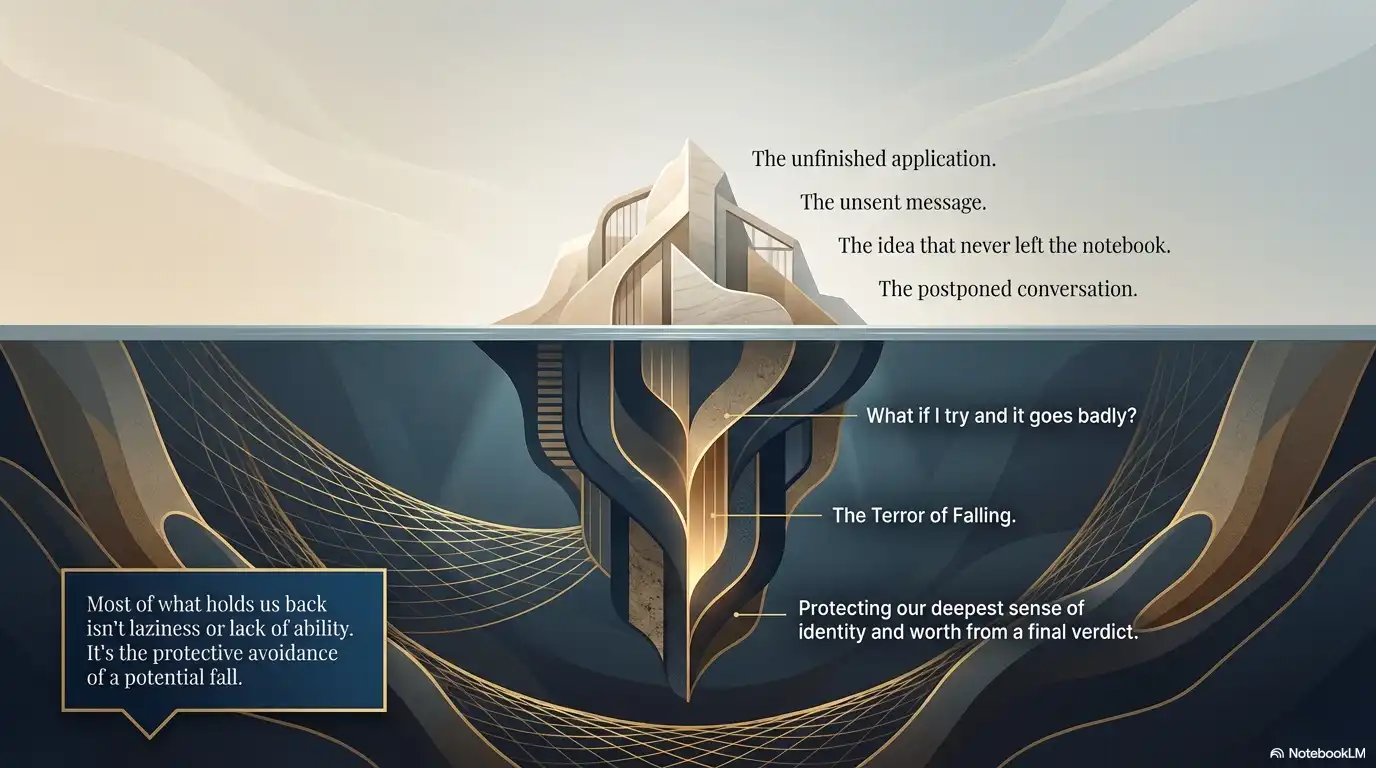
Let’s just name something that doesn’t get talked about enough in conversations about confidence: most of what holds us back isn’t laziness or lack of ability. It’s the terror of falling.
The unfinished application. The unsent message. The idea that never left the notebook. The conversation that keeps getting postponed. Almost always, underneath the surface of those stuck places, there’s a version of the same fear — what if I try and it goes badly? What if I fall?
Deuteronomy 33:27 doesn’t talk you out of that fear by promising you won’t fall. It does something far more interesting than that.
1. This Is Moses’ Final Word to God’s People — and He Chose This Image
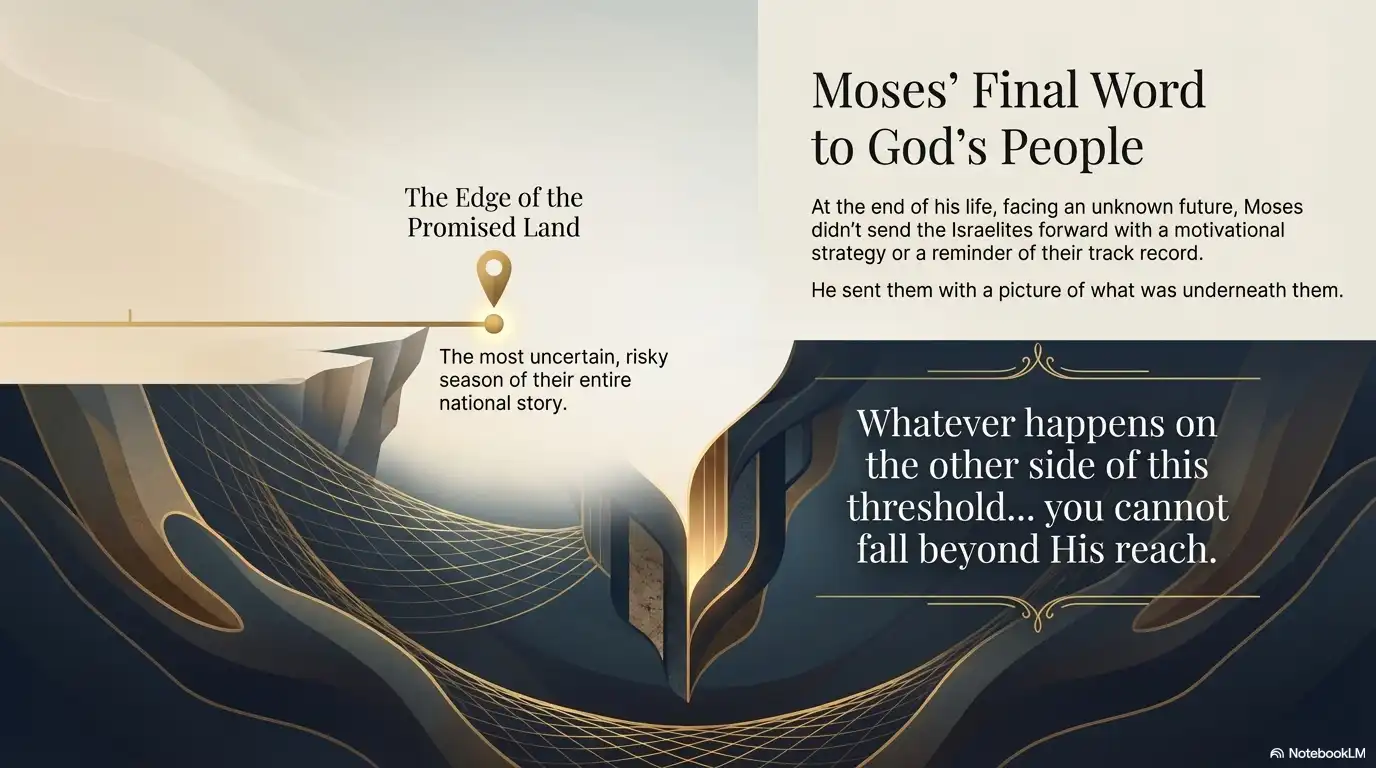
Context matters here, and honestly, this particular context is worth sitting with. Deuteronomy 33 is Moses’ final blessing over the Israelites before his death. He’s at the end of his life, they’re at the edge of the Promised Land, and he has one last thing to say over them before they step into the most uncertain, risky season of their entire national story.
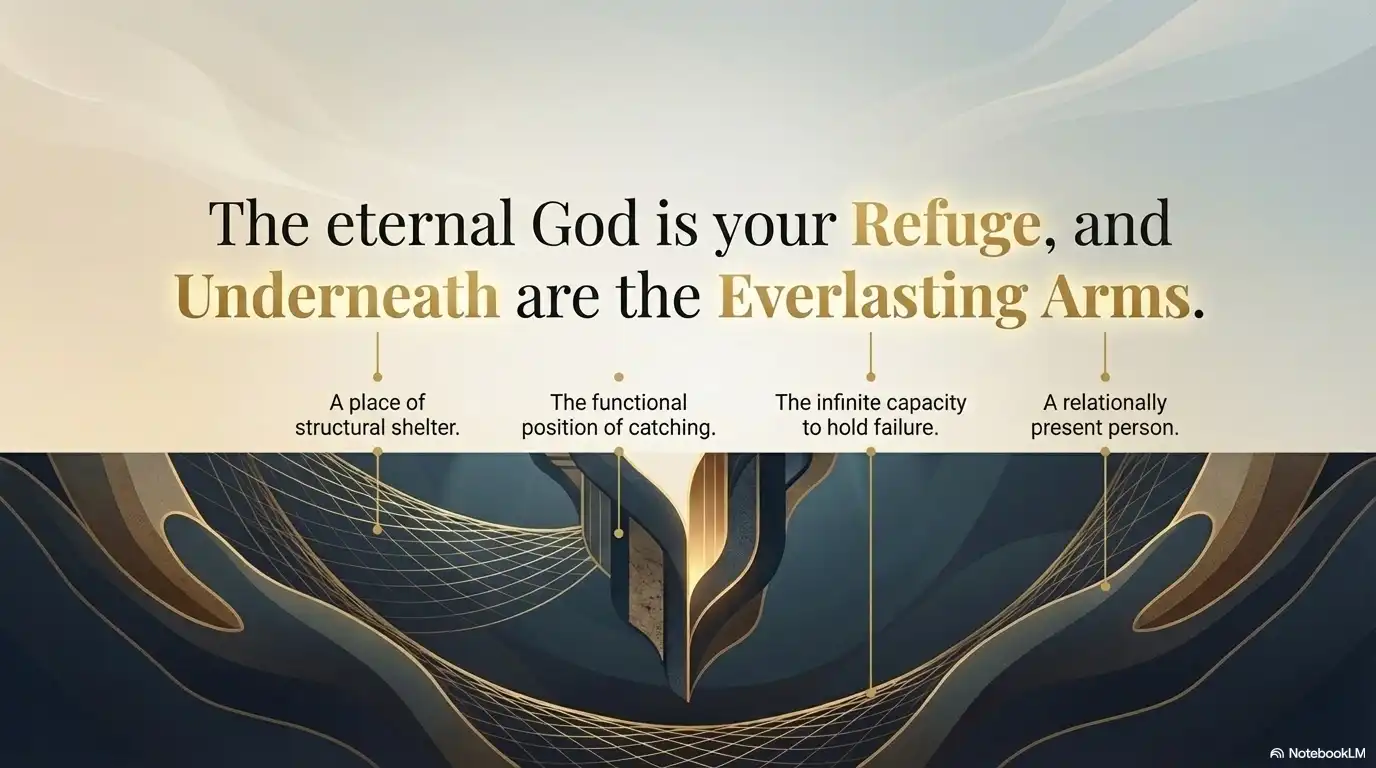
And what does he choose? The eternal God is your refuge. Underneath are the everlasting arms.
He didn’t send them into that unknown future with a motivational strategy or a reminder of their track record. He sent them with a picture of what’s underneath them. As if to say: whatever happens on the other side of this threshold — and some of it will be hard — you cannot fall beyond His reach.
That was the word a leader who’d seen everything chose to leave with the people he loved. It seems worth receiving.
2. The Word “Underneath” Is Doing Extraordinary Work
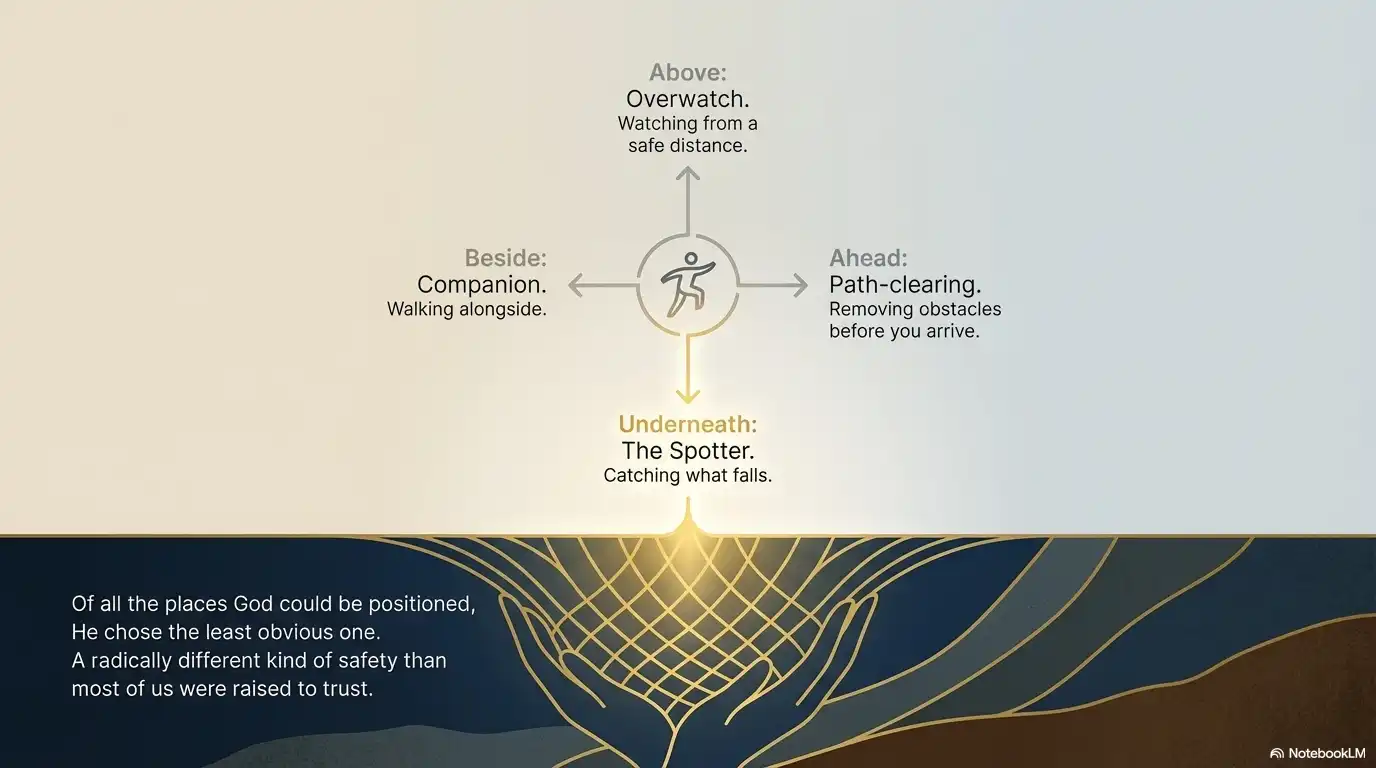
Of all the places God could be positioned in this verse, He chose the least obvious one. Not ahead of you, clearing the path. Not beside you, walking alongside. Not above you, watching from a safe distance.
Underneath.
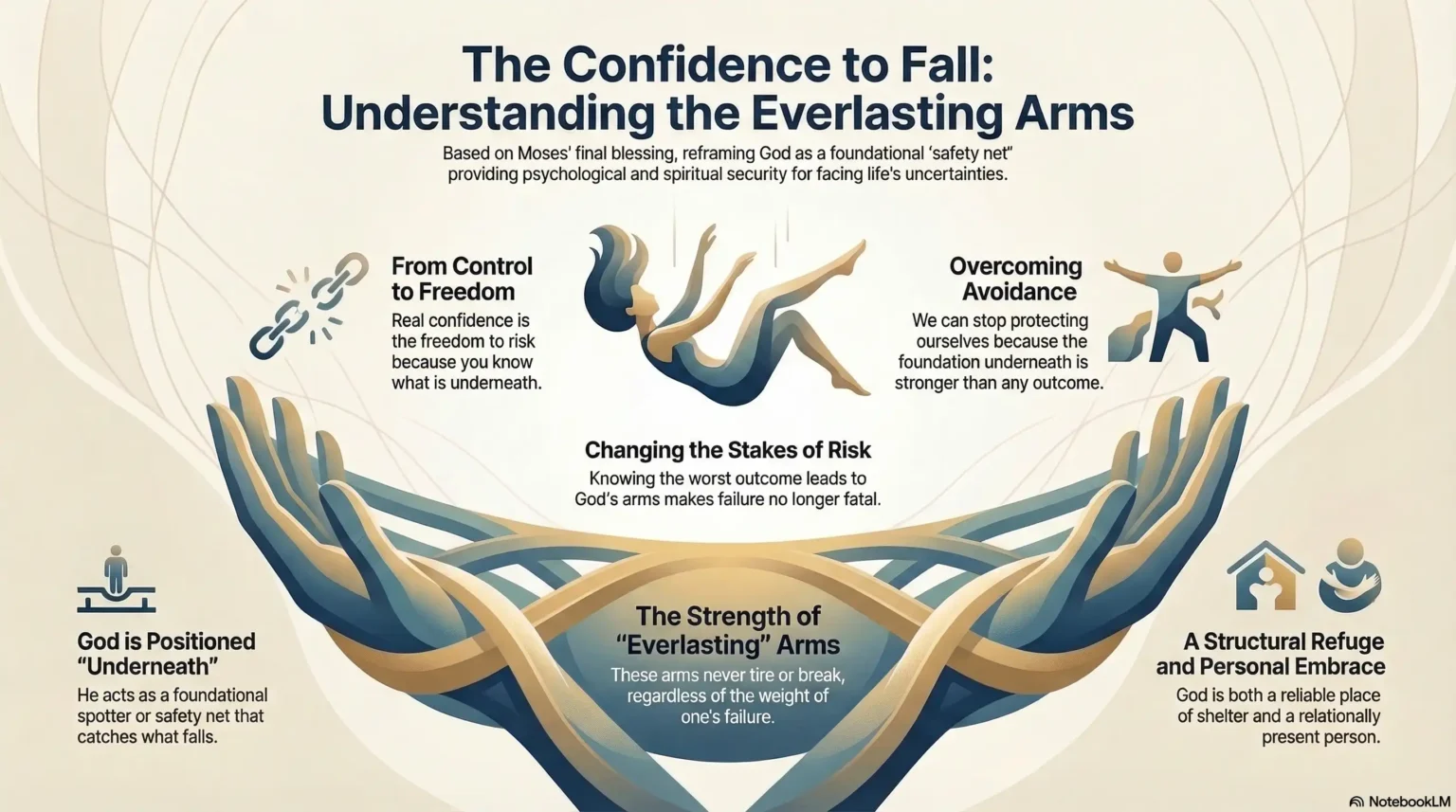
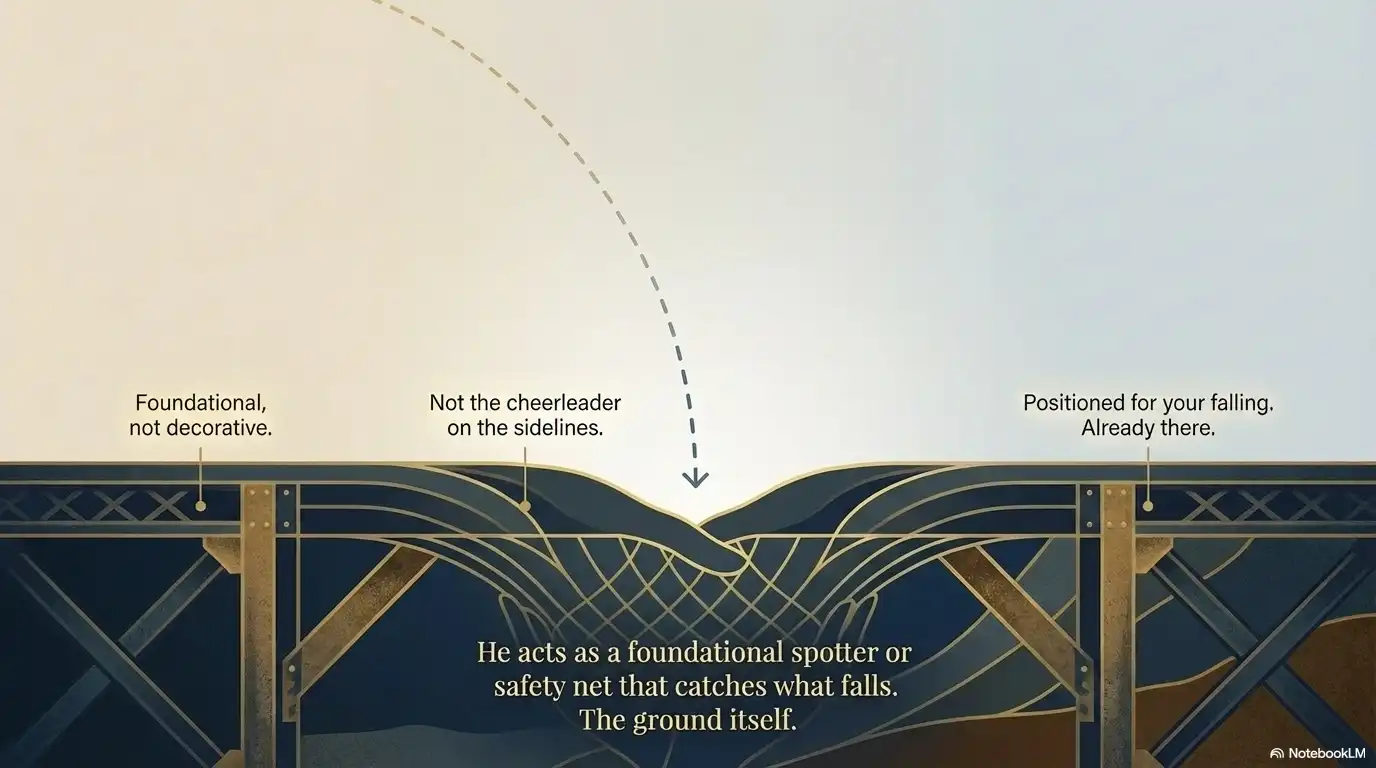
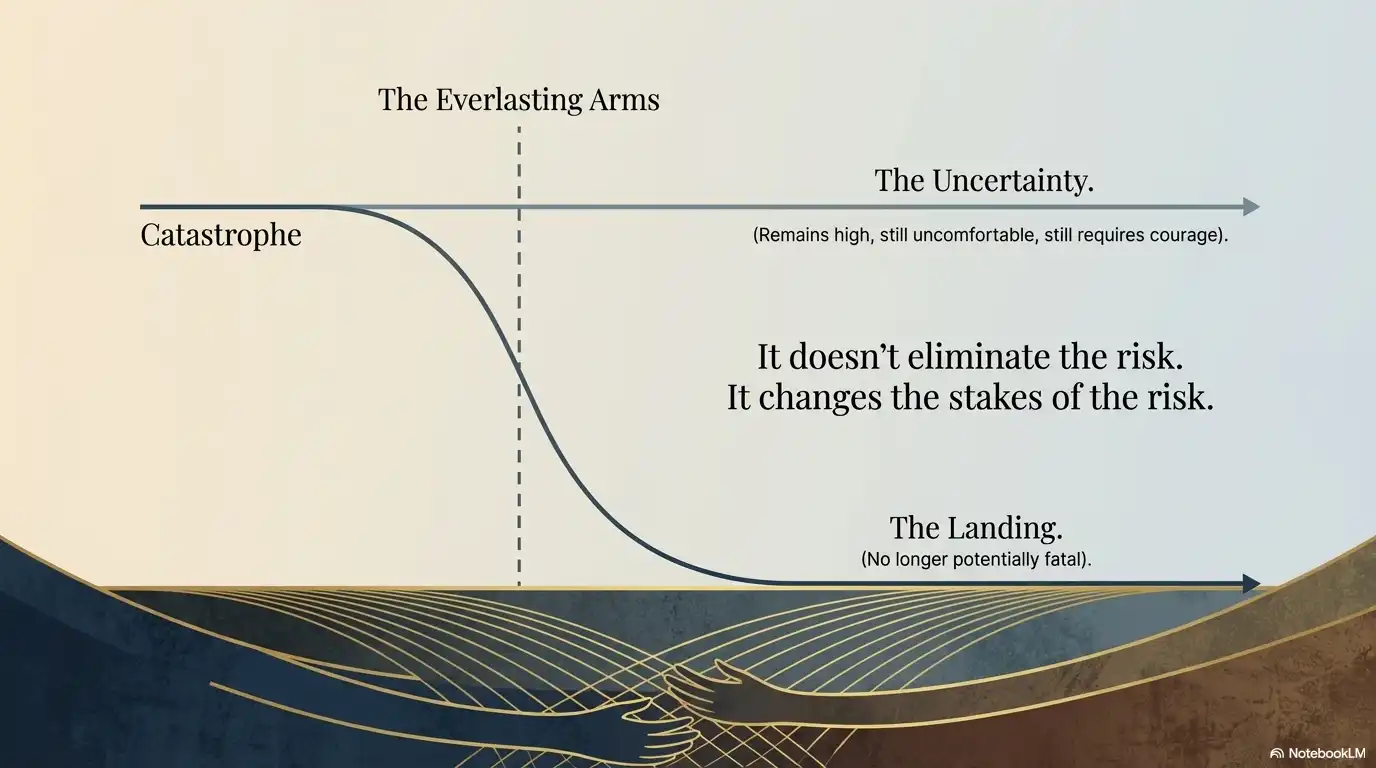
Think about what that actually means structurally. Underneath is the place that catches what falls. It’s foundational — not decorative. It’s not the place of the cheerleader on the sidelines. It’s the place of the spotter, the safety net, the ground itself. God isn’t just nearby when you risk and fall. He is, so to speak, positioned for your falling. Already there. Already underneath.
That is a radically different kind of safety than most of us were raised to trust.
3. “Everlasting” Is the Qualifier That Changes Everything
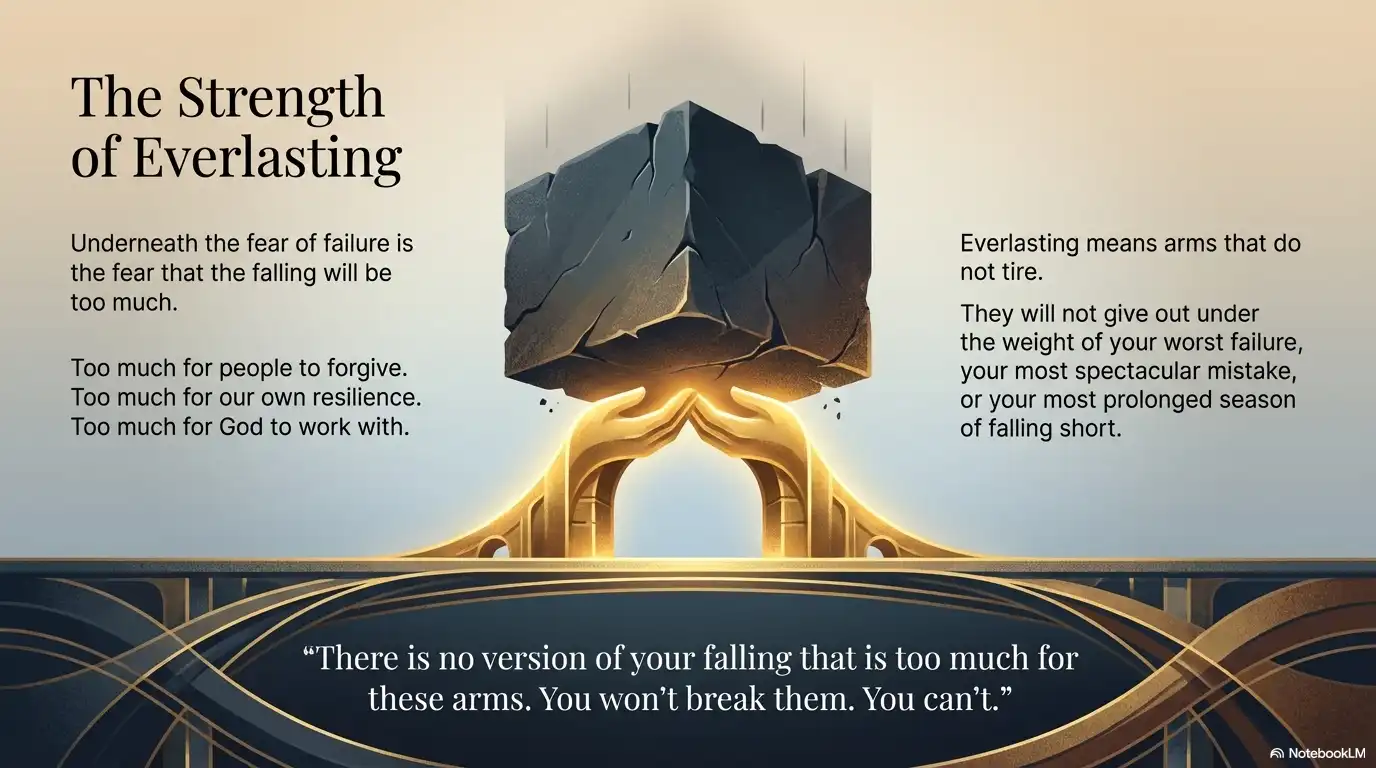
It would be meaningful enough if the verse simply said “arms are underneath you.” But it says everlasting arms. Arms that do not tire. Arms that do not give out under the weight of your worst failure, your most spectacular mistake, your most prolonged season of falling short.
So much of our fear of failure is really, underneath it — pun intended — a fear that the falling will be too much. Too much for people to forgive. Too much for our own resilience to handle. Too much for God to work with. The word everlasting directly addresses that fear. There is no version of your falling that is too much for these arms. They were described as everlasting precisely because the person describing them knew humans would need to test that claim at some point.
You won’t break them. You can’t.
4. Biblical Confidence Is Not the Absence of Risk — It’s the Freedom to Risk
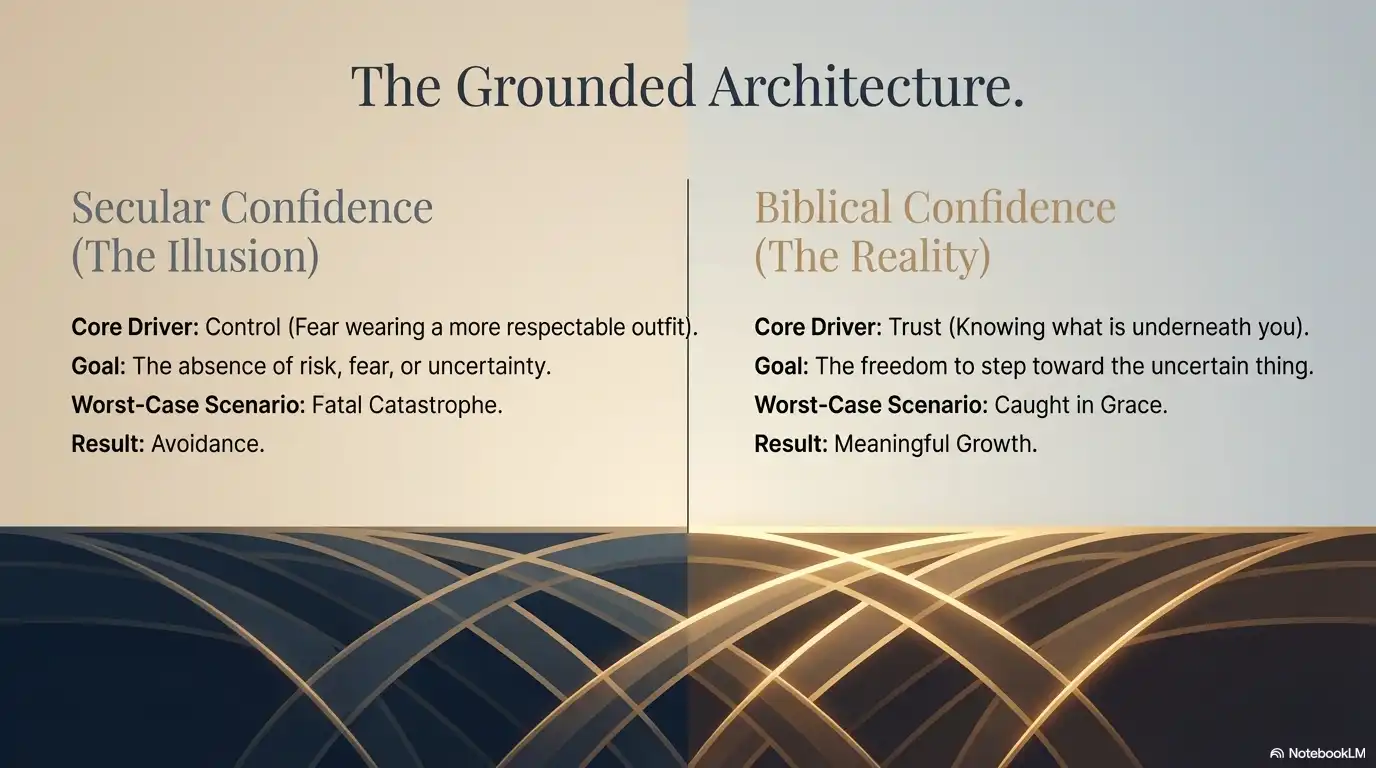
This is maybe the most practically significant reframe in today’s content, and it’s worth really letting it land. The goal of God-rooted confidence isn’t to reach a place where nothing feels risky, scary, or uncertain. That’s not confidence — that’s control. And control, honestly, is just fear wearing a more respectable outfit.
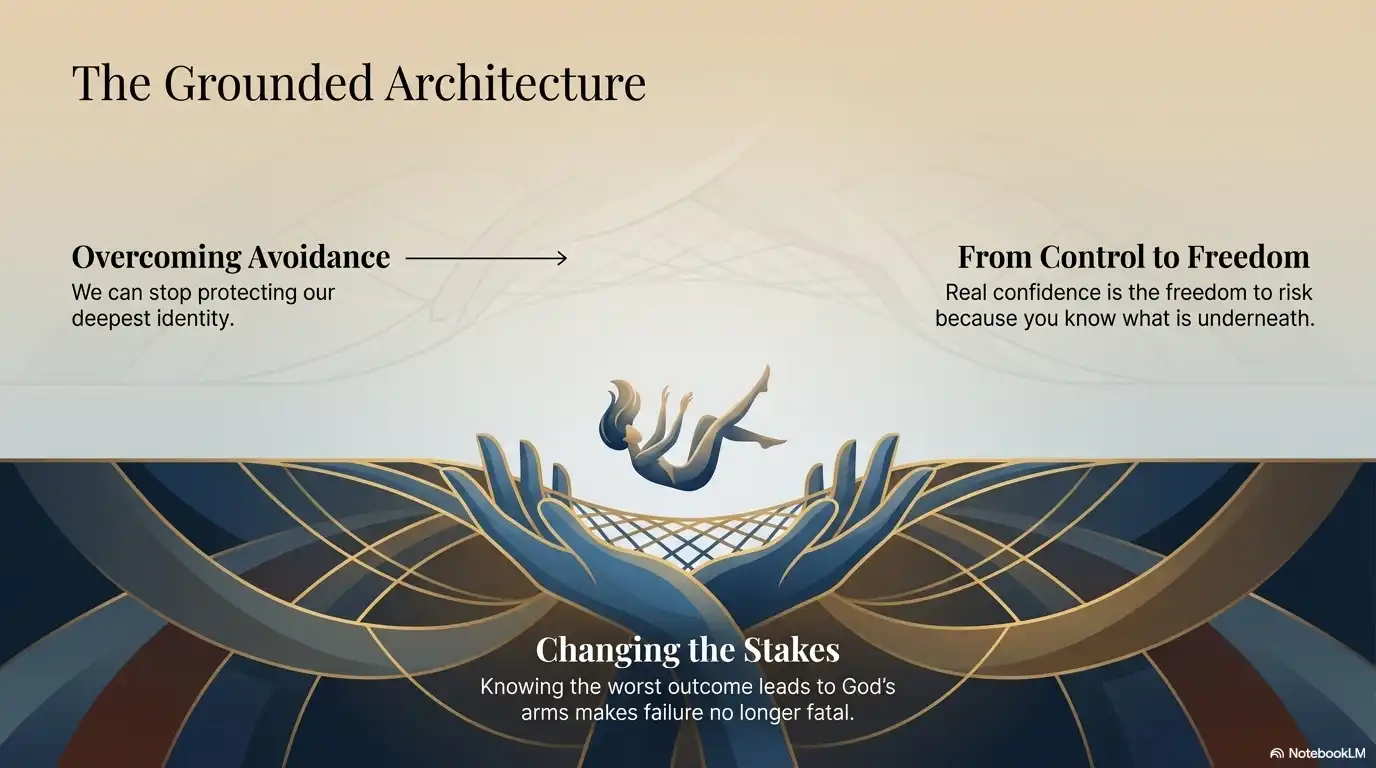
Real confidence — the biblical kind — is the freedom to step toward the uncertain thing because you know what’s underneath you. It doesn’t eliminate the risk. It changes the stakes of the risk. When you know the worst outcome — failure — lands you in the arms of God rather than in catastrophe, risk becomes a different kind of invitation. Still uncomfortable, maybe. Still requiring courage. But no longer potentially fatal.
That’s the shift this verse is trying to produce in you.
5. The Things We Avoid Are Often the Places We Grow Most
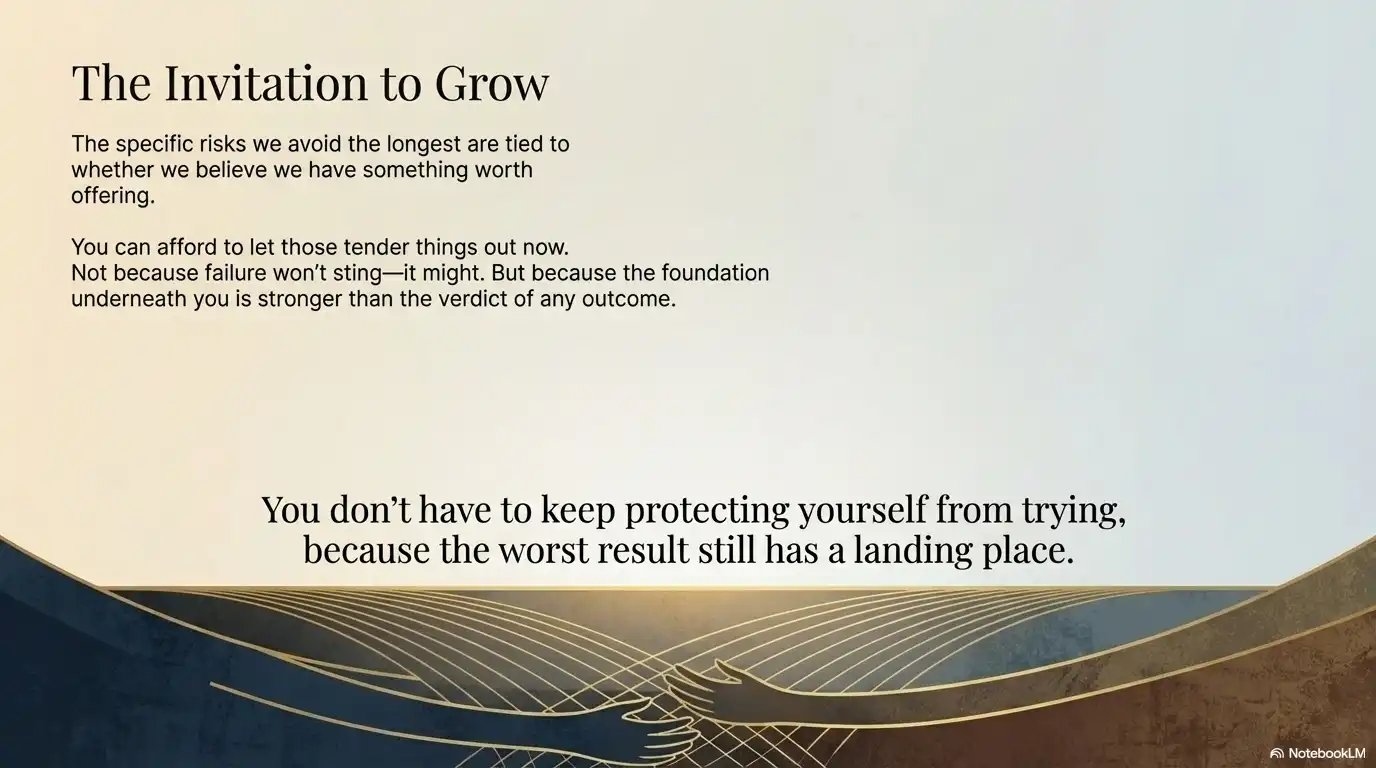
There’s a pattern worth noticing: the specific risks we avoid the longest tend to be the ones most connected to our deepest sense of identity and worth. The job we haven’t applied for isn’t just a job — it’s tied to how we see our capability. The conversation we keep postponing isn’t just a conversation — it’s tied to whether we believe our needs matter. The creative project gathering dust isn’t just a project — it’s tied to whether we believe we have something worth offering.
Which means the avoidance isn’t random. It’s protective. We’re keeping these tender things safe from potential verdict.
And what this verse gently says is: you can afford to let them out now. Not because failure won’t sting — it might. But because the foundation underneath you is stronger than the verdict of any outcome. You don’t have to keep protecting yourself so vigorously from the results of trying, because the worst result still has a landing place.
6. “Refuge” and “Arms” — Two Images, One Truth
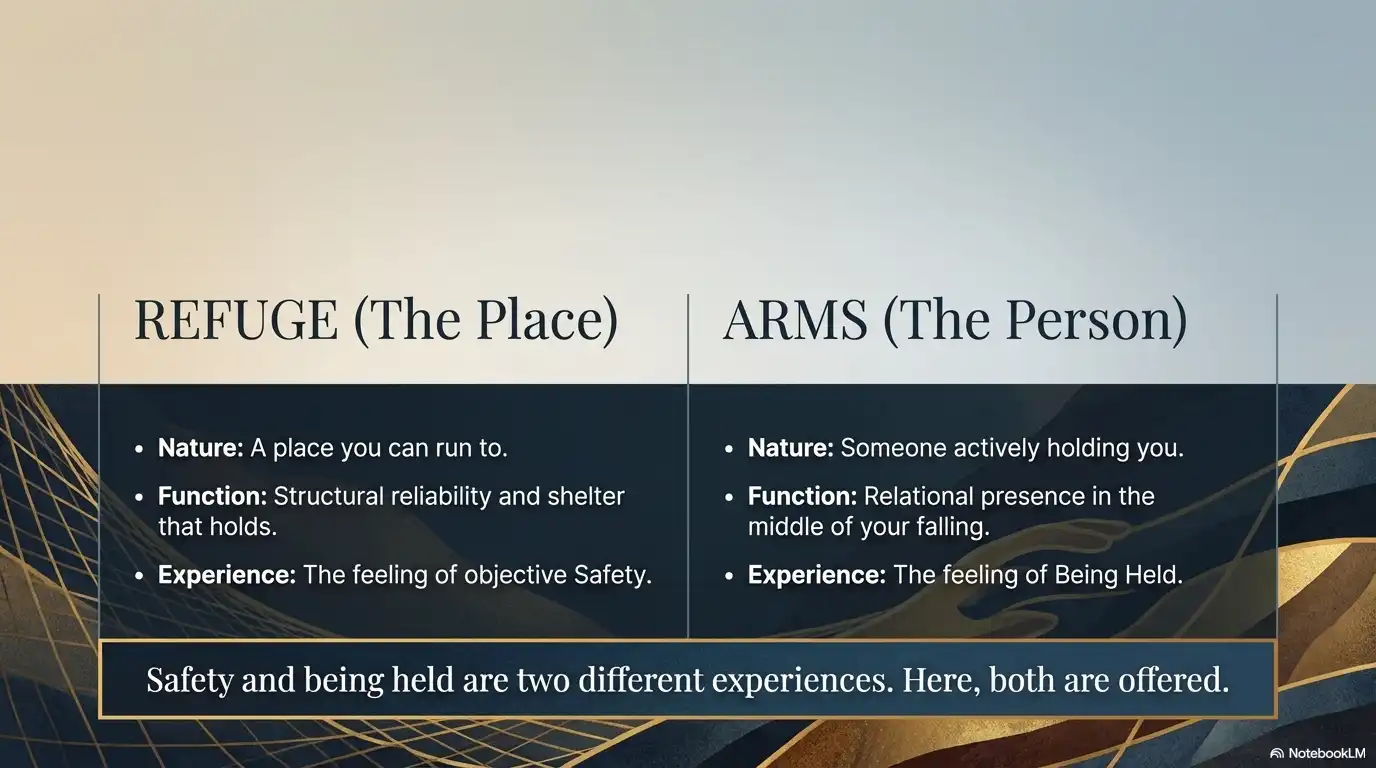
Notice that the verse gives us two distinct images in quick succession. First, God as refuge — a place you can run to, a shelter that holds. Then, God’s arms underneath — something even more intimate, more personal, more physical in its imagery.
Together, they paint a picture of a God who is not just structurally reliable but relationally present in your falling. A refuge is a place. Arms belong to a person. Both are offered here. You’re not just falling onto solid ground — you’re falling into Someone who is actively holding you. That distinction matters more than it might seem at first glance. Safety and being held are two different experiences, and God, apparently, is offering both.
✦ FAQ: Real Questions, Real Answers
Q: I’ve taken risks before and fallen — and the landing was brutal. It didn’t feel like God’s arms at all. How do I reconcile that?
That’s a completely fair thing to bring, and it deserves a real answer rather than a tidy one. Hard landings are real. Pain after failure is real. The fact that God’s arms are underneath you doesn’t mean the fall itself won’t hurt — it means it won’t destroy you. Looking back at your hardest falls, even the brutal ones: are you still here? Are there things that came out of that season — unexpected strength, unexpected clarity, unexpected rerouting — that you couldn’t have anticipated in the middle of the crash? That’s often where the everlasting arms become visible in hindsight. They were there. They just didn’t feel like cushioning. Sometimes they feel more like being held together than being kept from breaking. Both are real. Both are grace.
Q: What’s the difference between biblical risk-taking and just being reckless?
Really good distinction to draw, and yeah, it’s worth being clear on. Recklessness is risk without regard for wisdom, others, or consequences — essentially, using “God will catch me” as a blank check for impulsive decisions. Biblical risk-taking is different. It’s stepping toward something that genuinely requires courage and faith, having done the honest work of discernment, but refusing to let fear of failure be the deciding factor. The question to ask isn’t “could this go wrong?” — almost anything could. The question is “am I avoiding this because it’s genuinely unwise, or because I’m afraid of what falling would mean about me?” That second reason is the one this verse is specifically addressing.
Q: I wrote down my fear of failing at the thing I’ve been avoiding. It felt worse, not better. Is that normal?
Very normal — and honestly, it’s a sign the exercise is working. When we keep fears vague and unexamined, they tend to operate at full power just below the surface. Getting them onto paper makes them specific, which can initially feel more intense because now they’re visible. But visible fears can be engaged with, challenged, and held up against truth. Vague fears just quietly run the show. The discomfort of seeing it clearly is actually the first step toward it losing its grip. Stay with it.
Q: I’m afraid to fail not just for my sake, but because I don’t want to let other people down. Does this verse speak to that?
It does, in a quieter way — and this particular flavor of fear is worth naming because it’s one of the most common and least-discussed drivers of avoidance. Fear of disappointing others often feels more noble than plain fear of failure, but underneath it, it’s frequently the same root: an outsourced sense of worth. If your value depends on never letting people down, then failure becomes genuinely threatening to your identity, not just uncomfortable. What this verse speaks into is the foundation question: whose regard ultimately defines me? When that answer shifts — even partially — toward God, the weight of potentially disappointing others becomes more manageable. Not unimportant. Just no longer existentially threatening.
Q: What if I take the risk, fall, and then make the same mistake again? Is God’s patience really limitless?
The word everlasting in this verse is not just about strength — it’s about duration. It doesn’t run out. It doesn’t have a counter attached to it that reads “three more catches and then you’re on your own.” Some of the most formative biblical figures — Abraham, Moses, David, Peter — fell in the same directions more than once. And in every case, the arms were still there. This doesn’t mean repeated failures don’t have real consequences, or that growth isn’t expected over time. But the availability of God’s holding presence is not on a timer. You haven’t used yours up.
Q: The thing I’m avoiding feels genuinely too big. Like, not just scary but actually beyond what I’m capable of. What then?
Then it’s probably exactly the right size. So much of what God invites us toward is, functionally, beyond our current capacity — because the invitation is partly about discovering what becomes possible when you’re not doing it alone. The Israelites standing at the edge of the Promised Land that Moses was blessing them toward? It was, by all appearances, beyond them. The verse wasn’t given to people who had it handled. It was given to people facing something that required more than they had. The everlasting arms aren’t for the things you can manage on your own. They’re for the things that actually require you to trust them.
Q: I’ve been sitting with the fear I wrote down, and I genuinely don’t know if I’m ready to take the risk. Do I have to?
No — and it’s worth saying that clearly. This isn’t a challenge designed to push you into action before you’re ready. Today’s practice isn’t “go take the risk right now.” It’s “identify the fear, hold it up against the truth, and let that truth start doing its slow work.” Readiness tends to come through the process of returning to truth repeatedly, not before it. You don’t have to leap today. You just have to be honest today. The leap, if and when it comes, will have a different quality than anything forced or premature. Trust the timing of your own readiness while staying curious about where fear — rather than wisdom — is doing the driving.
Four days in, and something is quietly shifting in you. Even if you can’t feel it yet — it’s happening. See you tomorrow.