


What This Verse Really Means for Your Confidence
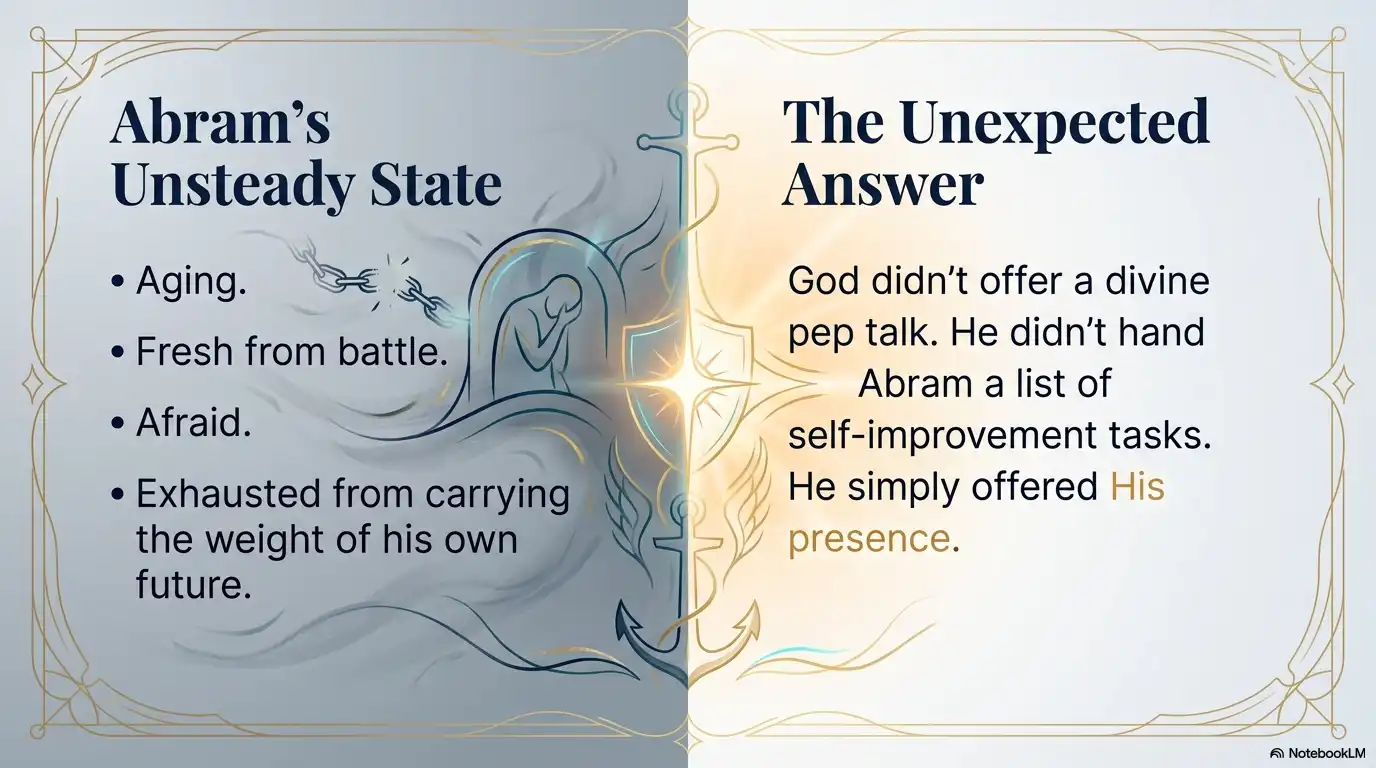
So here’s something worth sitting with for a moment. When God spoke these words to Abram, Abram wasn’t exactly in a triumphant season. He had just come out of battle, he was aging, and honestly — he was afraid. He had every human reason to feel unsteady.
And yet, God didn’t open with a pep talk. He didn’t hand Abram a list of things to work on. He simply said: “I am your shield.”
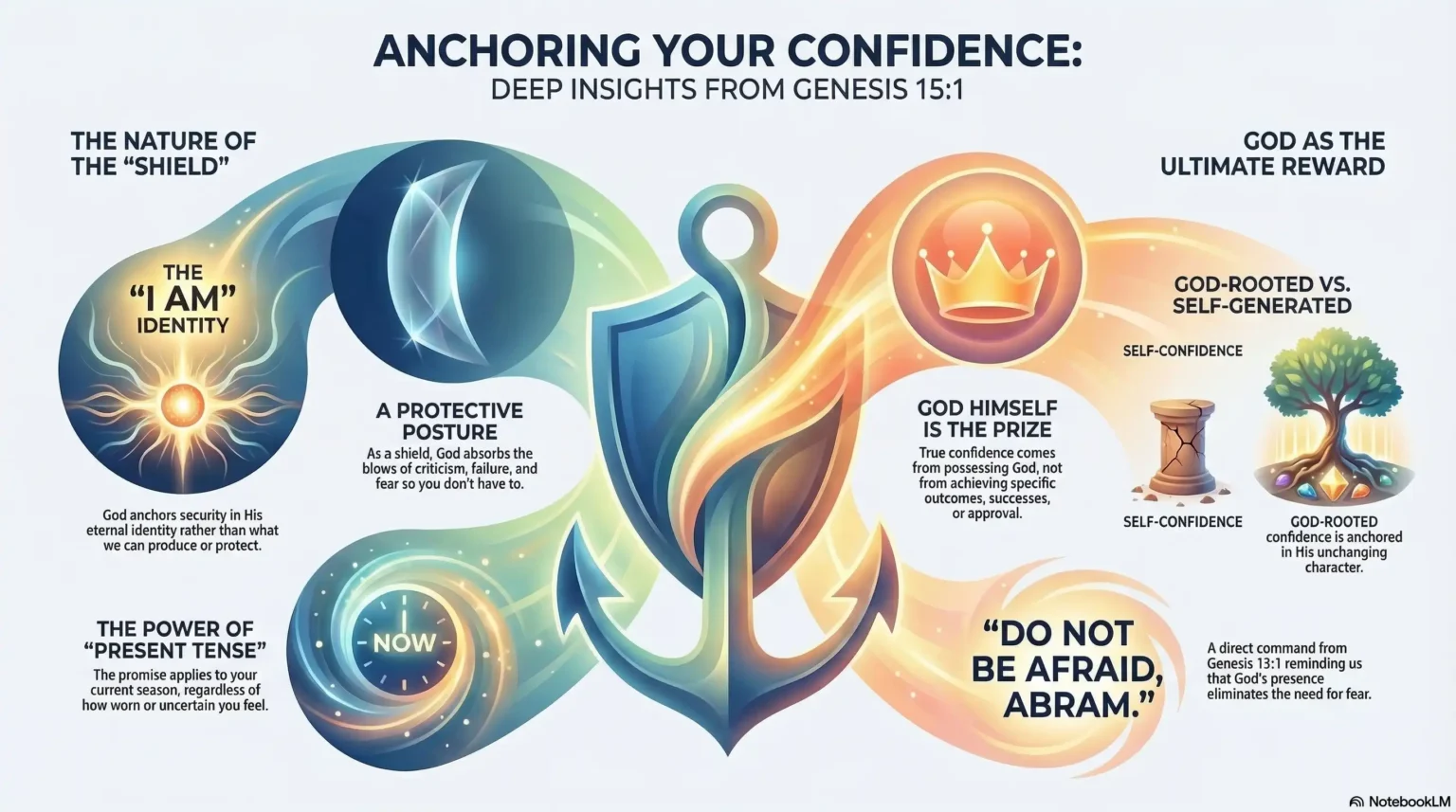
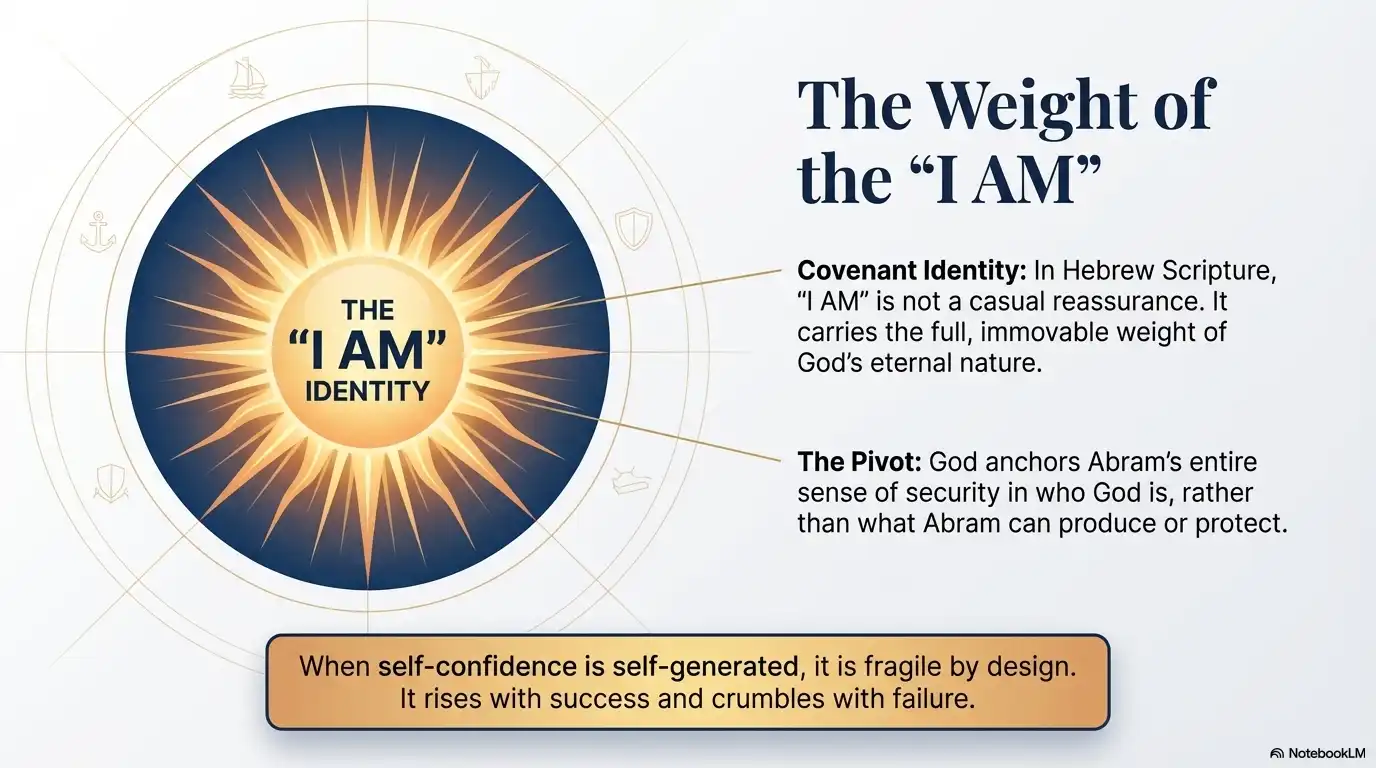
That phrase — I am — is doing a lot of heavy lifting. In Hebrew, it carries the weight of God’s covenant identity. The same “I AM” energy that shows up throughout Scripture when God is making a deeply personal declaration. This wasn’t casual reassurance. This was God anchoring Abram’s entire sense of security in who God is, not in what Abram could produce or protect.
That changes everything for us today.
1. Your Confidence Was Never Supposed to Come From You
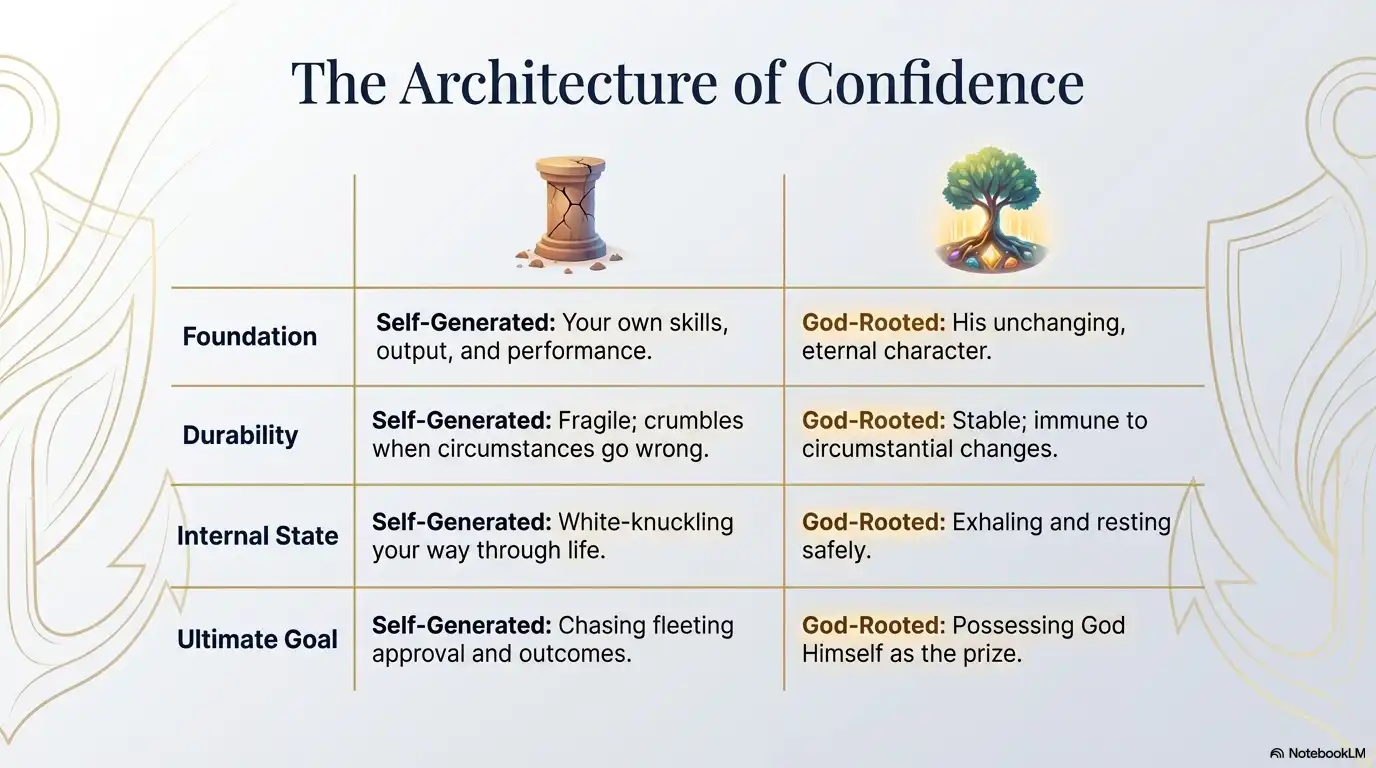
This might feel a little counterintuitive at first, especially in a culture that tells you to believe in yourself as the starting and ending point. And look — there’s nothing wrong with developing skills, working hard, and growing. But when self-confidence is only self-generated, it’s fragile by design. It rises when things go well and crumbles when they don’t.
God-rooted confidence works differently. It’s not dependent on your performance on any given day. It’s anchored in a character that never changes — His. When you internalize that He is your shield, you stop white-knuckling your way through life trying to be your own protector. You can actually exhale.
2. The Word “Shield” Is More Layered Than It Looks
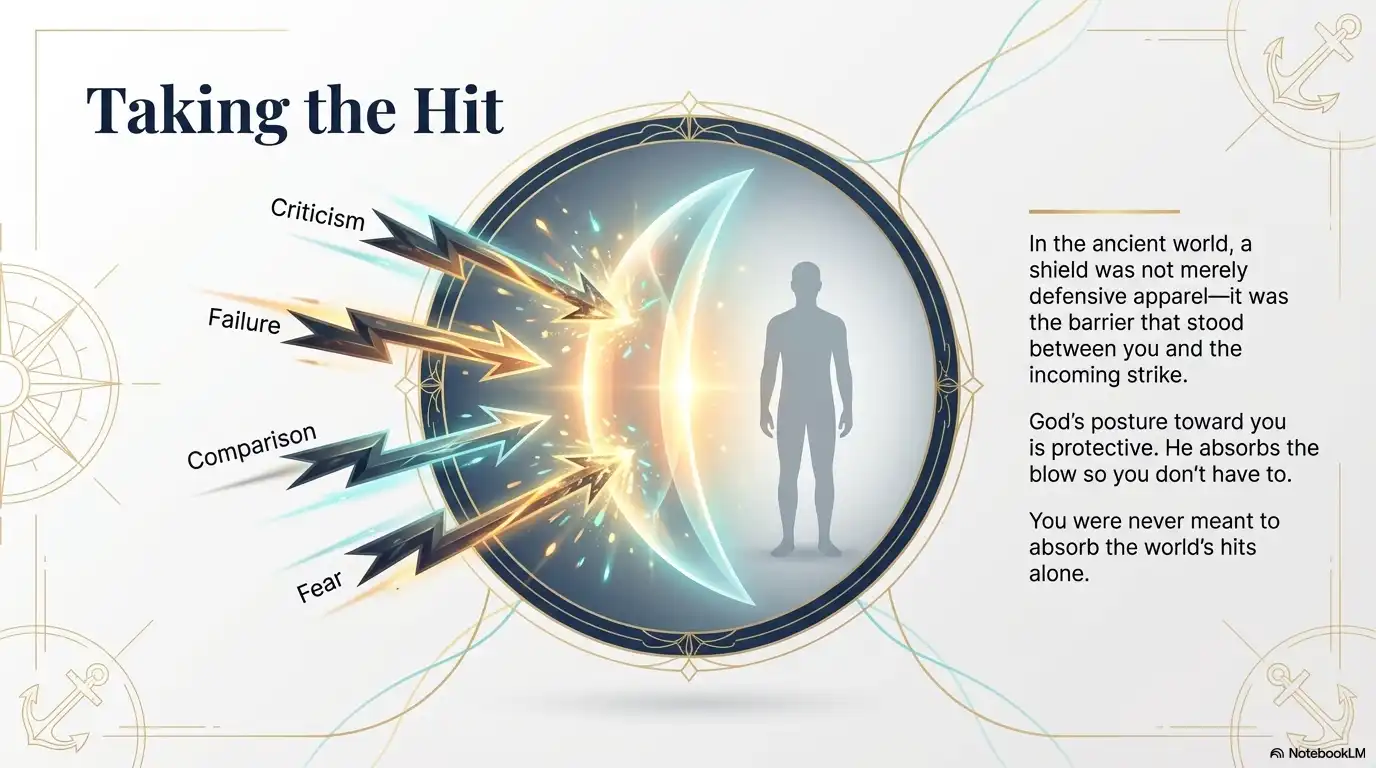
In the ancient world, a shield wasn’t just defensive gear — it was the thing that stood between you and what was coming at you. It absorbed the blow so you didn’t have to. When God says He is your shield, He’s saying: I’m the one taking the hit. You stand behind Me.
Think about what that means for the things that most commonly steal your confidence — criticism, failure, comparison, fear of the unknown. You were never meant to absorb all of that alone. God’s posture toward you is protective. He is positioned for you.
3. Present Tense Is Everything
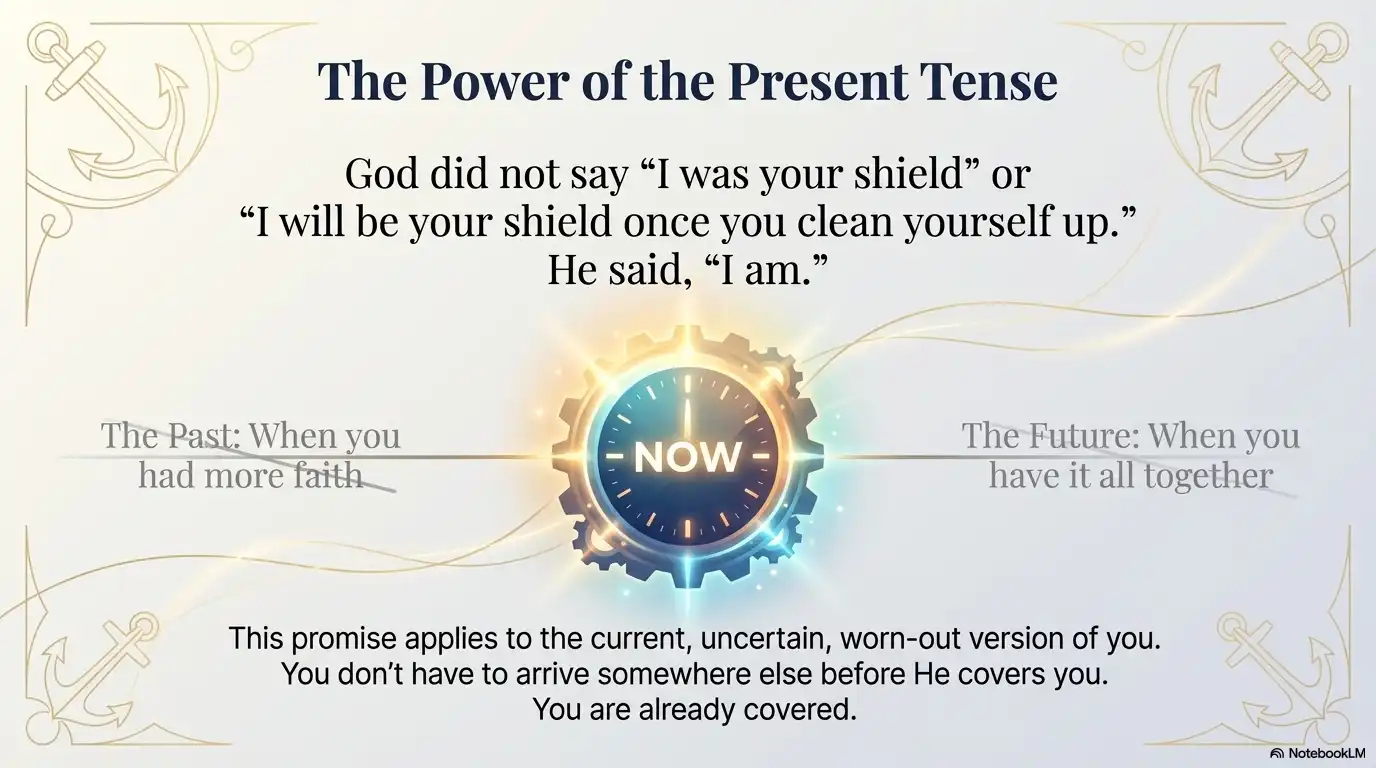
He didn’t say, “I will be your shield when you’ve cleaned yourself up” or “I was your shield back when you had more faith.” He said I am. Right now. In this season. With this version of you — the one who’s maybe a little uncertain, a little worn, a little unsure if this challenge is even going to make a difference.
That present-tense promise is actually the foundation of genuine self-confidence in God. You don’t have to arrive somewhere before He covers you. You’re already covered.
4. “Your Very Great Reward” — Don’t Skip Over This Part
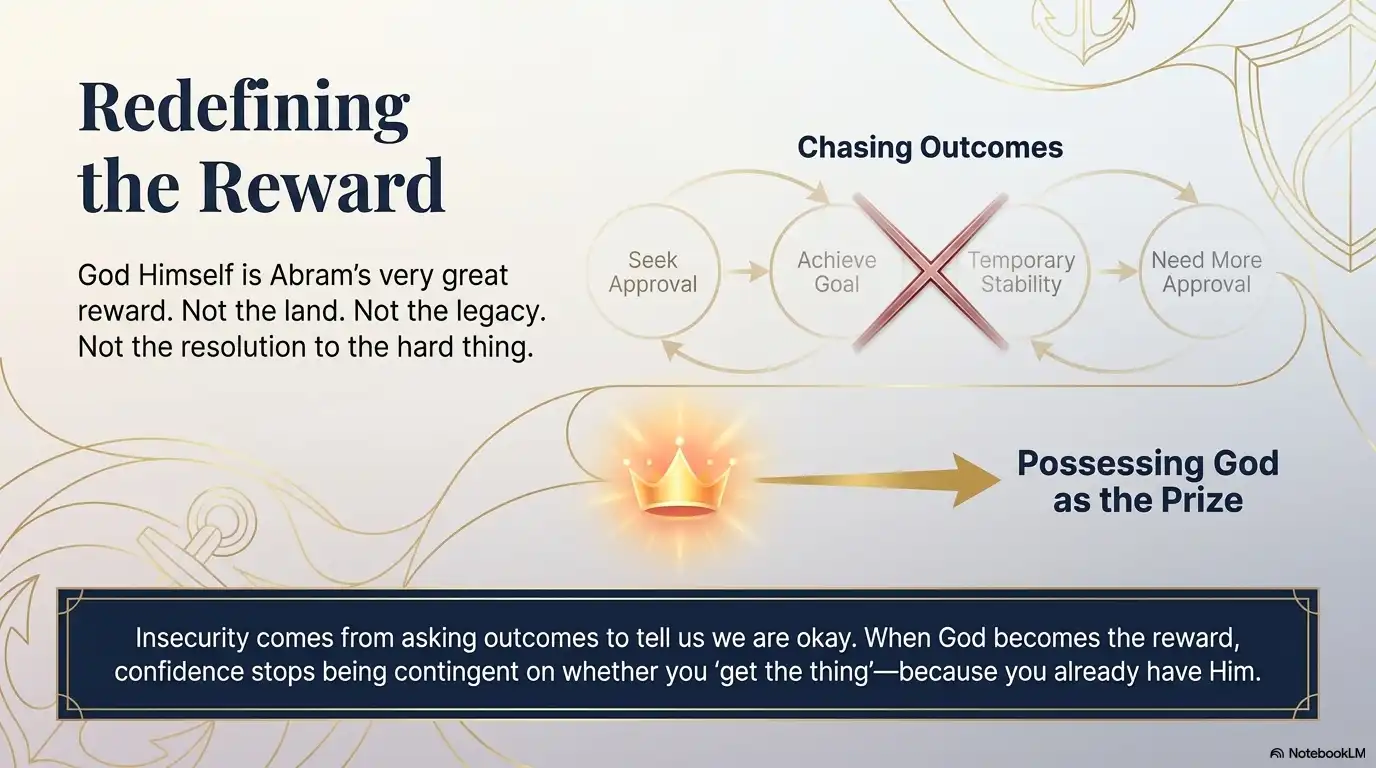
It’s easy to focus on the shield imagery, but that second phrase is quietly profound. God says He Himself is Abram’s very great reward. Not the land. Not the legacy. Not the success or the comfort or the resolution to the hard thing.
God is the reward.
This reframes confidence entirely. So much of our insecurity comes from chasing outcomes — approval, achievement, belonging, stability. We’re essentially asking things and people to tell us we’re okay. But when God becomes the reward, your confidence stops being contingent on whether you got the thing. You already have the thing. You have Him.
✦ FAQ: Real Questions, Real Answers
Q: I’ve heard that God is my shield before. Why doesn’t it actually feel that way?
That’s such an honest question, and you’re definitely not alone in asking it. Knowing something intellectually and experiencing it emotionally are two very different things. The gap between the two is usually where healing happens — and that’s genuinely what this 14-day journey is designed to help with. Confidence rooted in God isn’t usually a lightning bolt moment. It’s built slowly, through repeated encounters with His faithfulness. Give it time. The feeling tends to follow the practice.
Q: Is it wrong to want to feel confident in my own abilities?
Not at all. God gave you gifts, intelligence, and capabilities — and He absolutely wants you to use them. The issue isn’t confidence in your abilities. The issue is where that confidence is anchored. Think of it this way: a tree with deep roots can still stand tall and bear fruit. The roots don’t diminish the tree — they’re what make it possible. God-rooted confidence doesn’t make you less capable. It makes your capabilities more stable.
Q: What if I’ve failed so many times that even God being my shield doesn’t feel like enough?
That feeling is real, and it deserves to be acknowledged rather than quickly fixed. But here’s what’s worth noting about Abram — this conversation in Genesis 15 happens after he had already made mistakes. He had already doubted, detoured, and made some pretty significant missteps. And yet God showed up and said, I am your shield. Not “I was your shield before you messed up.” Present tense, even after the failure. Your history doesn’t disqualify you from this promise.
Q: How is this different from just positive thinking or motivational content?
Great question, actually. Positive thinking, at its core, is still self-referential — you’re trying to convince yourself to feel a certain way through your own mental effort. What this challenge is pointing to is something fundamentally different: a confidence that comes from outside you. It’s not about thinking more highly of yourself. It’s about resting in Someone who is already for you, already covering you, already present. That’s not a mindset shift — it’s a posture of trust.
Q: I’m not sure I really believe God is personal enough to care about my confidence. Is that okay to admit?
Yes — and honestly, thank you for being that real with yourself. Doubt isn’t the opposite of faith; it’s often where faith gets refined. Starting this challenge with honest skepticism is actually far more solid ground than starting with performed enthusiasm. Just bring what you have. Even Abram, in this very chapter, asked God some pretty direct questions. God didn’t pull back. He leaned in. So can you.
Q: Do I have to complete the journal prompts to get something out of this?
No pressure at all — but here’s the thing: something happens when you get your thoughts out of your head and onto paper. What feels vague and heavy inside often becomes clearer and more manageable when it’s written down. The prompts aren’t homework. They’re an invitation to be honest with yourself in a safe space. Even just a sentence or two is genuinely enough to start.
You showed up today. That matters more than you know. See you in Day 2.