

What It Means to Be Truly Seen
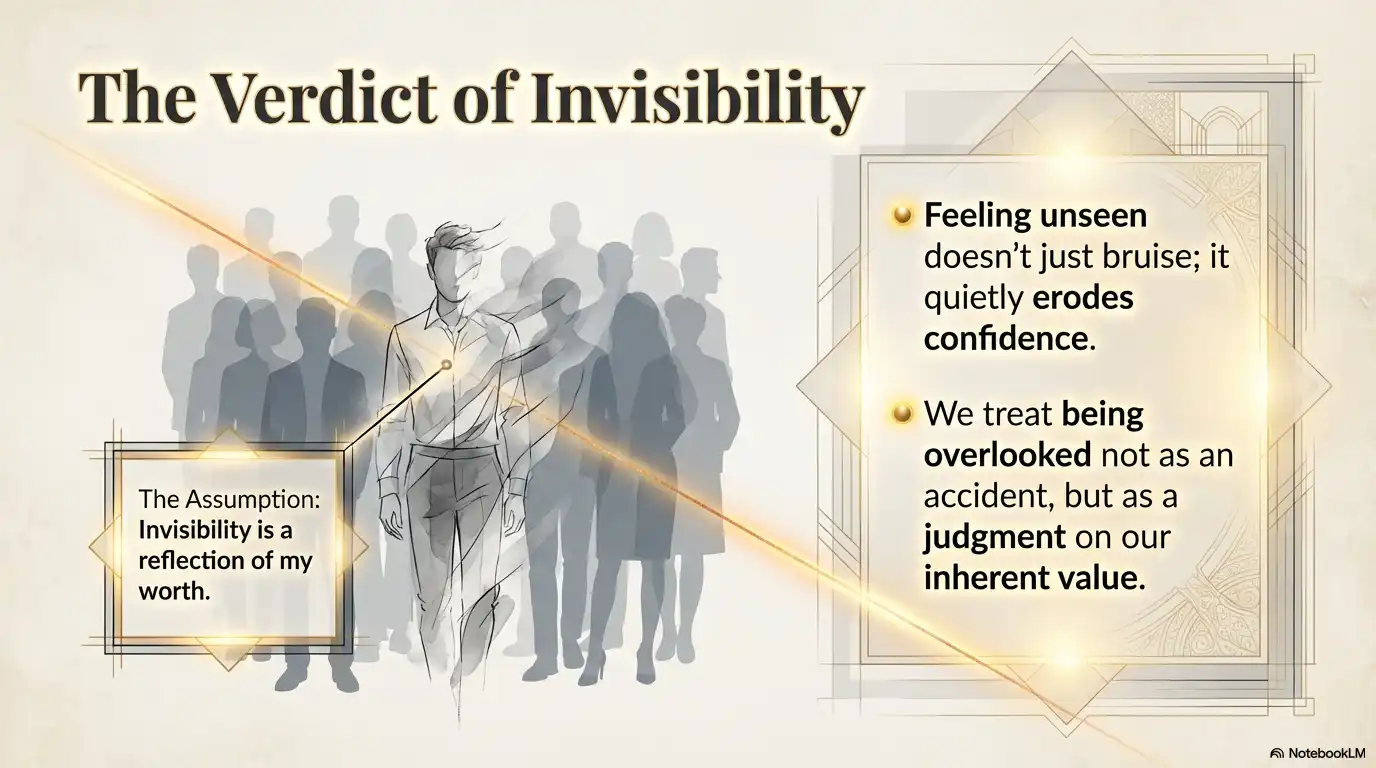
There’s something that happens to confidence when you feel unseen. It doesn’t just bruise — it quietly erodes. You start to wonder, almost without meaning to, whether the invisibility says something true about your value. Whether being overlooked is somehow a reflection of what you’re worth.
Most of us have spent more time in that feeling than we’d like to admit.
And that’s exactly why this particular passage — one of the oldest recorded blessings in all of Scripture — hits the way it does when you actually slow down long enough to receive it.
1. The Priestly Blessing Was Designed to Be Spoken Over Real People in Real Moments
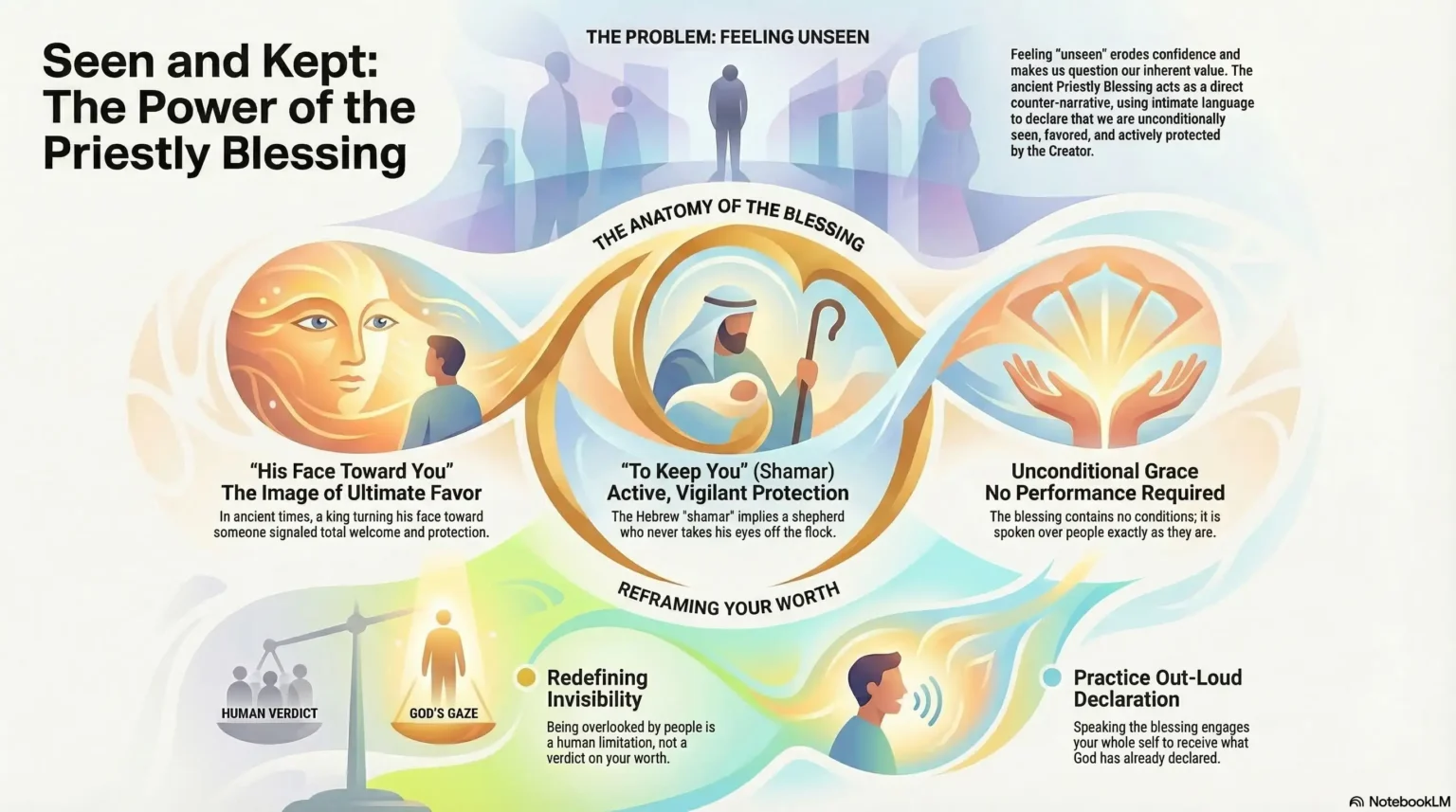
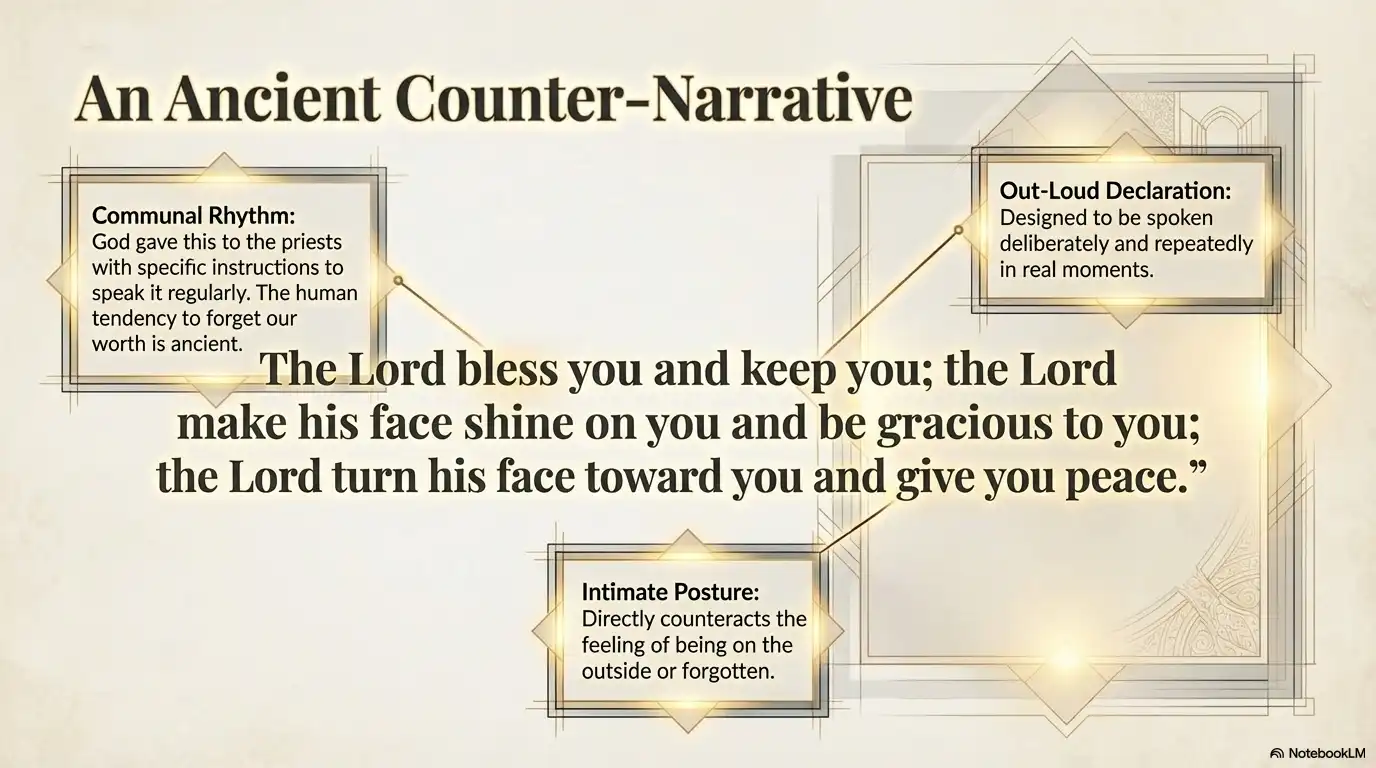
This blessing in Numbers 6 wasn’t written as poetry to admire from a distance. God gave it to Aaron and the priests with a very specific instruction: speak this over the people. Regularly. Deliberately. As an act of declaration.
In other words, God wanted His people to hear, out loud and repeatedly, that they were seen, favored, and kept. That’s not accidental. It tells you something important — that the human tendency to forget we’re cared for is not new. It’s ancient. And God, knowing exactly how we’re wired, built the reminder directly into the rhythm of communal life.
You were always meant to be reminded of this. Today is simply your reminder.
2. “His Face Toward You” Is One of the Most Intimate Images in Scripture
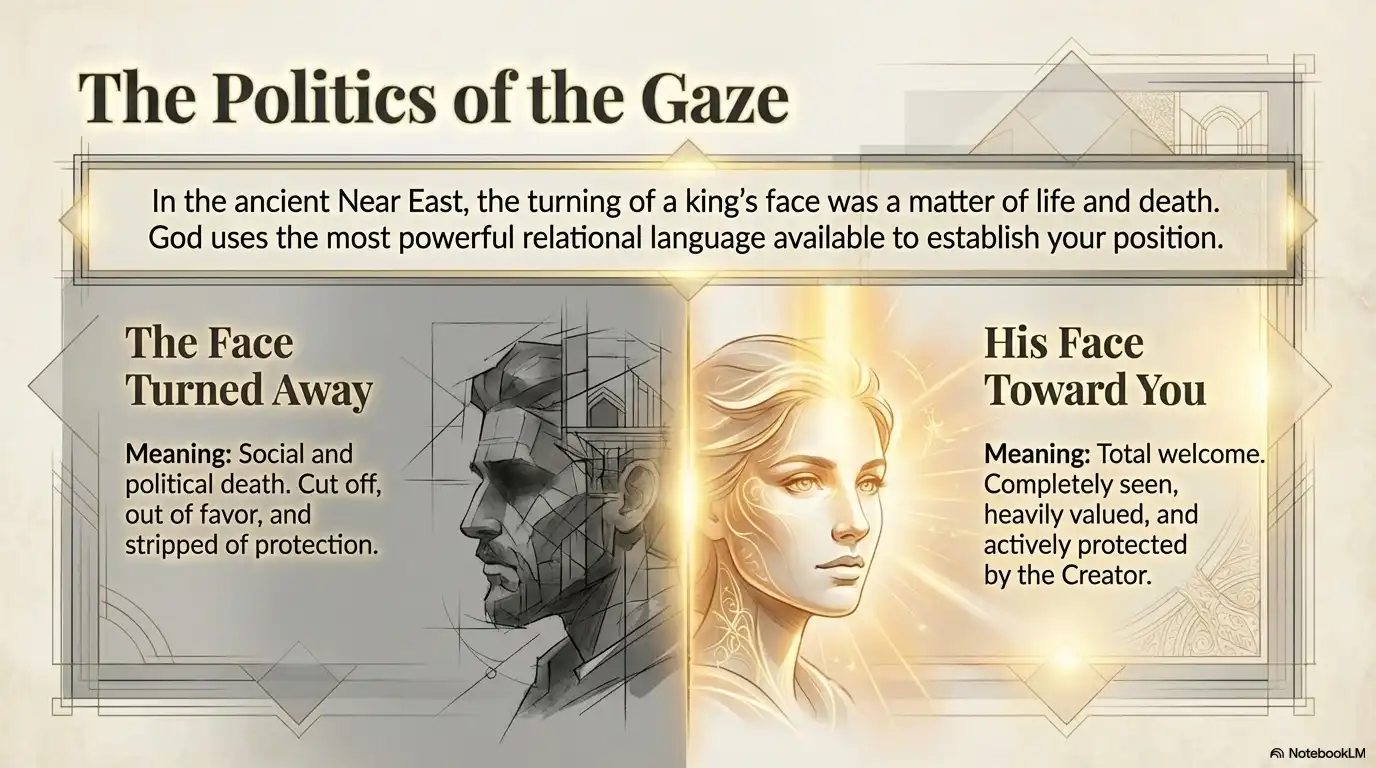
In the ancient Near East, the turning of a king’s face was everything. To have a ruler turn away from you was essentially social and political death — it meant you were out of favor, cut off, no longer under protection. To have a ruler turn toward you meant the opposite: you were seen, welcomed, valued.
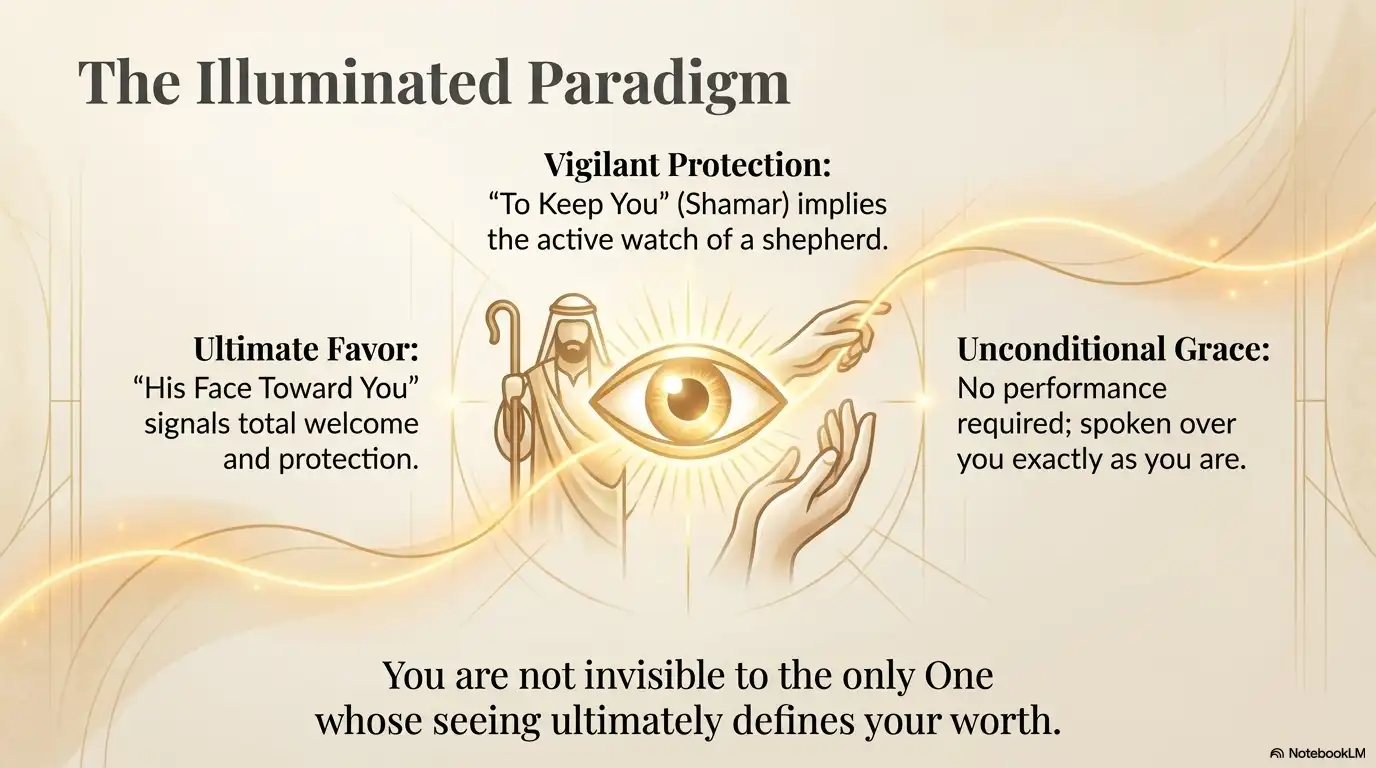
So when God says — three times across these verses, in a kind of beautiful repetition — that His face is toward you, shining on you, turned in your direction with grace and peace, He is using the most powerful relational language available to say: you are not on the outside. You are not overlooked. You are not forgotten.
And look — that’s not a small thing. That’s not spiritual small talk. That is the posture of the Creator of everything, aimed directly at you.
3. Notice What Isn’t Said
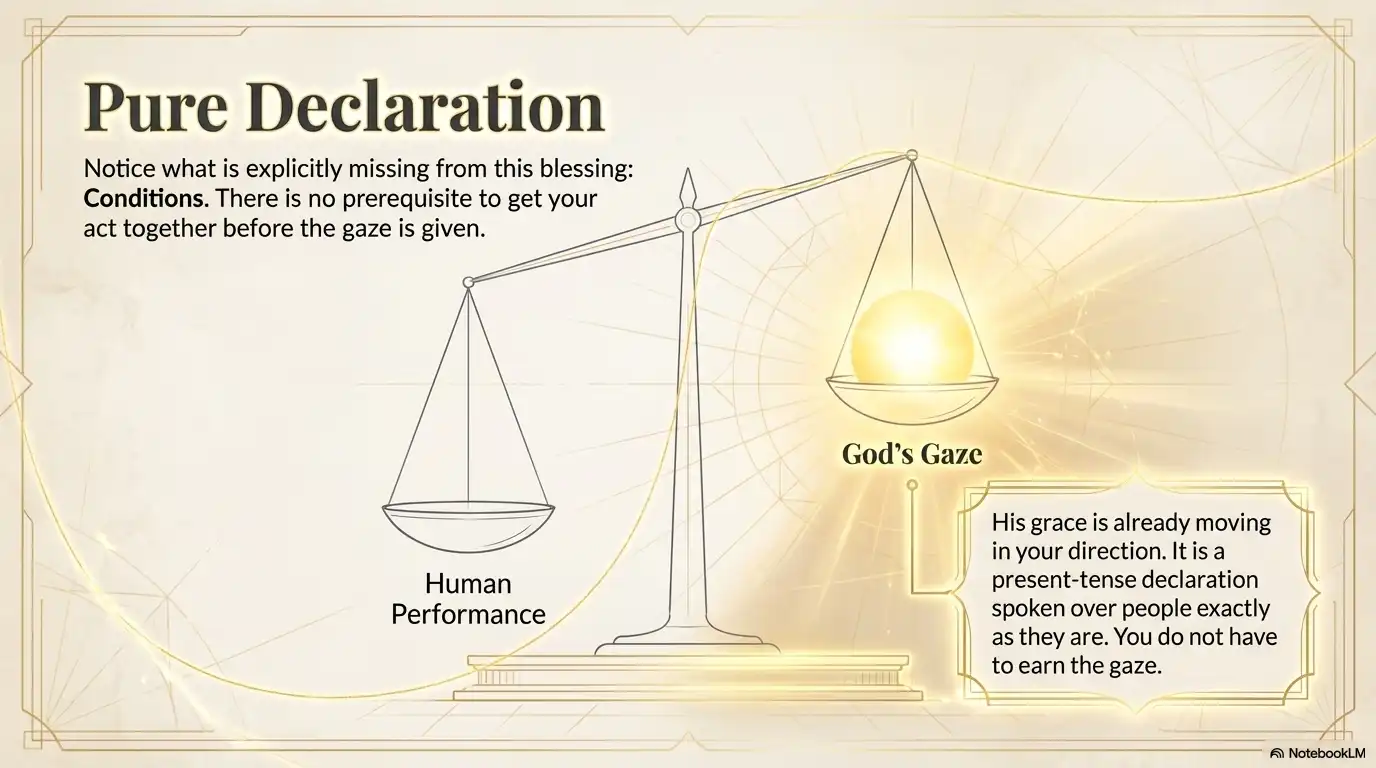
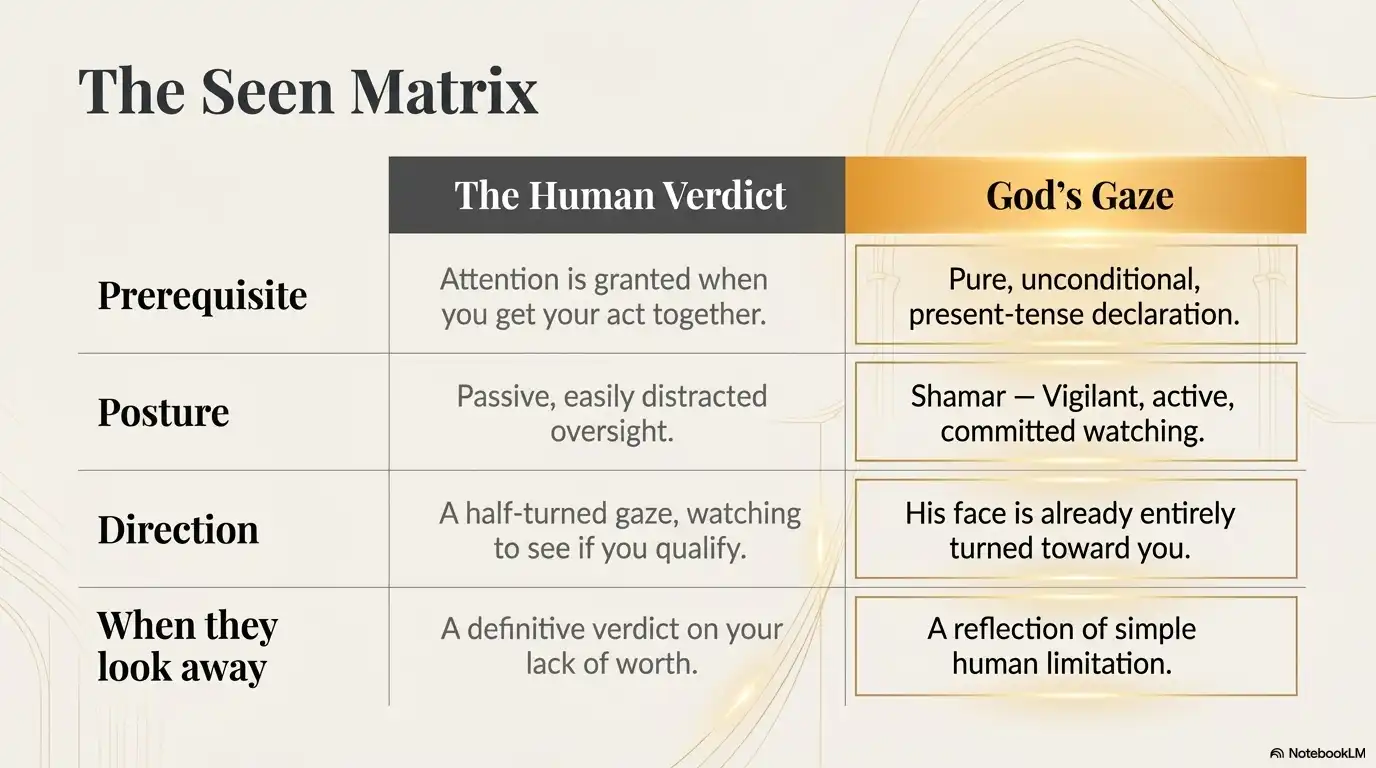
This blessing contains no conditions. There’s no “The Lord will bless you once you get your act together” or “His face will shine on you when you’ve earned it back.” The structure of the blessing is pure declaration. Present tense, unconditional, spoken over the people as they are — not as they should be or might eventually become.
That matters enormously for confidence, because so much of what undermines us is the quiet belief that God’s attention toward us is conditional. That He’s sort of half-turned in our direction, watching to see if we’ll qualify. This verse directly challenges that. His face is already toward you. His grace is already moving in your direction. Peace is already being extended.
You don’t have to do anything to earn His gaze. You already have it.
4. Being Seen by God Reframes Every Place You Feel Unseen by People
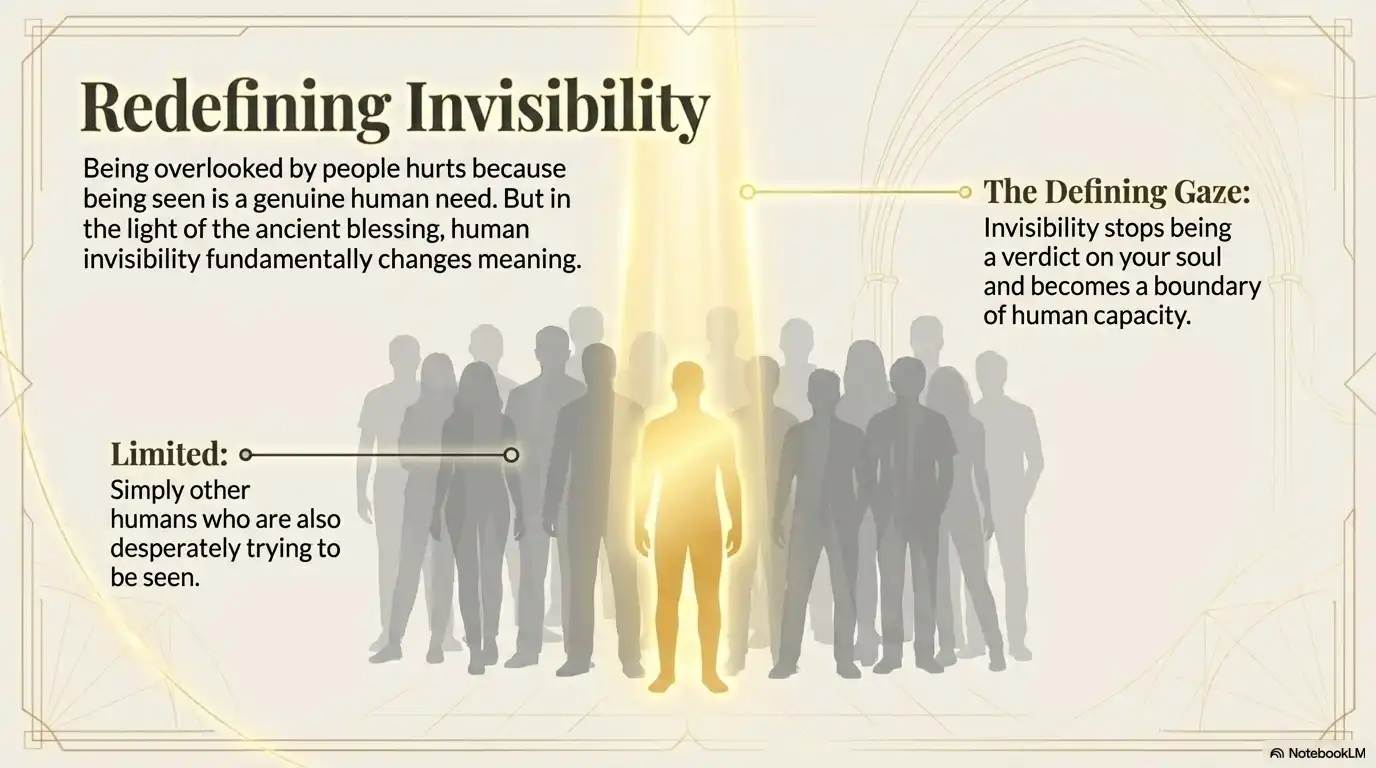
Here’s something worth really sitting with for a moment. The places where we feel most invisible — overlooked at work, forgotten in relationships, carrying struggles nobody seems to notice — those places feel so painful precisely because being seen is a genuine human need. You’re not weak for needing it. You’re human.
But what tends to happen is that when the people in our lives don’t fully see us, we start treating that as a verdict. As evidence. As confirmation of something we’ve feared about ourselves.
God’s face being turned toward you doesn’t erase the sting of human invisibility. But it does change what that invisibility means. It stops being a verdict and becomes, instead, a limitation — the very real and understandable limitation of people who are also trying to be seen themselves. You are not invisible to the only One whose seeing ultimately defines your worth.
5. “Keep You” — There’s a Protective Dimension Here Too
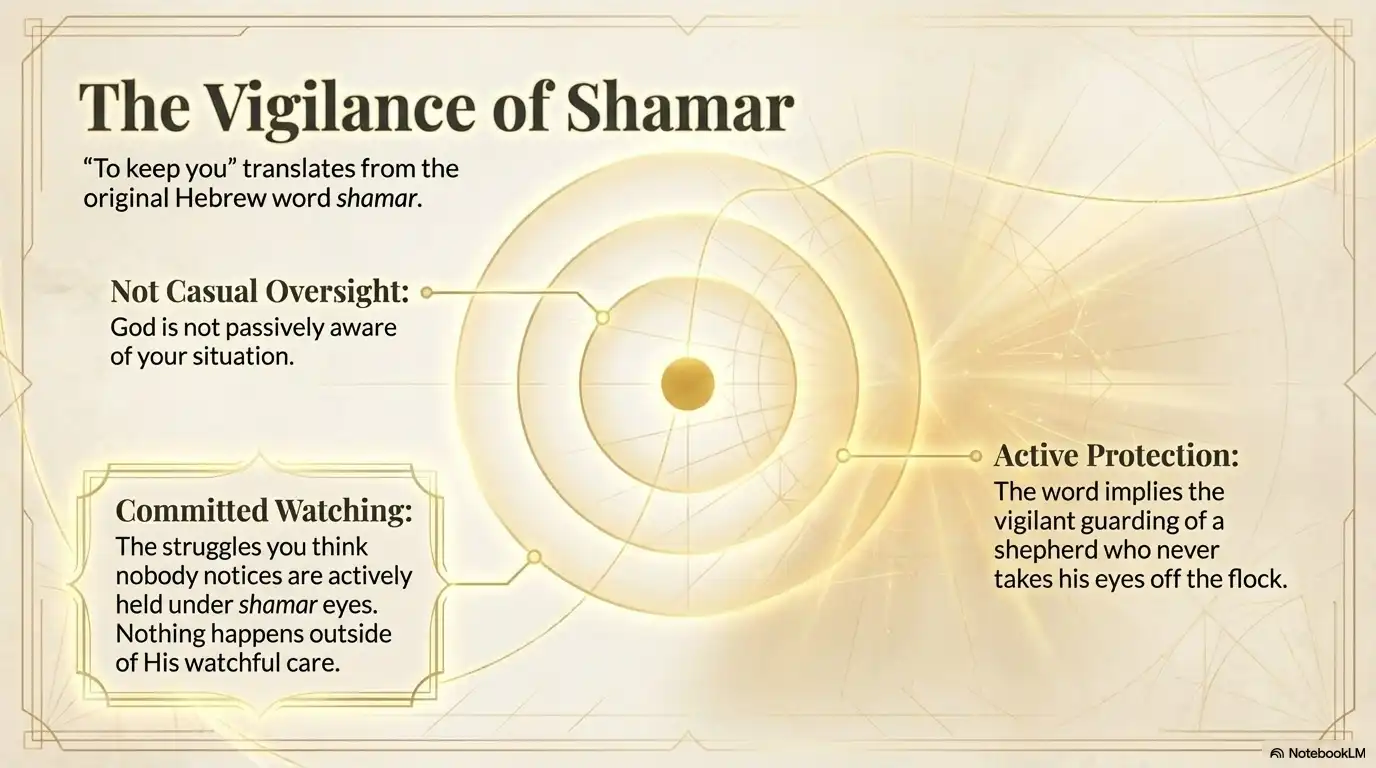
The word keep in the original Hebrew — shamar — carries the sense of guarding, watching over, protecting with vigilance. It’s the word used for a shepherd who never takes his eyes off the flock. Not casual oversight. Active, attentive, committed watching.
When you feel uncared for — when it genuinely seems like no one is paying attention to what you’re carrying — this word is doing important work. God isn’t passively aware of your situation. He is actively, attentively keeping you. The struggles you think nobody sees? He sees them with shamar eyes. Nothing about your life is happening outside of His watchful care.
That kind of being-seen is honestly more sustaining than most human attention ever manages to be.
6. Speaking the Blessing Out Loud Is Not a Performance — It’s a Practice
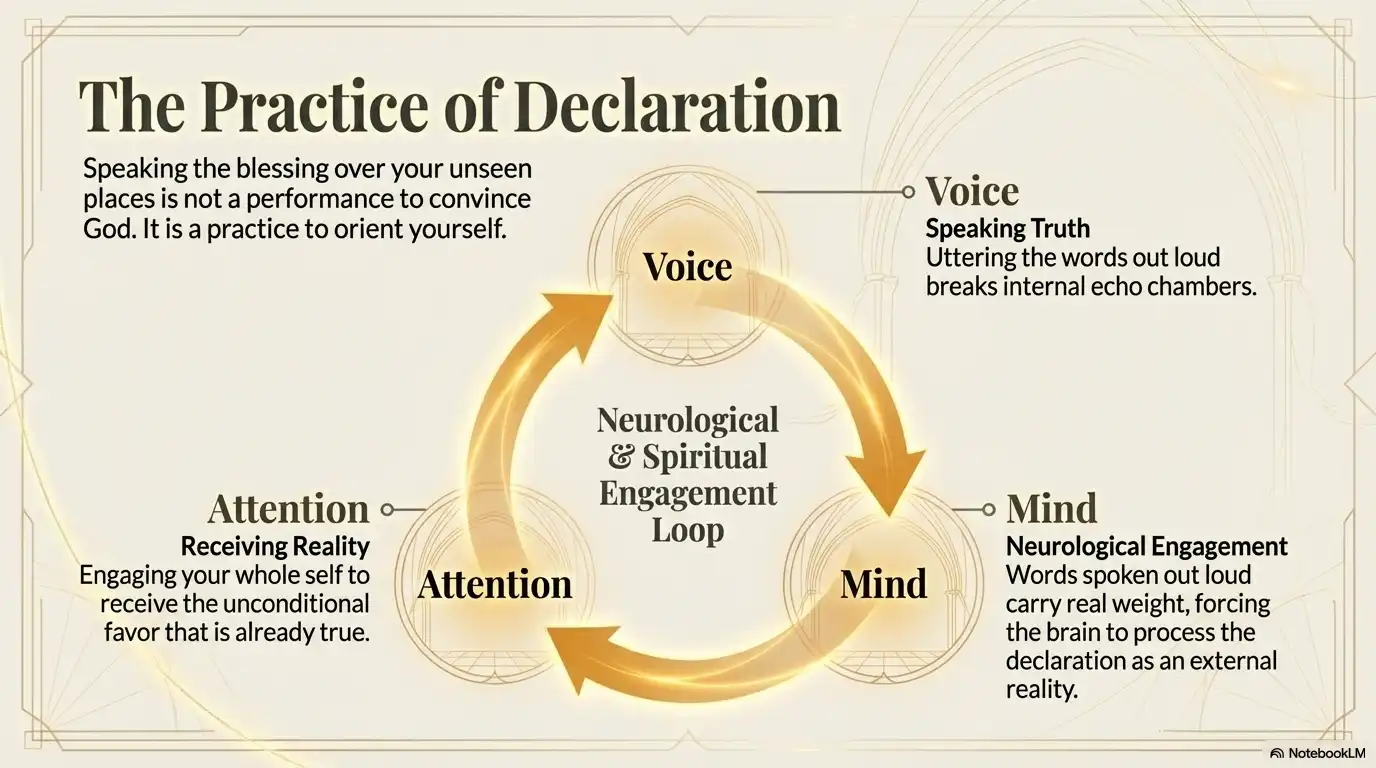
Today’s gentle practice asks you to speak this blessing over your specific unseen place. And yeah, that might feel a little awkward at first, especially if you’re not used to that kind of thing. But there’s real neurological and spiritual weight behind the act of speaking truth out loud rather than just thinking it.
What you say over yourself matters. Not because the words are magic, but because they engage your whole self — mind, voice, attention — in the act of receiving what’s already true. You’re not convincing God of anything. You’re orienting yourself toward what He’s already declared.
✦ FAQ: REAL QUESTIONS, REAL ANSWERS
Q: I genuinely don’t feel seen — by God or by anyone. How do I work with a verse that feels completely disconnected from my actual experience?
That gap between what the verse says and what you feel is real, and it deserves to be honored rather than rushed past. The honest truth is that most people who eventually experience deep, settled confidence in God’s care passed through a season of exactly that disconnect. Feeling unseen is one of the rawest human experiences there is. What this verse offers isn’t a quick fix for the feeling — it’s a different truth to hold alongside the feeling while it slowly begins to shift. You don’t have to feel it fully to let it start doing its work. Just hold it. Come back to it. Give it time to settle.
Q: If God’s face is toward me, why does my life still feel so hard and overlooked?
This is such an honest question, and it gets at something really important: God’s favor doesn’t mean the absence of difficulty. The priestly blessing was spoken over people who were, at that very moment, wandering in the wilderness. It wasn’t a promise that the hard thing would immediately resolve. It was a declaration of God’s posture through the hard thing. His face being toward you is not a guarantee of smooth circumstances. It’s a guarantee of accompanied ones. There’s a meaningful difference — and for a lot of people, that difference is actually more sustaining in the long run.
Q: I’ve been overlooked and let down by people who were supposed to care for me. Can I really trust that God is different?
Yes — and it makes complete sense that you’d bring healthy skepticism to this, especially if the people who were supposed to model care and attentiveness failed you. Human disappointment has a way of coloring how we imagine God. But here’s what’s worth considering: every place where human care has fallen short is actually a picture of what it was supposed to look like but didn’t. The longing you have to be truly seen and kept? That longing is not naive. It’s pointing toward something real that God alone can fully satisfy. The human versions were always meant to be reflections of a greater original — imperfect ones. You haven’t been wanting the wrong thing. You just haven’t yet received it from the right Source.
Q: Is it okay that I need to be seen? It feels a little needy.
More than okay — it’s entirely by design. The need to be known, seen, and regarded with care is not a character flaw. It’s woven into how you were made. You were created for relationship, and that includes the relationship of being truly noticed by the One who made you. Needing that isn’t weakness. It’s actually the right orientation of a person who understands what they were made for. The issue was never the need itself — it’s been trusting the wrong, limited sources to meet it fully.
Q: I tried speaking the blessing out loud and it felt hollow. Like I was just saying words. Is that normal?
So normal. And actually, that experience is worth leaning into rather than away from. The hollowness you feel isn’t evidence that the words aren’t true — it’s often evidence of how deep the wound of feeling unseen actually goes. Words spoken into a long-held wound don’t usually produce immediate relief. They produce slow healing. Think of it less like flipping a switch and more like watering ground that’s been dry for a while. The first few times, it might feel like nothing’s happening. Keep going anyway. Something is happening underneath the surface, even when you can’t feel it yet.
Q: What do I do when I feel overlooked by people at work or in relationships today — in real time?
A few things, honestly. First, name it rather than suppress it — something as simple as “I feel unseen right now, and that’s genuinely hard” goes further than pretending it doesn’t sting. Second, bring it directly to this verse. Not in a way that bypasses the pain, but in a way that holds the pain alongside the truth: “I feel unseen here, and yet His face is turned toward me.” Third — and this one takes practice — start to notice small moments of being genuinely seen that you might be filtering out. When we’re running a “nobody sees me” narrative, we unconsciously discount evidence to the contrary. God’s care often shows up through small, easily-missed moments. Train yourself to catch them.
Q: I feel seen by God in theory, but I still desperately want human validation. Does that mean my faith isn’t deep enough?
Not at all — and please hear that clearly. Wanting to be seen, affirmed, and valued by the people in your life is not a sign of spiritual immaturity. God created community for a reason. The goal isn’t to reach a place where human connection no longer matters to you. The goal is to reach a place where human validation is a gift you can receive and enjoy — rather than a lifeline you’re white-knuckling. There’s a big difference between appreciating being seen and being dependent on it for your stability. You’re working toward the second thing. The first one gets to stay.
Three days in, and you’re building something real. That matters. See you tomorrow.