


The Confidence That Comes From Looking Back
Here’s something that doesn’t get nearly enough attention in conversations about confidence: memory is a spiritual discipline.
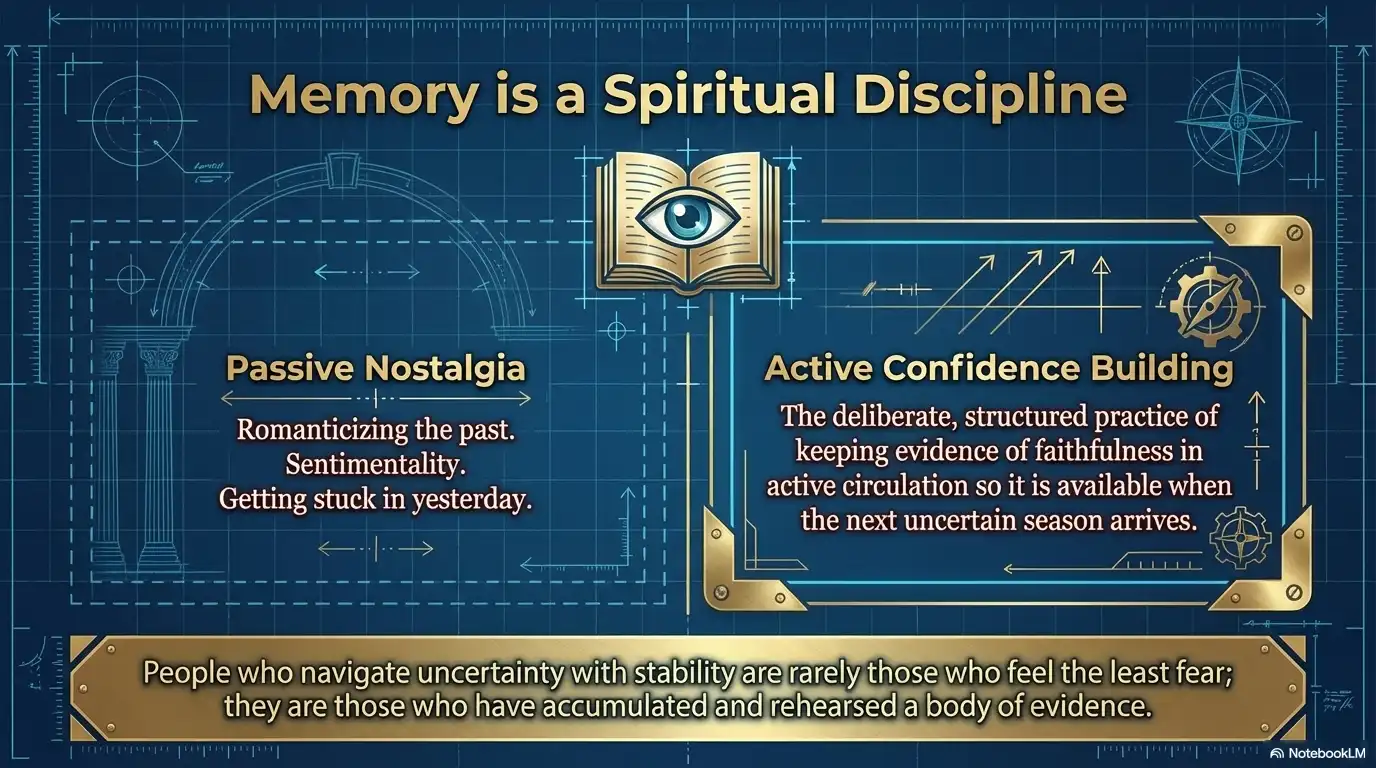
Not nostalgia. Not romanticizing the past. Not getting stuck in yesterday. But the deliberate, intentional act of looking back at specific moments of faithfulness and letting them speak into the uncertainty that’s in front of you right now.
That’s exactly what Solomon is doing in 1 Kings 8:57. And the context in which he does it makes the whole thing significantly more powerful.
1. Solomon Is Praying This at the Peak of His Success — and That’s Worth Noticing
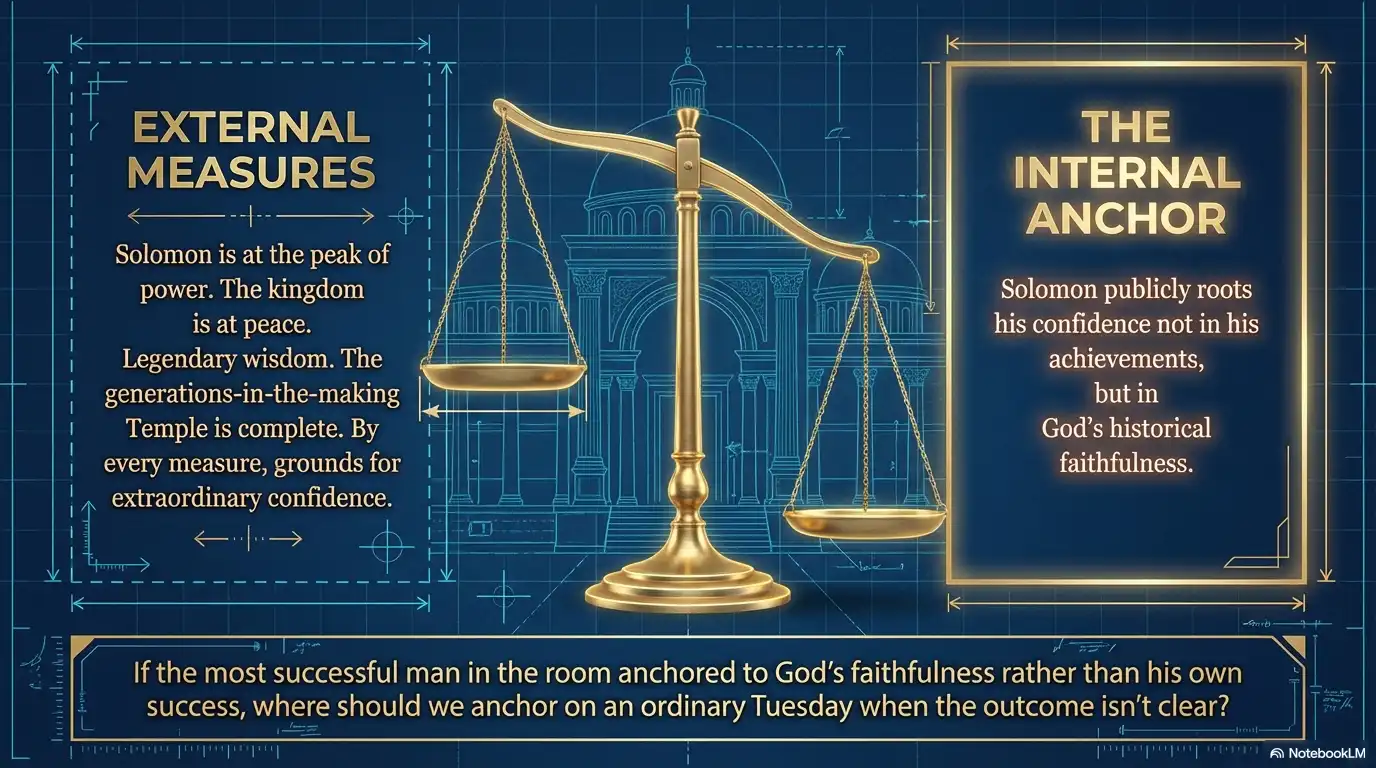
This verse comes from Solomon’s prayer at the dedication of the Temple. It’s one of the most triumphant moments in Israelite history. The Temple — this monumental, generations-in-the-making project — is finally complete. Solomon is at the height of his power, his wisdom is legendary, the kingdom is at peace. By any external measure, this is a moment of extraordinary confidence.
And yet Solomon doesn’t trust the external measures. Instead, he roots his confidence — publicly, in prayer, in front of the entire assembly of Israel — not in his own achievement or his current circumstances, but in God’s historical faithfulness.
That’s, honestly, a remarkable thing. The most successful man in the room is essentially saying: none of this is the source of my confidence. His track record is. If Solomon, at his peak, needed to anchor to God’s faithfulness rather than his own success, what does that tell us about where we should be anchoring on our ordinary Tuesday when things feel uncertain and the outcome isn’t clear?
2. “As He Was With Our Ancestors” — Inherited Faithfulness Is Real Faithfulness
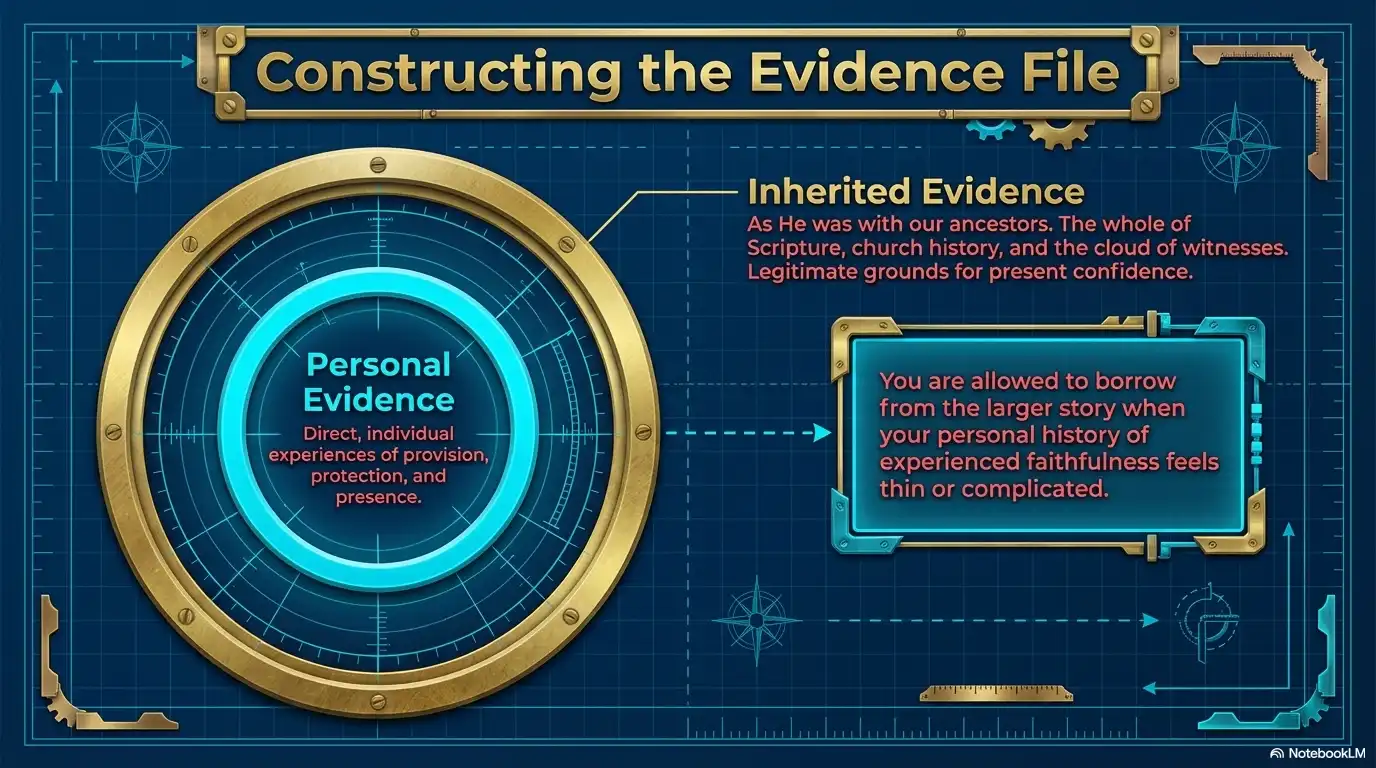
There’s something theologically rich happening in this prayer that’s easy to miss. Solomon is appealing to faithfulness he didn’t personally experience. He’s pointing to what God did for Abraham, for Moses, for Joshua, for David — people whose stories he inherited rather than lived. And he’s treating that inherited evidence as legitimate grounds for present confidence.
This is, actually, a really important move. We tend to think that the only evidence that counts is personal evidence — things we’ve experienced directly ourselves. And personal evidence is powerful, no question. But Solomon’s prayer widens the evidential base considerably. The whole of Scripture, the whole of church history, the whole of what God has done in and through other people’s lives — all of that is available to you as evidence of a character that doesn’t change.
When you can’t find enough personal evidence in your own story — when your history of experienced faithfulness feels thin or complicated — you’re allowed to borrow from the larger story. That’s not cheating. That’s exactly what Solomon did. The ancestors’ testimony counts. The history counts. The cloud of witnesses counts. It all points to the same consistent character.
3. Remembering Faithfulness Is Not Passive Nostalgia — It’s Active Confidence Building
There’s a reason the Israelites were commanded, repeatedly throughout Scripture, to remember. The festivals, the memorials, the retelling of the Exodus story every Passover — none of that was sentimentality. It was a deliberate, structured practice of keeping evidence of faithfulness in active circulation so that it would be available when the next uncertain season arrived.
Because uncertain seasons always arrive. And the people who navigate them with the most stability are almost never the people who feel the least fear. They’re the people who have, over time, accumulated and rehearsed a body of evidence that gives them somewhere to stand when the present moment feels unsteady.
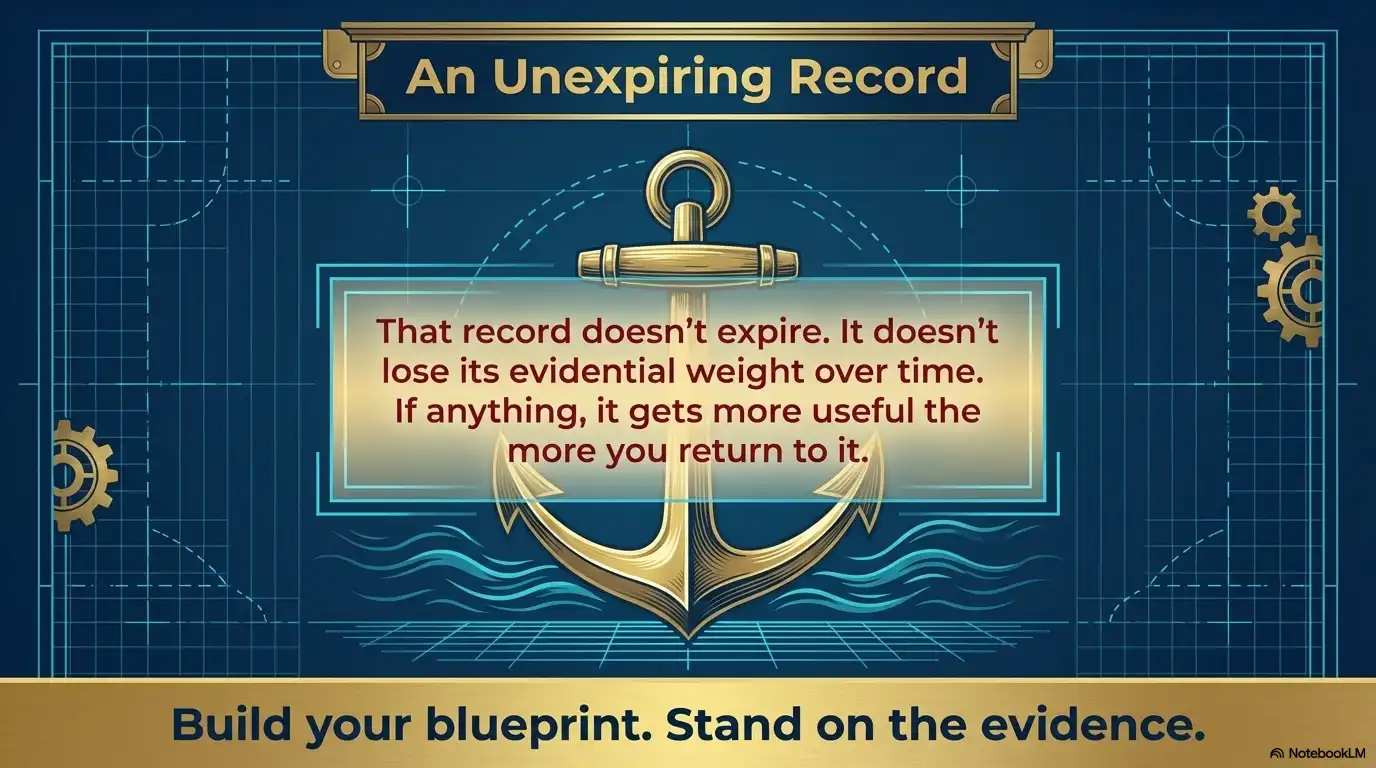
Writing down the specific memory in today’s practice is part of that accumulation. You’re not just journaling for therapeutic processing — though that has real value too. You’re building an evidence file. A record of instances where the thing you’re being asked to trust right now has already proven itself in your particular life. That record doesn’t expire. It doesn’t lose its evidential weight over time. If anything, it gets more useful the more you return to it.
4. The Structure of Solomon’s Prayer Is a Template Worth Borrowing
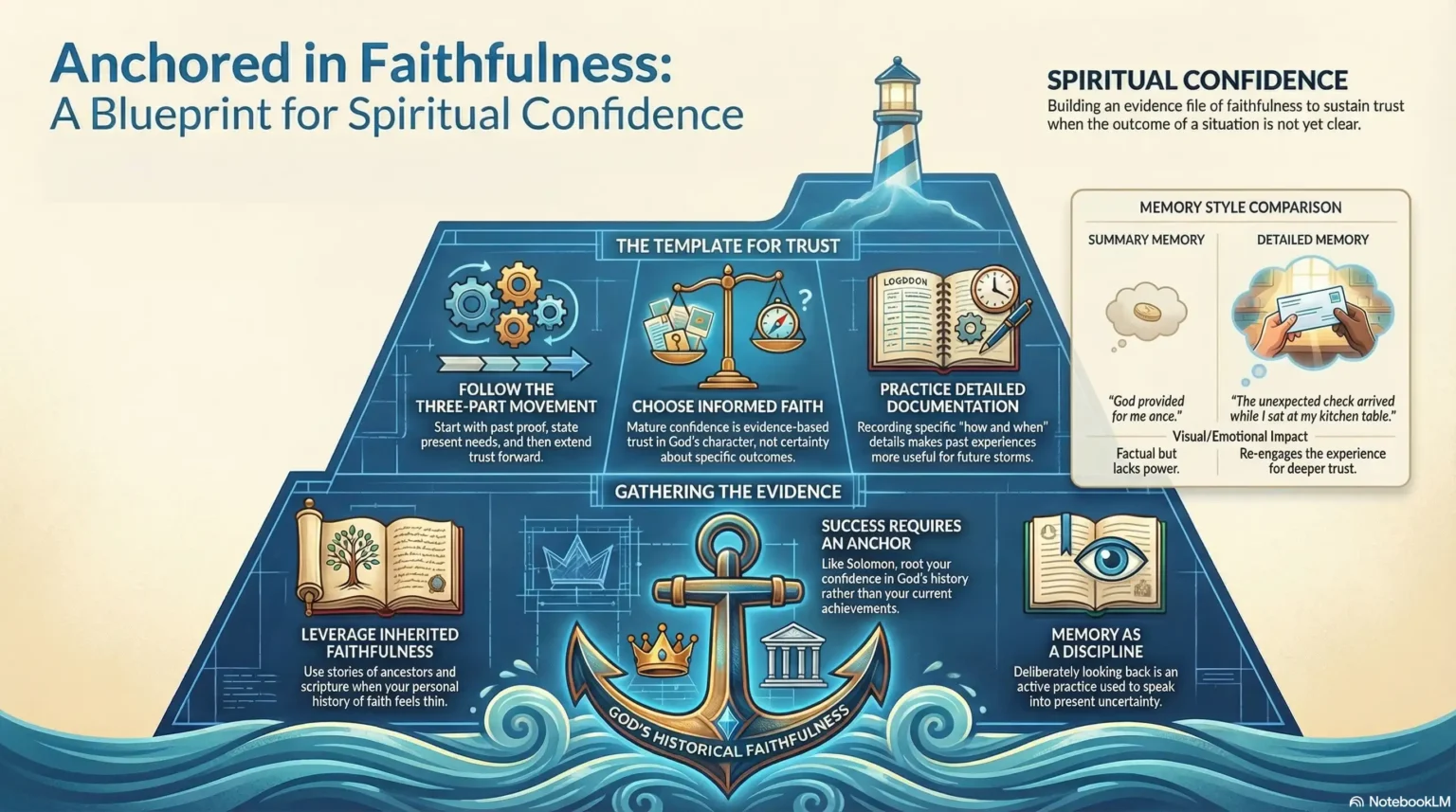
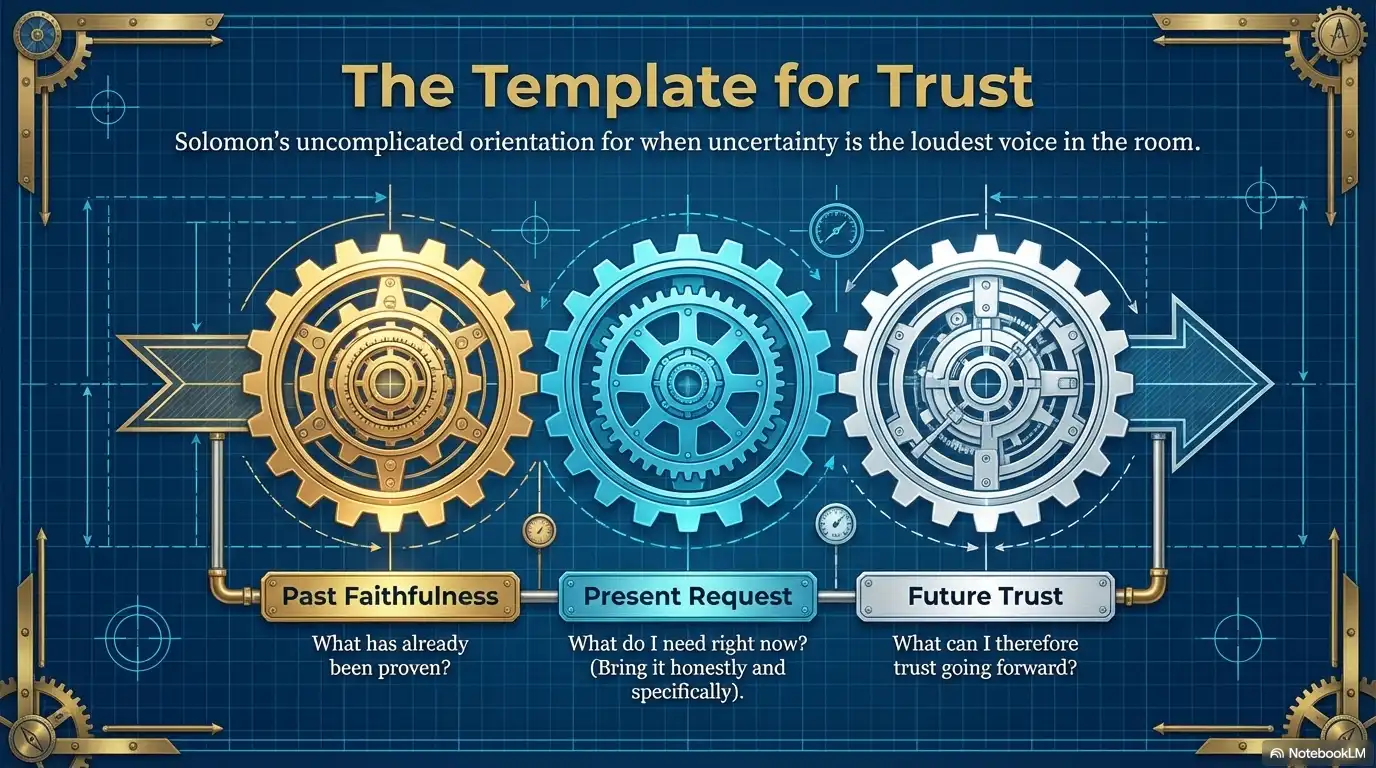
Look at the movement in this verse: past faithfulness → present request → future trust. It’s essentially a three-part structure for navigating confidence in uncertainty. You start with what has already been proven. You bring your present need honestly and specifically. You extend trust forward based on what the past has already established.
That’s not a formula to mechanically apply. But it is a genuinely useful orientation for the moments — and they will come, probably more than once in the second half of this challenge and beyond — when uncertainty threatens to become the loudest voice in the room. What has already been proven? What do I need right now? What can I therefore trust going forward?
Solomon, for all his legendary wisdom, essentially reduced it to that. There’s something freeing about how uncomplicated that is.
5. Your Personal Faithfulness Memories Are Theologically Significant
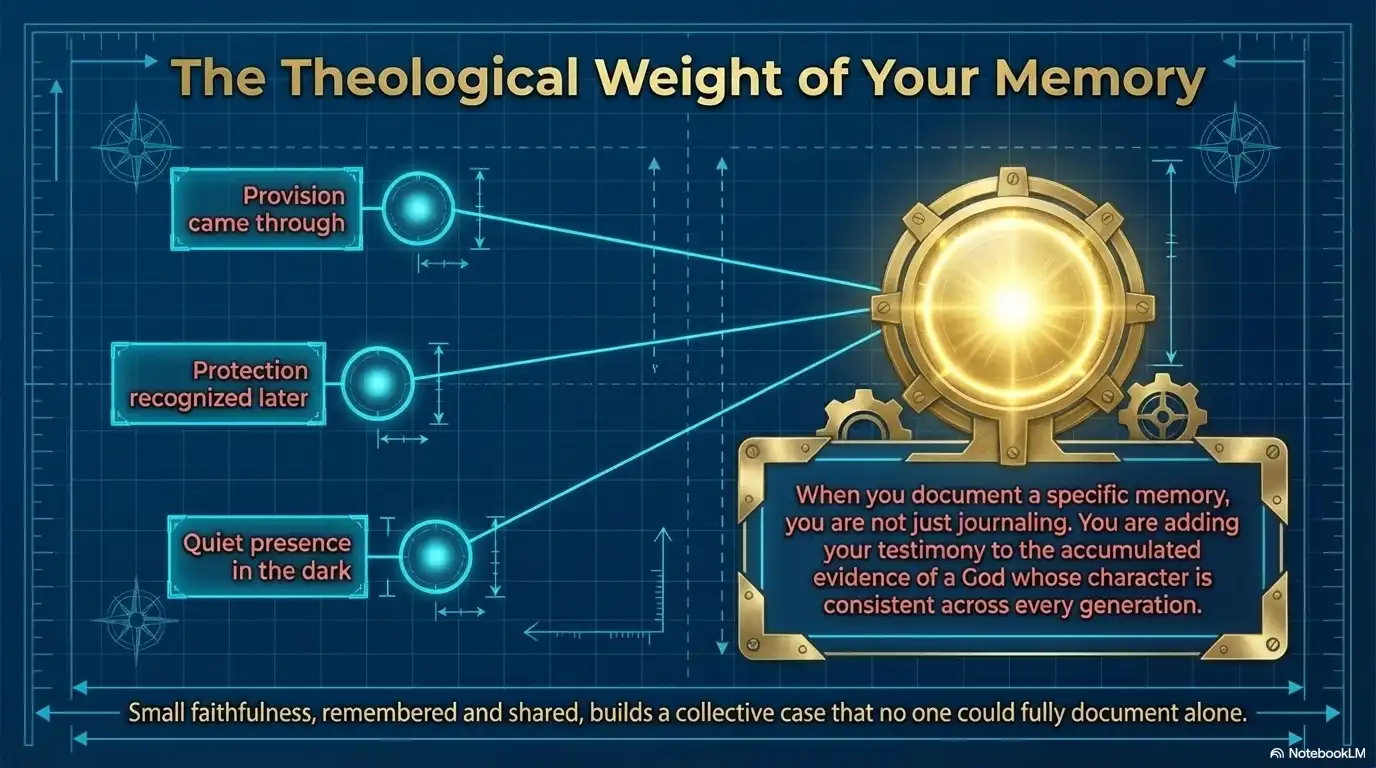
This might sound like an unusual way to frame it, but stay with it for a moment. When you write down the specific memory of God’s faithfulness in your own life — the provision that came through, the protection you didn’t fully recognize until later, the presence that showed up in the dark — you are not just journaling about a personal experience. You are adding your testimony to the accumulated evidence of a God whose character is consistent across every generation and every individual story.
Your memory matters. Not just for your own confidence, but as part of a larger, ongoing body of witness. The forum thread today — where people are sharing their God was faithful when stories — is a living expression of exactly what Solomon was doing in this prayer. Individual testimonies, gathered together, building a collective case for a faithfulness that none of them could fully document alone.
Your story belongs in that collection. Even if it feels small. Even if the faithfulness you experienced was quiet rather than dramatic. Small faithfulness, remembered and shared, becomes part of something larger than itself.
6. The Gap Between “He Was Faithful Then” and “He’ll Be Faithful Now” Is Where Faith Actually Lives
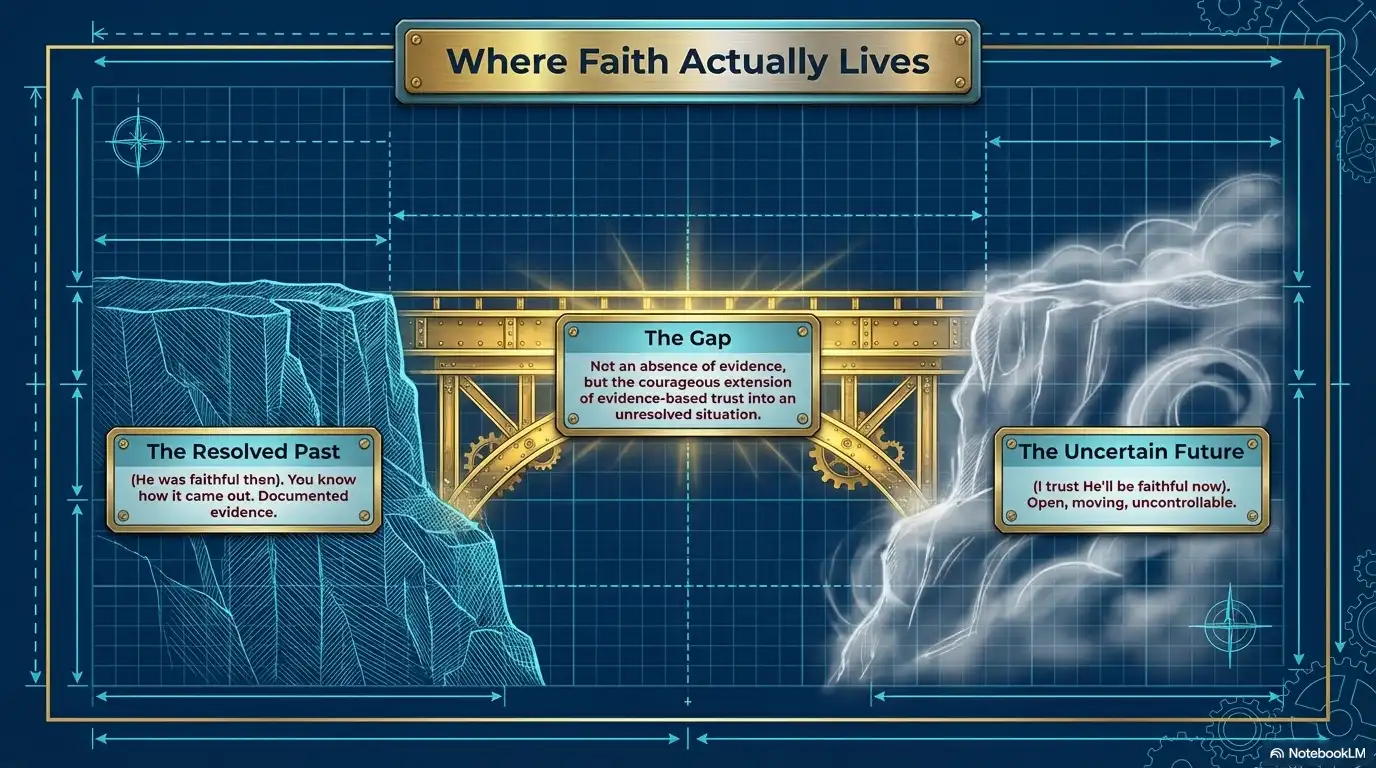
Here’s the honest part. Writing he was faithful then is usually the easier sentence. Most of us, when we slow down enough to look, can find at least one clear instance of experienced faithfulness to point to. The harder sentence — the one that requires something — is I trust He’ll be faithful now.
Because the present situation is uncertain in a way the past memory is not. The past has already been resolved. You know how it came out. The present is still open, still moving, still capable of going in directions you can’t predict or control.
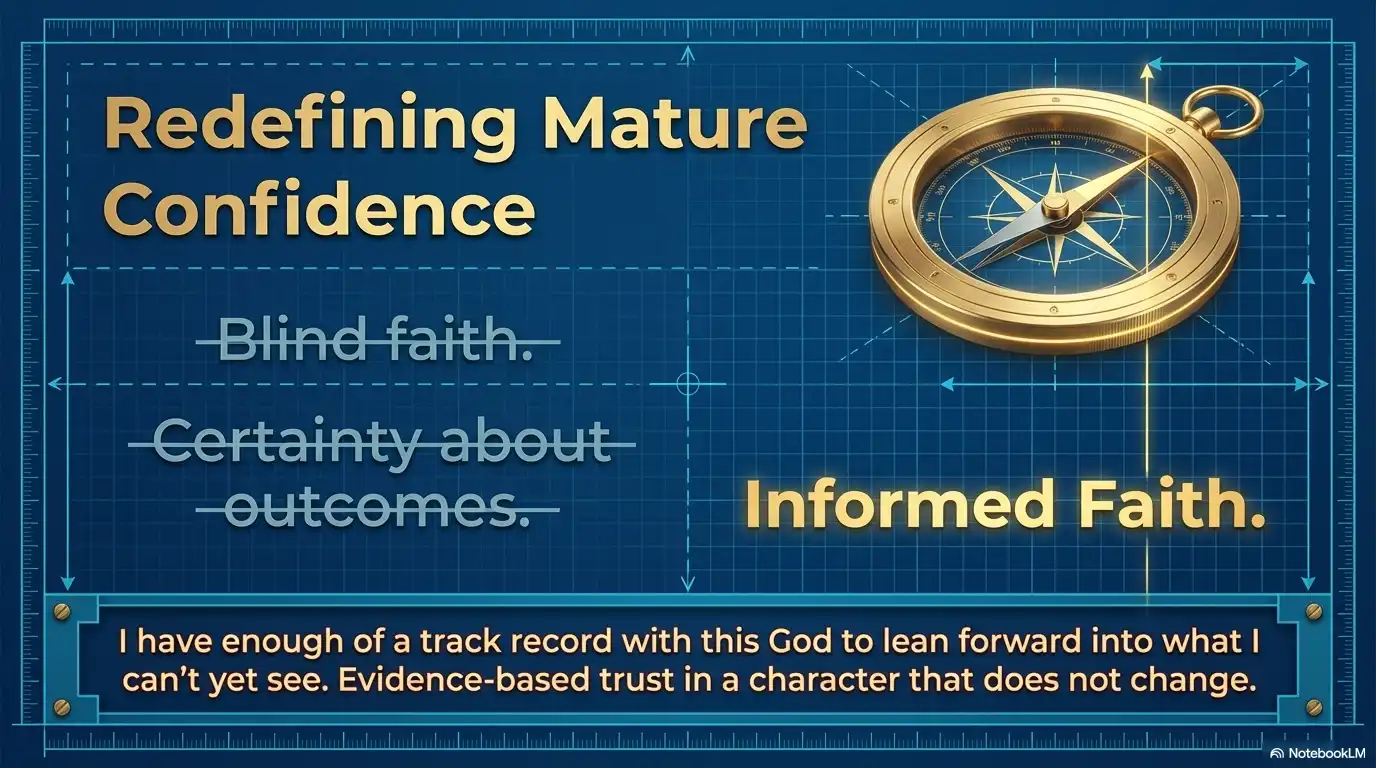
That gap — between the proven past and the uncertain future — is precisely where faith operates. Not in the absence of evidence, but in the courageous extension of evidence-based trust into a situation that hasn’t been resolved yet. That’s not blind faith. That’s informed faith. Faith that says: I have enough of a track record with this God to lean forward into what I can’t yet see.
That, honestly, is one of the most honest and mature definitions of confidence available. Not certainty about outcomes. Evidence-based trust in a character.
7. The Practice of Detailed Memory Is Deliberate — Don’t Shortcut It
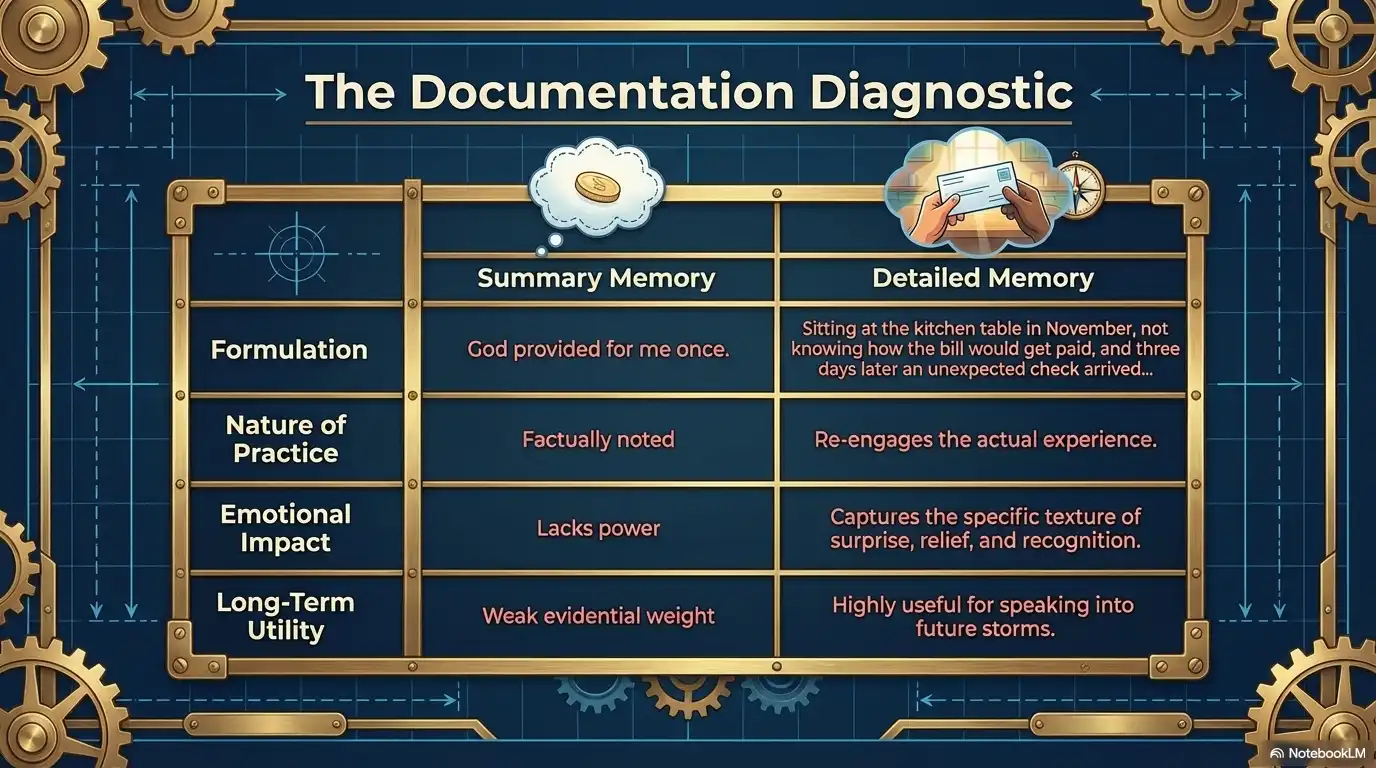
Today’s practice specifically asks you to write the memory in detail. That instruction is worth following more carefully than it might initially seem. There’s a meaningful difference between God provided for me once and I remember sitting at that kitchen table in November, not knowing how the bill would get paid, and three days later something completely unexpected came through that I had no hand in arranging.
The detail does something the summary can’t. It re-engages the actual experience — the specific emotional texture of the before and after, the specific quality of the surprise or relief or quiet recognition that something more than coincidence had happened. That re-engagement is what makes the memory evidentially useful rather than just factually noted. You’re not just acknowledging that something happened. You’re returning to it fully enough to let it speak again into a present that needs its testimony.
Give the memory the space it deserves. Write it in full. It’s one of the most confidence-building things you can do today.
✦ FAQ: Real Questions, Real Answers
Q: I’m having a really hard time identifying a clear memory of God’s faithfulness in my own life. What do I do with that?
First — that’s an honest and courageous thing to admit, and it’s more common than people let on in faith communities where everyone seems to have a dramatic testimony ready to go. A few things worth trying. Start smaller than you think necessary: not a miracle, just a moment where things were harder than you could handle alone and you somehow made it through. That survival itself is often faithfulness in a quiet key. Second, as mentioned in today’s insights, you’re allowed to borrow from the wider story — Scripture, history, other people’s testimonies — when your own personal evidence feels thin. Solomon did exactly that. Third, if after genuine reflection you genuinely can’t find any trace of experienced faithfulness in your history, that’s worth bringing directly to God rather than filing away as settled fact. Sometimes the question itself opens something.
Q: I have a memory of faithfulness from years ago, but right now things feel so hard that the old memory almost feels irrelevant. How do I bridge that gap?
That feeling — where past faithfulness seems too distant to speak into present difficulty — is really common and worth taking seriously rather than pushing through. What tends to help is specificity in both directions. When you write the old memory, try to get detailed enough that you’re actually re-experiencing the texture of it rather than just noting that it happened. And when you write the forward-trust sentence, make it equally specific to your current situation rather than generic. He was faithful in that exact impossible thing then. I trust He’ll be faithful in this exact impossible thing now. The more specific both ends of the connection are, the shorter the bridge feels between them.
Q: What if the thing I’m trusting God for right now is something I prayed about before and it didn’t work out the way I hoped? My faithfulness memory is complicated by a disappointment memory.
Yeah — and that complication is real and worth honoring rather than quickly resolving. Complicated faith history is actually more common than clean faith history, even if it’s less frequently the version that gets shared in forums. Here’s something worth sitting with: faithfulness doesn’t always look like the outcome we prayed for. Sometimes it looks like being held through an outcome we didn’t want. Sometimes it looks like a different provision than the one we requested. Sometimes it looks like a character forged in the waiting that we couldn’t have developed any other way. None of that makes the disappointment less real. But it might widen what counts as evidence of faithfulness, such that even your complicated memories have something worth adding to the record.
Q: I find it easy to remember God’s faithfulness in other people’s stories but hard to see it in my own. Why is that, and does it count?
It’s easier to see faithfulness in other people’s stories partly because you’re not inside them — you don’t have access to all the fear and doubt and messy detail that the person living it experienced. From the outside, patterns of faithfulness are more visible. From the inside, they’re often obscured by the noise of the experience itself. And yes — it counts. As addressed above, Solomon himself appealed to inherited testimony rather than exclusively personal experience. Other people’s stories of faithfulness are legitimate evidence. The God who showed up in their story is the same God you’re trusting now. Start there if that’s where the evidence feels clearest, and keep gently looking for where your own story might contain more than you’ve been giving it credit for.
Q: This practice of remembering faithfulness sounds a lot like gratitude journaling. Is it basically the same thing?
There’s meaningful overlap, honestly, but also a meaningful distinction. Gratitude journaling tends to focus on noticing and appreciating good things — a broader category that can include things that have nothing to do with trust or character or evidence of faithfulness. What Solomon is doing, and what this practice is pointed toward, is something more specifically evidential. It’s not just I’m grateful this happened. It’s this specific thing that happened tells me something specific and reliable about God’s character that I can extend trust on going forward. The gratitude and the evidence-building often travel together, but the second one does something the first one doesn’t — it builds a case rather than just a feeling. Both are valuable. But for the purpose of confidence in uncertainty, the evidence-building dimension is the one that tends to do the most structural work.
Q: I want to share my story in the forum but I’m afraid it’s not dramatic enough to be encouraging to others. What do you think?
Share it. Honestly, the quiet stories — the ones that don’t involve dramatic miracles or sudden reversals — are often the most encouraging precisely because they’re the most relatable. Most people’s lives contain far more quiet faithfulness than dramatic intervention, and when someone shares a small, honest story of God showing up in an ordinary way, it gives permission to the majority of people in the room who’ve been quietly wondering if their story counts. Your unspectacular testimony is someone else’s permission slip to trust their own unspectacular experiences as real. That’s not a small thing. That’s, arguably, more valuable than the dramatic version.
Q: How do I use this practice in real time — like, when I’m anxious about something in the moment and can’t stop to journal?
Keep one memory close. Specifically, after doing today’s journaling practice, identify the single clearest and most personally meaningful faithfulness memory you’ve recorded — the one that carries the most evidential weight for you — and commit it to something you can quickly access. That might mean keeping it as a note on your phone, writing it on an index card, or simply memorizing it in enough detail that you can return to it quickly. Then, when anxiety about the future spikes in a real moment, you have a practiced move: remember the specific thing, feel it briefly, extend the connection forward. It doesn’t need to be a long exercise to be effective. The memory itself, held clearly and briefly in mind, carries the weight. That’s actually what the Israelite practice of short, repeated remembrance phrases was designed to do — make the evidence quickly accessible when you needed it most.
Nine days. You’re building something that will outlast this challenge — a practiced habit of looking back so you can move forward with something more solid than hope. That’s real. See you tomorrow.