

The Confidence That Comes From Knowing Nothing Is Wasted
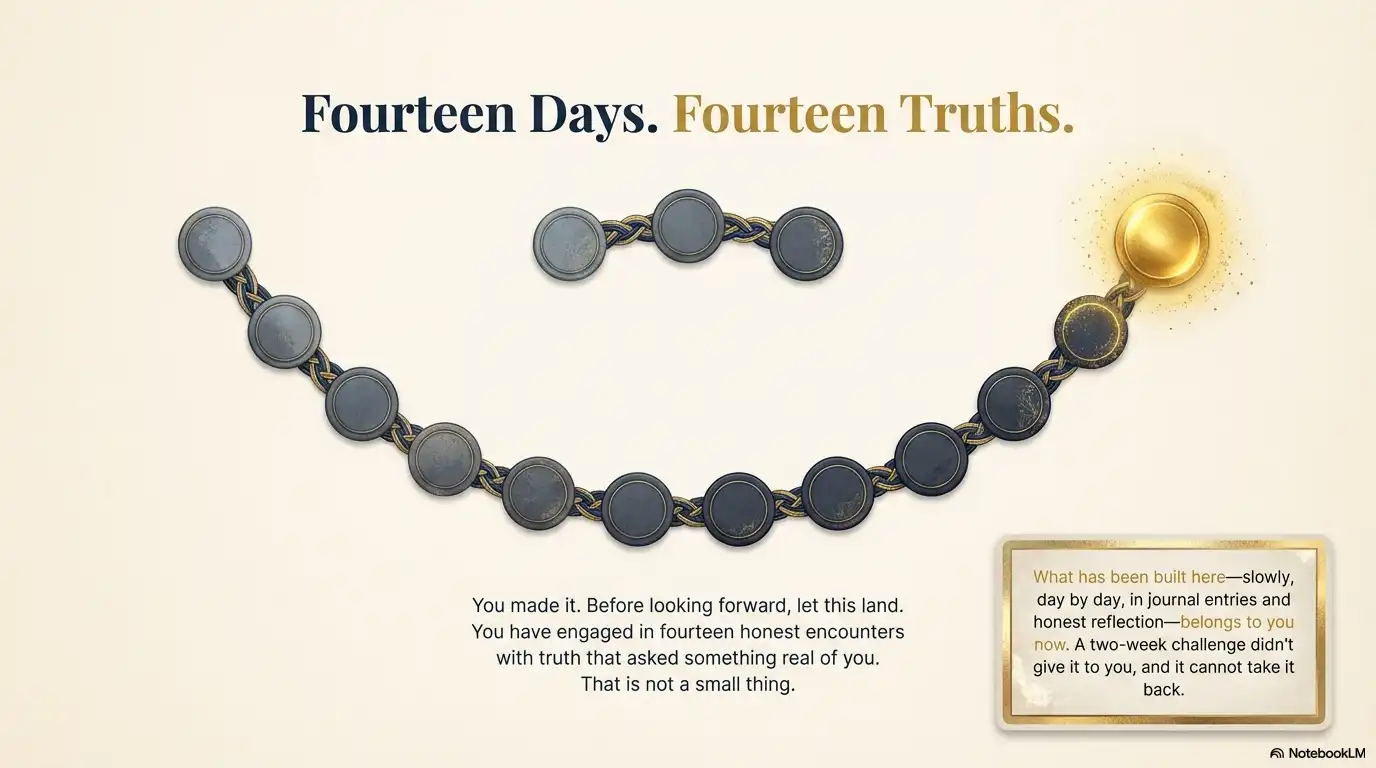
You made it.
And before anything else — before the insights, before the FAQ, before the reflection on what comes next — just let that land for a moment. Fourteen days. Fourteen verses. Fourteen honest encounters with truth that asked something real of you. That is not a small thing, and it deserves to be received before it’s immediately moved past.
Now. Genesis 50:20. Of all the verses that could have anchored the final day of this challenge, this one might be the most quietly extraordinary. Because it doesn’t just speak to where your confidence can rest going forward. It speaks to everything that happened before you got here.
1. Joseph’s Story Is the Longest Narrative in Genesis — and It Ends With This
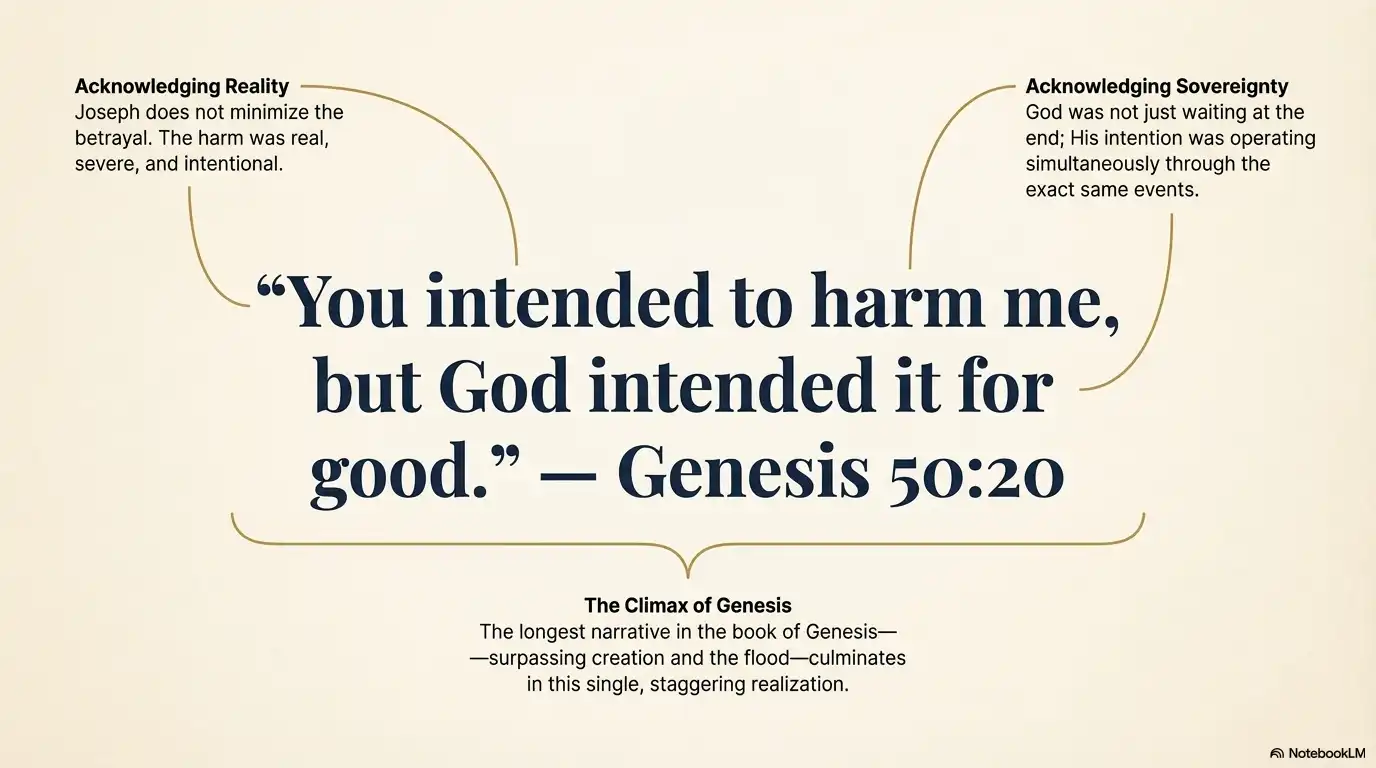
That’s worth sitting with for a moment. The book of Genesis — which contains creation, the flood, the call of Abraham, the binding of Isaac, the covenant with Jacob — gives more space to Joseph’s story than to any other. Chapters upon chapters of detail. And the emotional, theological, narrative climax of all of it is this single statement, spoken by a man to his brothers who had genuinely, severely, and repeatedly wronged him.
You intended to harm me. God intended it for good.
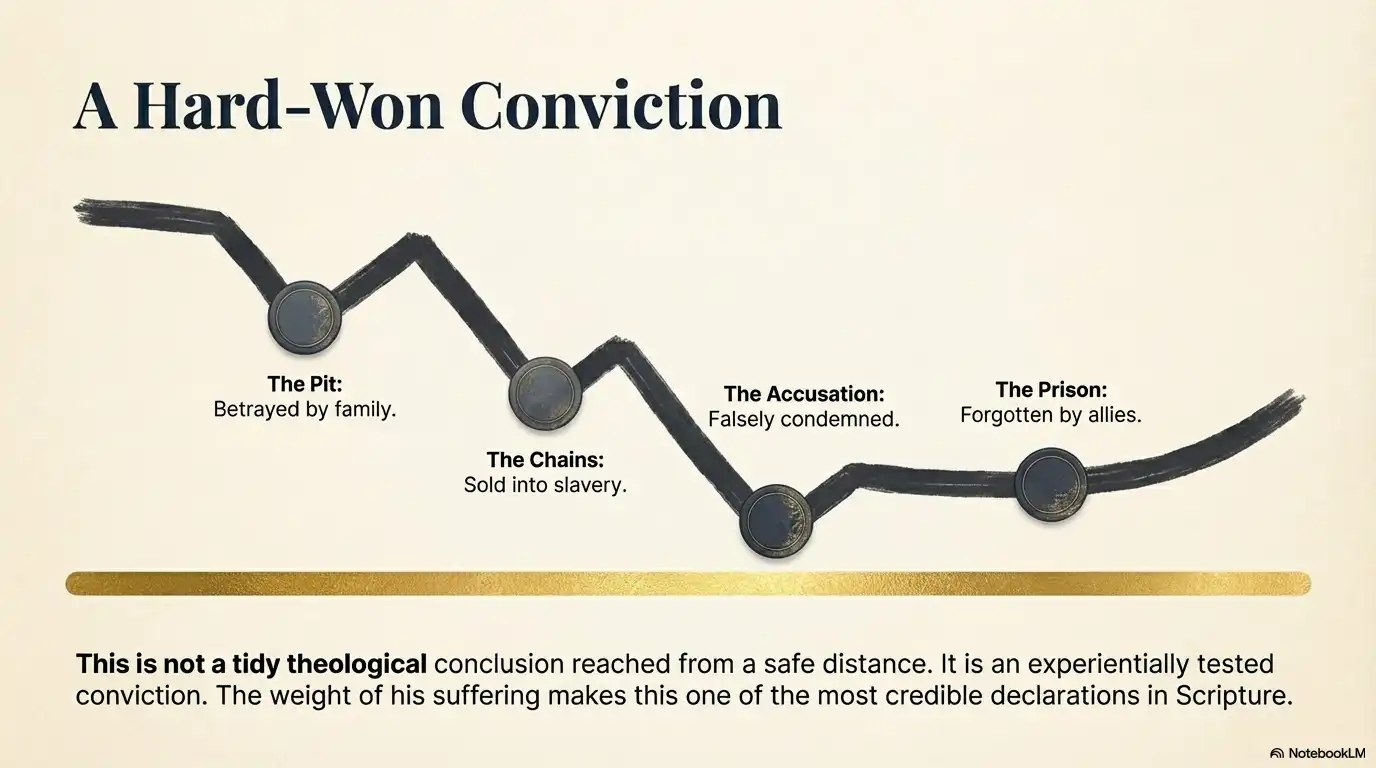
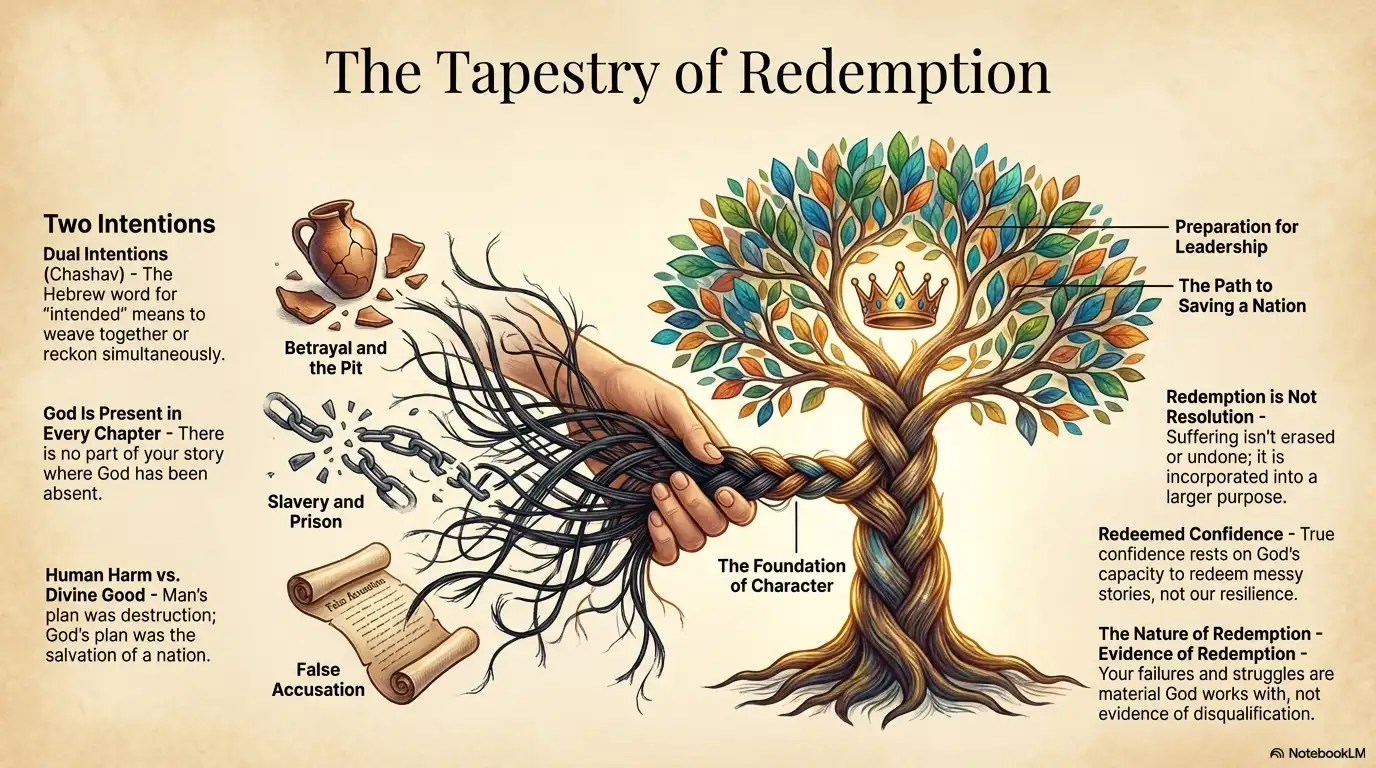
The scope of what Joseph is holding in that sentence is almost incomprehensible. He’s talking about being thrown into a pit by his own family. Being sold into slavery. Being falsely accused and imprisoned. Being forgotten by the very person he helped and who promised to advocate for him. Years of suffering, injustice, and what must have felt — from the inside — like complete abandonment.
And he looks back across all of it and says: God was in it. Not just at the end. In all of it. And He was working.
That’s not a tidy theological conclusion Joseph reached from a safe distance. That’s a hard-won, experientially tested conviction that took the full weight of everything he suffered to arrive at. Which makes it, honestly, one of the most credible things anyone says in the entire Bible.
2. “You Intended” and “God Intended” — Two Intentions, One Story
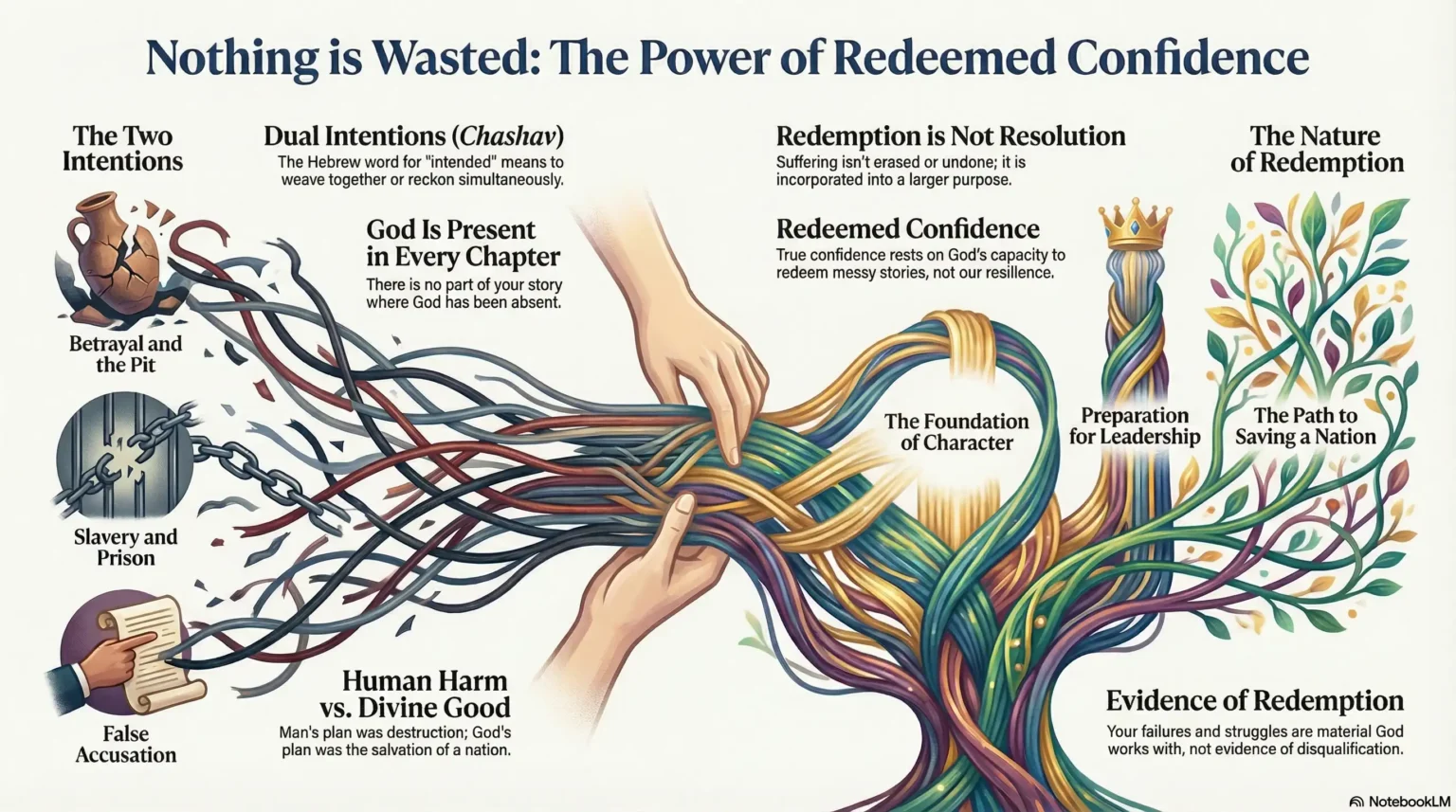
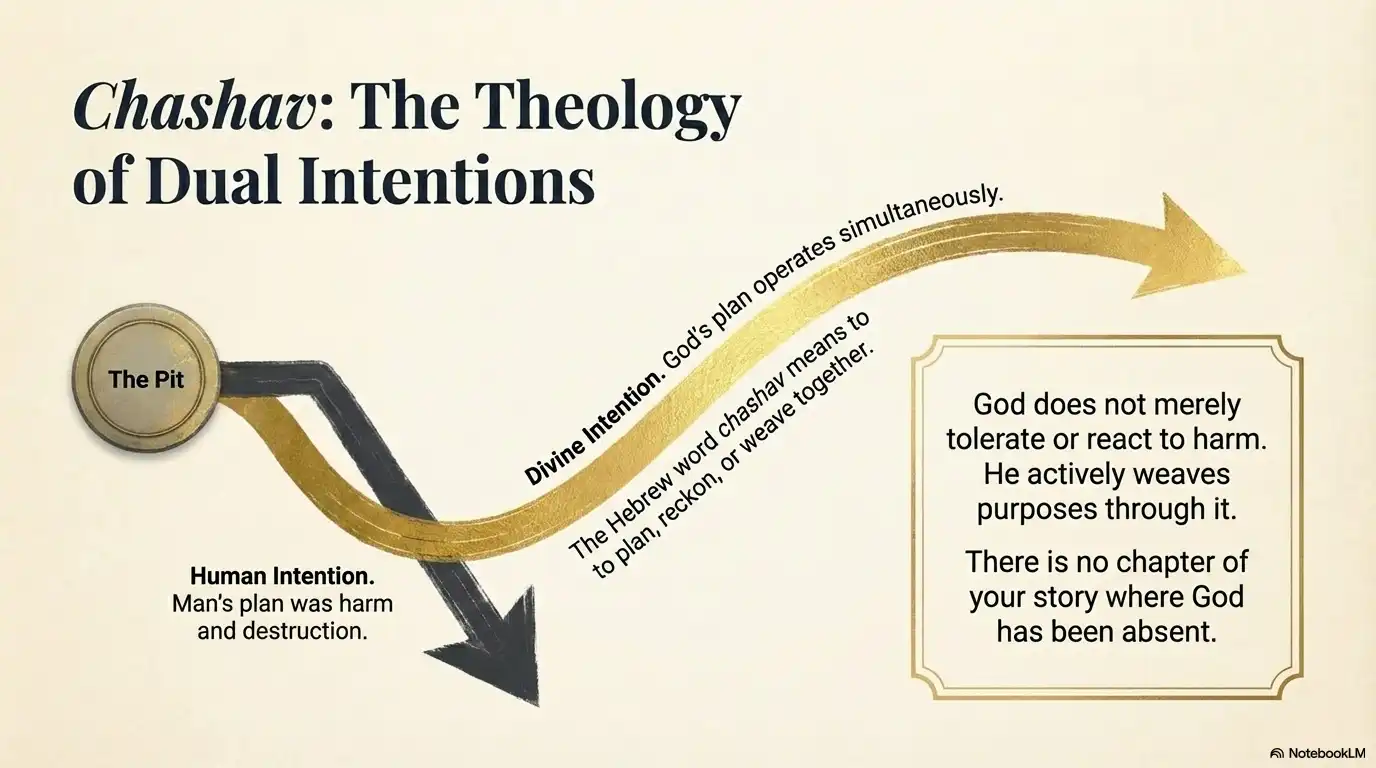
The Hebrew word used for both “intended” in this verse is the same word — chashav — meaning to plan, to reckon, to weave together. What Joseph is saying is not that God tolerated what his brothers did or merely reacted to it. He’s saying that God was actively weaving purposes through it — that His intention was operating in the same events, simultaneously, that the brothers’ harmful intention was operating in.
This is not a comfortable theological idea. It raises questions that deserve honest engagement rather than quick resolution. But what it speaks into — specifically, for the question of confidence — is this: there is no part of your story that God has been absent from. Not the parts that were done to you. Not the parts you did to yourself. Not the years that felt wasted, the seasons that felt like pure loss, the experiences that seemed to produce nothing but damage.
The God who can take a pit and a prison and a false accusation and weave them into the salvation of a nation is the same God who has been present in every chapter of your story — including the ones you’re most tempted to wish away.
That kind of God produces a very specific kind of confidence. Not the confidence that your past has been perfect. The confidence that your past has not been wasted.
3. The Most Confident Thing Joseph Ever Said Had Nothing to Do With His Own Strength
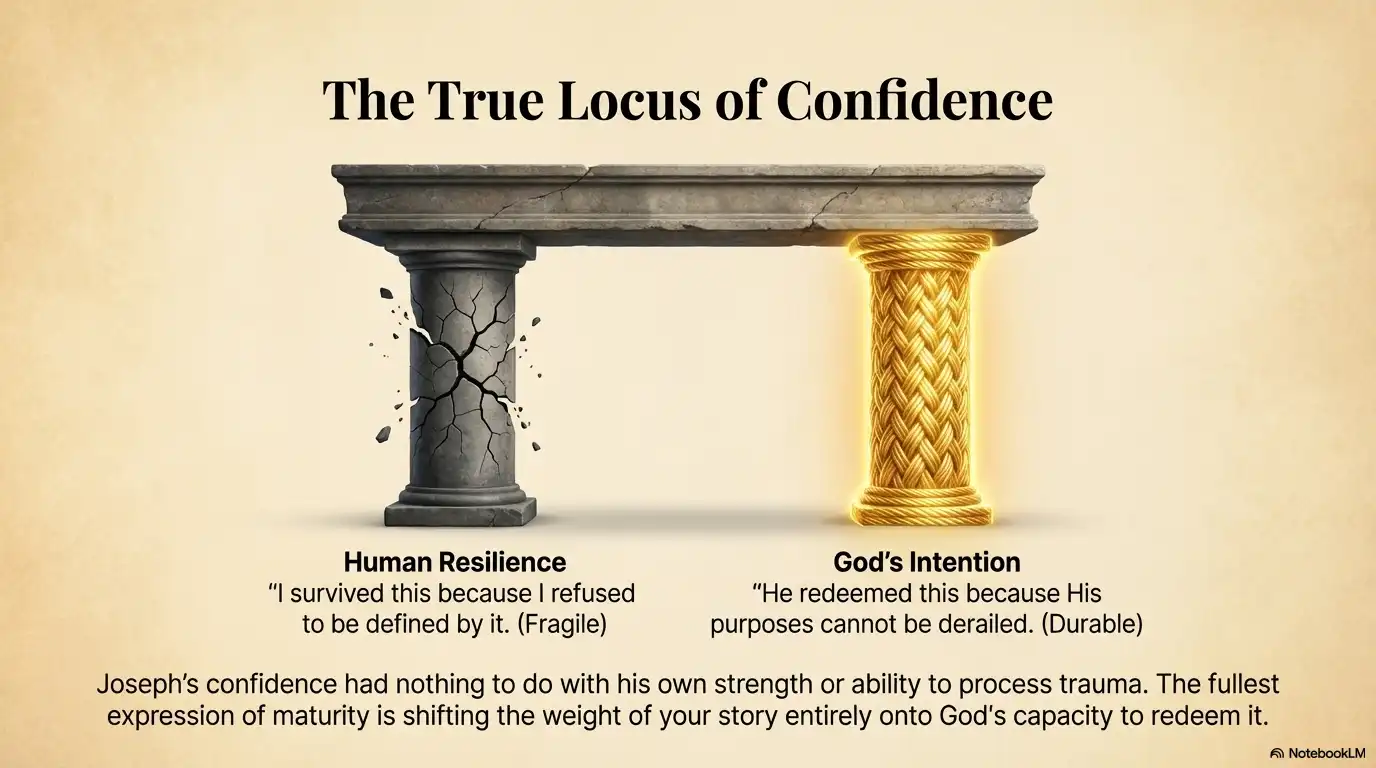
Here’s what’s worth noticing about this declaration — the one that stands as the climax of the longest story in Genesis. Joseph is not saying I survived this because I was resilient enough. He’s not saying I overcame this because I refused to be defined by what happened to me. He’s not even saying I forgive you because I’m spiritually mature enough to do so.
He’s saying: God. The entire weight of the statement rests on God’s intention, God’s involvement, God’s capacity to accomplish purposes that no human plan — including the harmful ones — could ultimately derail.
That is the fullest and most mature expression of the confidence this entire challenge has been building toward. Not I can handle what comes. But He can redeem what has already come — and everything that comes next. The confidence doesn’t rest on Joseph’s ability to process trauma or maintain a good attitude under pressure. It rests on a God whose intentions are strong enough to work through anything — including the worst things.
Fourteen days of foundation. And this is what the foundation is ultimately for: a confidence that doesn’t require a clean or easy story, because it’s rooted in a God who redeems messy ones.
4. Redemption Is Different From Resolution — and the Difference Matters
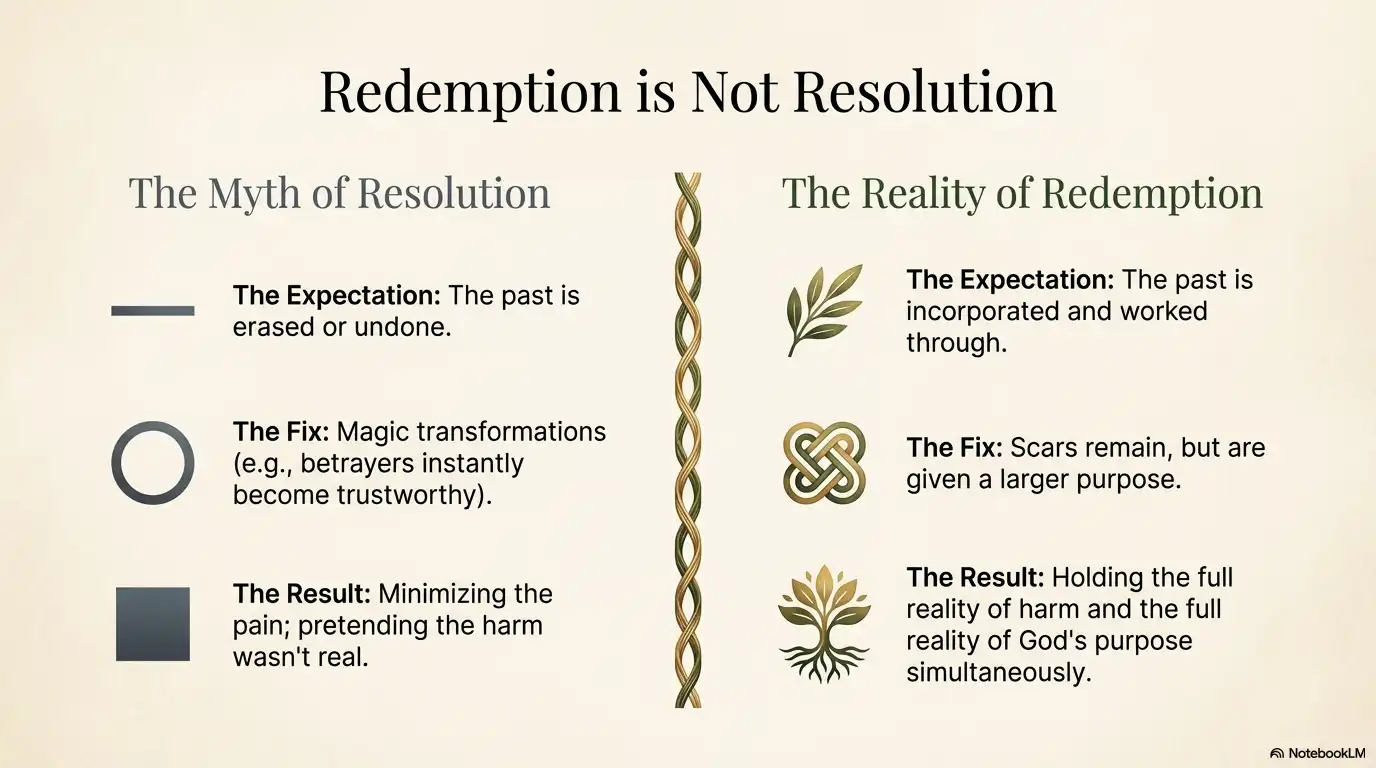
Something worth being precise about, because it changes how you carry this going forward. Joseph’s brothers don’t magically become trustworthy people at the end of his story. The years of his life lost to slavery and imprisonment don’t reappear. The suffering wasn’t undone — it was redeemed. Worked through. Incorporated into a purpose larger than the pain.
There’s a version of this verse that gets applied in a way that’s almost dismissive — well, God meant it for good, so it’s fine. That’s not what Joseph is doing. He’s not minimizing what happened to him. He’s not pretending the harm wasn’t real. He’s doing something far more sophisticated and, honestly, far more faith-requiring: he’s holding the full reality of the harm and the full reality of God’s redemptive purpose simultaneously, without collapsing one to make room for the other.
That’s what confidence rooted in God’s redemptive capacity actually looks like. Not the erasure of difficult chapters, but the refusal to let difficult chapters be the defining word about your story. Because they’re not the author. He is.
5. Your Failures, Your Fears, Your Struggles — None of It Is Outside His Reach
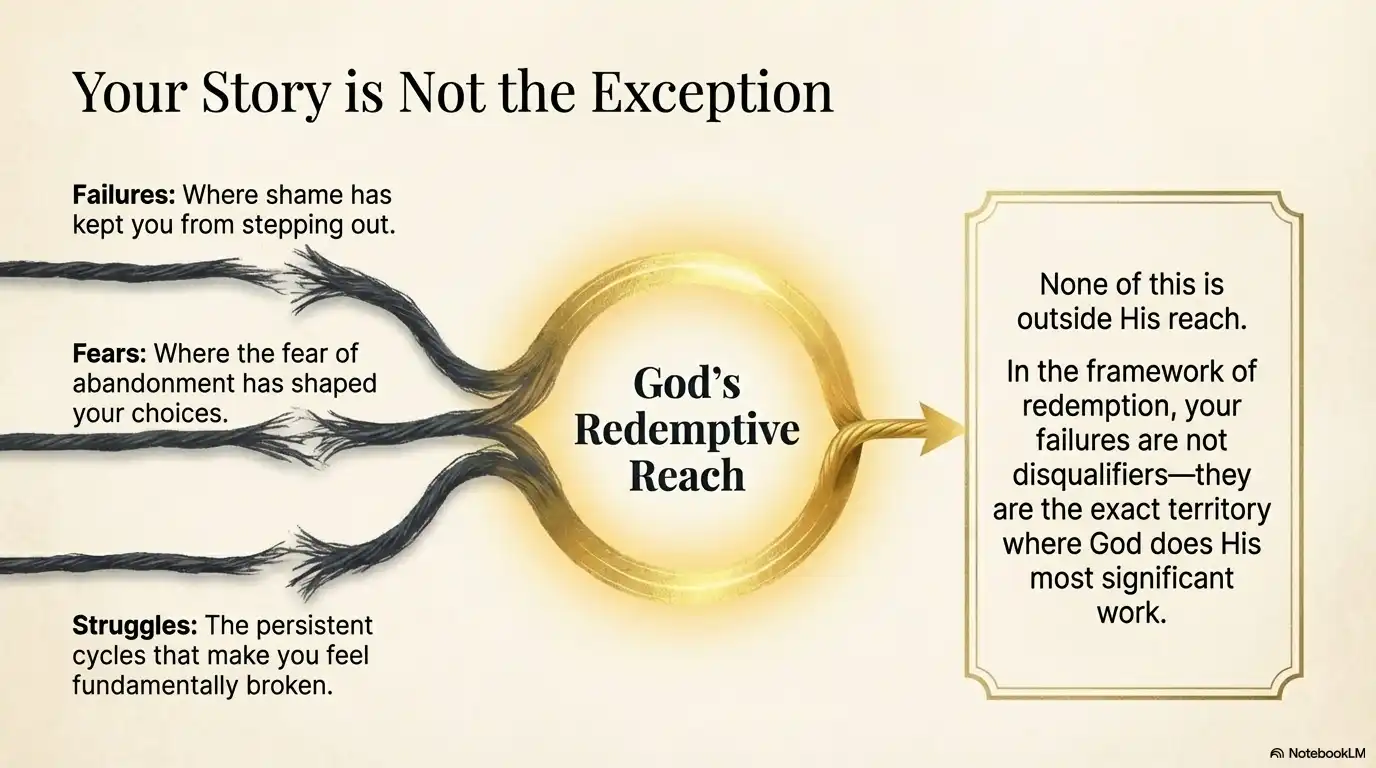
This is the specific gift of ending on this verse after fourteen days of honest work. Because over these two weeks, you’ve been asked to look at some real things. Where your confidence has been built on shaky ground. Where fear of abandonment has shaped your choices. Where shame has kept you from stepping out. Where old failures have stolen your sense of what’s possible.
And here, on Day 14, this verse quietly says: all of that — every bit of it — is material God works with, not evidence that you’re beyond His reach.
The failures are not disqualifiers. The fears, honestly examined, become the very places where trust gets most deeply developed. The struggles — the ones that have felt most embarrassing, most persistent, most like evidence that something is fundamentally wrong with you — are, in Joseph’s framework, precisely the territory where God’s redemptive intention tends to do its most significant work.
Nothing is wasted. That’s not a platitude. It’s a covenant promise from a God who has demonstrated, across an entire book of Scripture and in the specific, detailed story of a man who suffered unjustly for years, that He is extraordinarily good at making something from what looked like nothing. At weaving purposes through what looked like destruction. At turning what was intended for harm into what accomplishes good.
Your story is not the exception to that pattern. It’s another instance of it.
6. Confidence Built on Redemption Is the Most Durable Kind Available
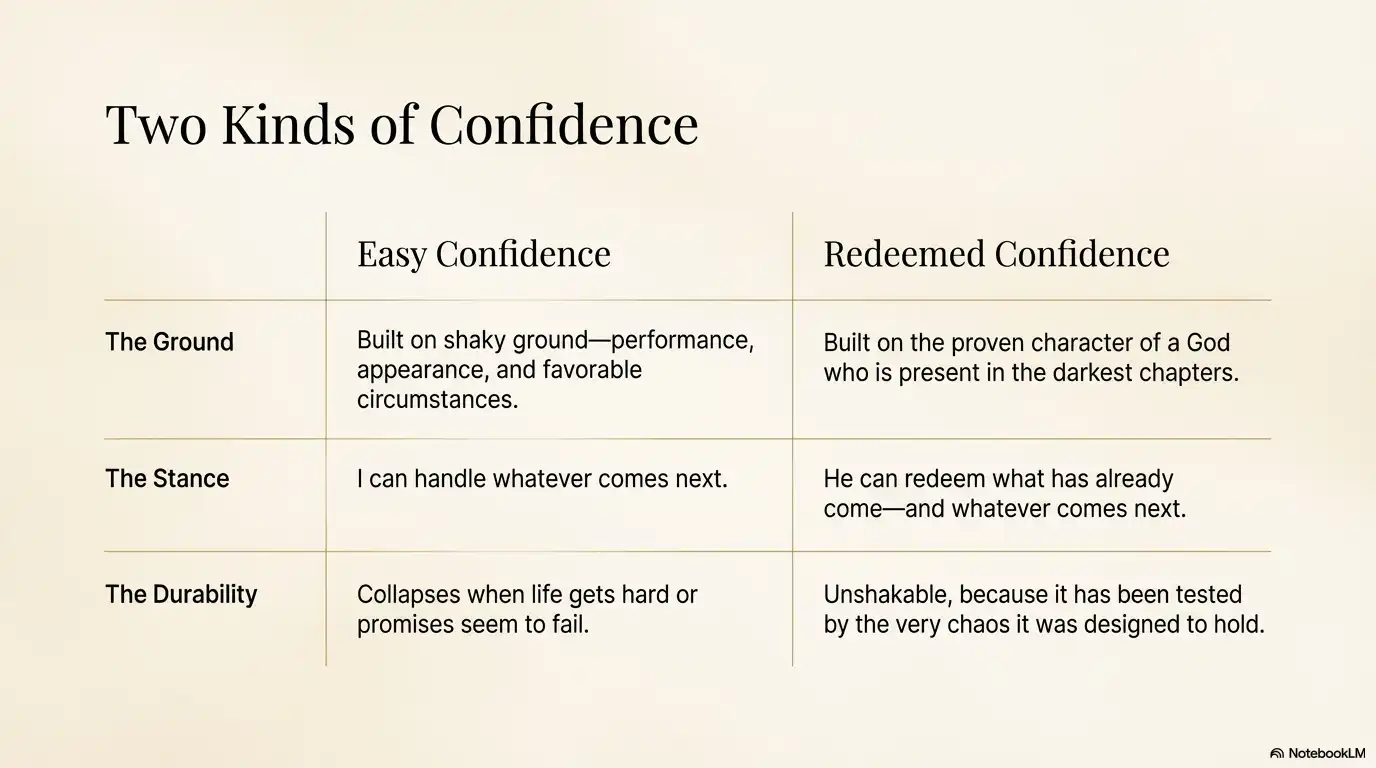
Let’s come all the way back around to where this challenge started. Day 1 established that most people build confidence on shaky ground — performance, appearance, others’ opinions, circumstances. And that there’s another kind of confidence. One that doesn’t collapse when life gets hard.
Fourteen days later, here’s what that other kind of confidence actually looks like in its fullest form. It’s not just confidence that God is your shield in the present moment. It’s not just confidence that you belong to Him or that His face is toward you or that His arms are underneath you. It’s confidence that even the chapters that seemed to contradict all of that — the ones that felt like abandonment, like failure, like evidence that the promises don’t work — were not outside His story. Were not beyond His reach. Were not wasted.
Joseph’s confidence in that room with his brothers wasn’t the confidence of someone who’d had an easy life. It was the confidence of someone who’d had a redeemed one. And redeemed confidence is actually more solid than easy confidence, because it has been tested by the very thing it was designed to hold — and held.
That’s what fourteen days has been building toward. Not a life without giants or chaos or fear or seasons of feeling outnumbered. A confidence that holds through all of that, because it’s rooted in the only thing that has proven itself capable of holding.
7. This Is Not an Ending — It’s a Threshold
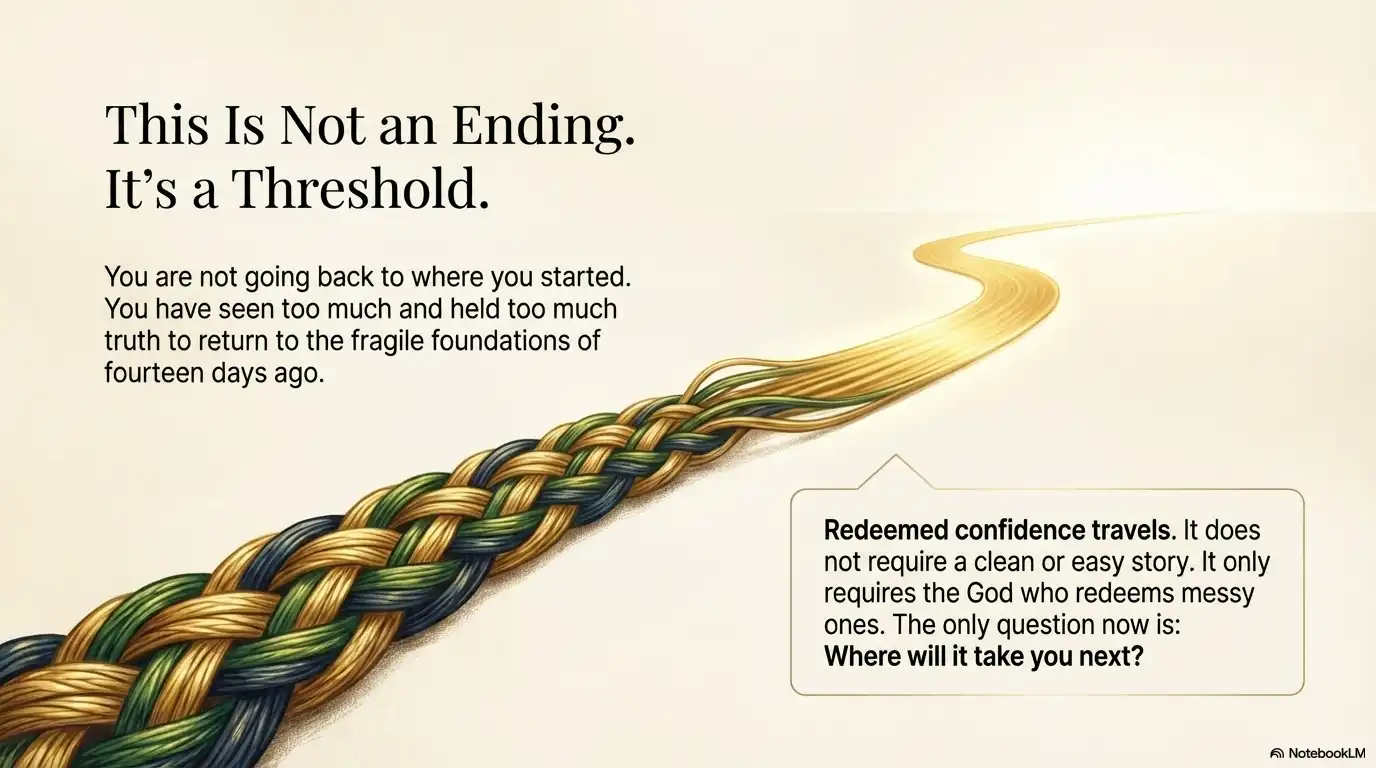
Fourteen days ago, you crossed a threshold when you started this challenge. Today you’re standing at another one. The content ends. The foundation doesn’t. What’s been built here — slowly, day by day, in journal entries and honest reflection and small practices and the simple act of showing up when you could have quit — that belongs to you now in a way that a two-week challenge didn’t give you and therefore can’t take back.
You’re not going back to where you started. You can’t, actually. You’ve seen too much, held too much truth too closely, encountered the character of God from too many angles to simply return to the foundations you were standing on fourteen days ago.
The question, as the fork ahead makes clear, is simply what this next season needs to keep building on what’s been established here. And that’s a question worth taking seriously — with prayer, with honesty about what has and hasn’t worked in previous seasons, and with the same willingness to be truthful with yourself that you’ve been practicing for the last two weeks.
The confidence you’ve been building? It travels. Into whatever path you choose next.
✦ FAQ: Real Questions, Real Answers
Q: I’ve been doing this for 14 days and honestly still feel like the same person in a lot of ways. Did something actually change?
Something changed. And the fact that you can’t fully see it yet doesn’t mean it isn’t real — it might actually mean it’s more structural than surface-level, which is ultimately the more durable kind of change. Here’s a simple diagnostic worth trying: go back to your Day 1 journal entry if you wrote one. Read what you wrote about where your confidence had been rooted, what you were most afraid of, what you were hoping for. Then read it as the person you are today. The distance between those two versions of you — even if it feels small — is real ground that’s been covered. Real foundations that have been examined and, in at least some places, rebuilt on more solid ground. That’s not nothing. That’s actually the whole point.
Q: Genesis 50:20 sounds great in theory but I genuinely cannot see how some of what I’ve been through could ever be used for good. How do I hold this verse honestly with my actual story?
With a lot of grace toward yourself — because this is genuinely one of the harder things faith asks of us. Joseph didn’t arrive at Genesis 50:20 on Day 1 of his suffering. He arrived at it after years of not being able to see the purpose, after seasons where the promise seemed to have clearly failed, after moments where the plot gave absolutely no indication of where it was heading. The conviction that God intended it for good came at the end of a long process of experiencing His faithfulness in small ways along the way, which eventually accumulated into the larger perspective he was able to hold in that room. You may not be at the end of the story yet. The perspective that allows you to see the redemptive thread often only becomes visible from a vantage point you haven’t reached yet. That’s not a reason to dismiss the promise. It’s a reason to stay in the story long enough to see it.
Q: How do I choose between Path A and Path B? I’m genuinely unsure which one is right for me.
The most honest question to sit with is probably not which path sounds better but which pattern has been true of you historically. Have you consistently followed through on self-directed growth, or does your track record show that you tend to need external accountability to maintain momentum? Neither answer is a character judgment — it’s just information about how you’re actually wired and what your particular season needs. A second useful question: when you imagine each path, what does the feeling in your body tell you? Not the anxiety of either one being a big decision — that’s normal. But underneath that, is there a quiet sense of rightness about one direction that the other doesn’t have? Pray specifically. Be honest about what you actually need rather than what sounds most spiritually impressive. And give yourself a couple of days to let the answer settle before deciding.
Q: I’m afraid the shifts I’ve felt over these 14 days will fade once the structure ends. What can I do to prevent that?
This fear is legitimate and worth taking seriously rather than reassuring yourself out of quickly — because the email is right that relief does fade without structure, and that’s not a spiritual failure, it’s just how human change works. A few concrete things worth doing in the next 48 hours specifically. First, identify the two or three practices from this challenge that have been most genuinely helpful and write them down as specific habits rather than vague intentions. Not “spend time with God” but “return to one verse each morning and journal one honest sentence about it.” Second, decide now — before the momentum fades — what your next step is. The fork in the road doesn’t stay open indefinitely, and the energy and openness you feel right now is the best resource you have for making a good decision about what comes next. Use it while it’s available.
Q: I have a hard time applying Joseph’s story to my own because what happened to him was done by other people. My struggles are mostly my own fault. Does this verse still apply?
Yes — and maybe more than you realize. Joseph’s story isn’t exclusively about external injustice. He made mistakes too. He was, by his father’s own account, somewhat insufferable as a young man — boasting about his dreams in ways that inflamed already tense family dynamics. The story is messier than the clean version suggests. But more importantly: the verse doesn’t specify that God only redeems suffering caused by others. It says God intended it for good — whatever the source, whatever the contributing factors, whatever the degree of your own involvement in how things unfolded. The failures that are most clearly yours are not outside the reach of this promise. They may actually be the most personally significant places where its truth becomes real — because discovering that God redeems your own worst moments is, honestly, a more intimate and transformative encounter than discovering He redeems the harm others have caused.
Q: What do I do on Day 15? I genuinely don’t know how to continue without the daily structure.
That’s such a real and honest question, and the fact that you’re asking it means you’ve genuinely engaged with what this challenge was offering rather than just going through the motions. A couple of thoughts for the immediate next days. Return to the verse that landed most powerfully for you across these fourteen days — not a new one, but the one that already has your fingerprints on it, the one you came back to more than once. Spend a few days going deeper into that single passage rather than moving to something new. Let it do more work in you before you add new material. And take the path decision seriously in the next 48 hours — because the structure of choosing a next step is itself a form of structure that carries you through the transition. The challenge ending isn’t a cliff. It’s a threshold. You just need to know which door you’re walking through next.
Q: I want to share Genesis 50:20 with someone in my life who’s going through something really hard right now. How do I do that without it sounding dismissive of their pain?
Carefully, and probably with more listening than speaking first. The verse lands differently when it’s offered too quickly — before the pain has been fully witnessed, it can sound like a shortcut past the grief rather than a companion through it. What tends to make the difference is not the timing of the verse but the quality of the presence before it. If you’ve sat with someone in their hard thing — really sat with them, not immediately trying to fix or reframe it — then the verse, offered gently and without pressure to immediately feel better about it, tends to be received as a companion rather than a dismissal. Something like: I’m not saying this to minimize what you’re going through. But this verse has been sitting with me, and I wanted to share it because I believe it’s true about your story too. Then let them do what they need to do with it. You’re not responsible for their timeline of receiving it. You’re just responsible for offering it with honesty and care.
Q: I’m feeling a mix of gratitude and grief that this is ending. Is that a strange combination?
It’s, honestly, one of the most appropriate combinations possible. Gratitude because something real happened here — you know it, even if you can’t fully articulate it yet. Grief because endings, even good endings, involve a kind of loss — of structure, of the daily rhythm, of the particular version of this journey that belongs only to these fourteen days and can never be exactly repeated. Both feelings are true. Both deserve to be honored rather than one being used to cancel out the other. Hold them alongside each other the way Joseph held the harm and the redemption alongside each other — not by collapsing one to make room for the other, but by letting both be fully real. That’s, actually, a pretty good summary of the mature confidence this whole challenge has been building toward. Holding the complexity of your real life, fully and without flinching, in the hands of a God whose purposes are larger than any single feeling.
Fourteen days. You came, you stayed, you showed up honestly, and something in you is different for it. Carry it forward. The foundation is yours now. Go build something on it.